A Forested Township, Not a City
The Woodlands is a census-designated place, not an incorporated city. It is governed by The Woodlands Township, a special-purpose district created by the Texas Legislature in 1993, and in a November 2021 referendum residents voted against incorporating. Most of the community lies in Montgomery County, with the Creekside Park village across Spring Creek in Harris County.
That structure matters after water damage. The Township provides fire protection, parks and other services, while water and sewer come from Woodlands Water and the local utility districts, and county services depend on which side of the county line you live on. Knowing who to call for a street drainage problem or a water main issue saves time.
George P. Mitchell founded The Woodlands in 1974 as a planned community laid out under the influence of landscape architect Ian McHarg's Design With Nature. The result is about 44 square miles of homes and businesses tucked into heavy forest, threaded by Spring Creek, Panther Creek and Lake Woodlands.
Spring Creek, Panther Creek and Heavy Rain
Spring Creek forms the boundary between Montgomery and Harris counties and flows east to the West Fork of the San Jacinto River. During Hurricane Harvey in 2017, the National Weather Service reported major flooding on Spring Creek and its tributaries affecting The Woodlands and the I-45 corridor.
Harvey was not an isolated case. Montgomery County recorded 500-year floods in three consecutive years, in May 2015, April 2016 and August 2017. Homes and businesses near the creeks are most exposed, but intense rain can also back up storm drains and push water under doors almost anywhere.
If creek or street water gets inside, treat it as Category 3 and plan on professional flood cleanup: removal of soaked materials, cleaning and sanitizing, then drying.
Under the Canopy: Trees, Gutters and Roof Leaks
The Woodlands kept its trees on purpose, for shade and character, and the area falls in FEMA Wind Zone 2. Under that canopy, storm damage cleanup in The Woodlands is often about the roof. A falling limb can break shingles and decking, and leaves and pine needles packed into gutters and valleys can send rain under the roof edge.
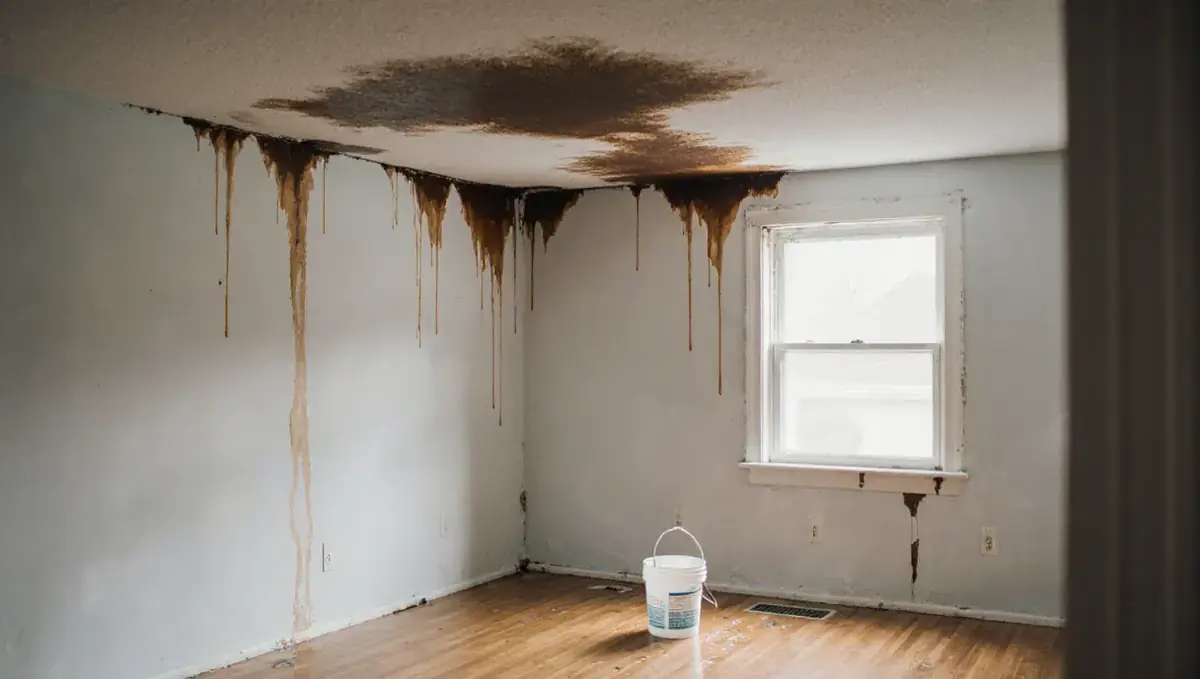
These leaks are easy to miss at first. Water pools on attic insulation, then spreads across ceiling drywall until a brown stain or sag appears. By then, framing and insulation may need drying or replacement.
- Clear gutters and valleys before storm season.
- After high winds, look for missing shingles, dents in vents and fresh stains on ceilings.
- Get any opening tarped quickly so the next rain does not add damage. See storm damage cleanup.
The First Hour After a Leak in The Woodlands
- Find and stop the source. Turn off the main water valve or the shutoff at the failed fixture, appliance or water heater.
- Make it safe. Keep out of standing water near electrical outlets, and avoid rooms where a wet ceiling is sagging.
- Take pictures. Document the source, every affected room and damaged items before anything is thrown out.
- Lift and move. Get rugs, papers, photos and electronics off wet floors and put furniture on blocks.
- Call (888) 817-5061. We connect you with a local restoration company for emergency water removal and drying, any time of day.
How Pros Handle Extraction, Drying and Repair
Extraction and assessment
Crews pull out standing water and use moisture meters and thermal imaging to trace it behind walls, under hardwood and tile, and into lower floors of two-story homes.
Controlled drying
Dehumidifiers and air movers are placed according to those readings, and progress is checked until materials reach a dry standard. Flooded drywall and wet insulation are commonly cut out to let cavities dry. Learn about structural drying.
Putting things back
Then comes water damage repair: new drywall, paint, trim, flooring and cabinets. Before hiring, ask about the company's licensing, insurance and training, for example IICRC certification.
Mold in a Humid, Shaded Setting
Shade keeps the community cooler, but it also slows drying. Following EPA guidance, mold can begin growing on damp materials within 24 to 48 hours, so attics, crawl spaces and wall cavities that stay wet after a leak need attention quickly.
Texas licenses mold professionals through the Texas Department of Licensing and Regulation (TDLR). A license is generally required for mold of 25 contiguous square feet or more, and the assessor and the remediator on a project must be different. Once remediation wraps up, the state requires a Certificate of Mold Remediation within 10 days. Keep it, because sellers must provide copies to buyers.
Read about mold removal, and verify any license with the TDLR License Search before work starts.
Coverage Questions for Homes and Town Center Businesses
Water damage looks different from a two-story village home to an office tower or retail space in Town Center or Research Forest. Commercial losses can involve tenants on several floors, carpet tiles, server rooms and business interruption, so property managers benefit from a provider that keeps room-by-room moisture records. Homeowners face smaller spaces but the same need for clear documentation. Either way, the insurance basics are similar.
- Standard homeowners policies generally exclude flood, and many commercial property policies do too. NFIP and private flood policies fill that gap, and new NFIP policies typically wait 30 days before taking effect.
- The Texas Attorney General notes that most homeowner policies in Texas cover sudden and accidental leaks only and may exclude or cap mold.
- Report losses promptly and keep photos, drying logs and invoices.
WaterQ makes no promises about claims. For water damage in The Woodlands, call (888) 817-5061 and get connected with a local professional who can document the damage as work begins.
Villages of The Woodlands and Nearby Communities
The free WaterQ line serves all eight villages, Town Center and Research Forest, plus nearby Montgomery and Harris County communities.
Neighborhoods
- Grogan's Mill
- Panther Creek
- Cochran's Crossing
- Indian Springs
- Alden Bridge
- College Park
- Sterling Ridge
- Creekside Park
- Town Center
- Research Forest
Nearby communities
The Woodlands Water Damage FAQ
Is The Woodlands a city?
No. The Woodlands is a census-designated place governed by The Woodlands Township, a special-purpose district created in 1993. Residents voted against incorporation in November 2021. Water and sewer service comes from Woodlands Water and local utility districts.
How do I get emergency alerts in The Woodlands?
The Township runs a free alert service by text, email and voice call. It moved to a new system in July 2025, so residents need to register an account on the Township's Emergency Alerts page to receive messages.
Which parts of The Woodlands are most likely to flood?
Areas near Spring Creek, Panther Creek and their tributaries carry the most creek-flood risk; Spring Creek saw major flooding in Harvey. Heavy rain can still cause localized flooding elsewhere, so check flood maps and consider flood insurance.
Do I need a licensed company for mold cleanup in Texas?
For mold covering 25 contiguous square feet or more, Texas generally requires TDLR-licensed professionals, with separate parties doing the assessment and the remediation.
Does WaterQ send a crew to my home?
WaterQ is a free referral service, not a contractor. The 24/7 line connects you with an independent, local restoration company that performs the inspection and work.
Local emergency and flood resources
Official sources for alerts, flood maps and preparedness in and around The Woodlands: