Low Ground Between Houston and Galveston
League City sits about 23 miles from both downtown Houston and Galveston, at an elevation of roughly 20 feet. It spreads across about 53 square miles, mostly in Galveston County, with a small slice north of Clear Creek in Harris County. It has become the largest city in Galveston County, growing from 1,341 people in 1950 to more than 114,000 in 2020.
Water shapes daily life here. Clear Creek forms the northern edge of the city on its way to Clear Lake and Galveston Bay, and smaller channels such as Cowart's Creek, Magnolia Bayou and Chigger Bayou cross local neighborhoods. Waterside communities like South Shore Harbour and Waterford Harbor are built around marinas.
The climate is wet, too. League City averages about 60 inches of precipitation a year, and August and September are typically the wettest months, right in the middle of hurricane season.
Clear Creek's Record Rise During Harvey
Hurricane Harvey brought extraordinary rainfall to this part of the coast. Between August 25 and 31, 2017, a gauge about 3 miles south of League City recorded 52.87 inches, and nearby Friendswood logged 56 inches, according to the National Weather Service.
The NWS reported that Clear Creek reached record levels across its watershed, causing significant flooding in Friendswood and League City. The Clear Creek watershed spans parts of Harris, Galveston, Brazoria and Fort Bend counties, so rain falling far upstream ends up passing League City on its way to the lake.
During heavy rain, watch creek levels on the Harris County Flood Warning System, which includes gauges along Clear Creek. For flood cleanup in League City after creek water gets inside, see our flood cleanup page.
Roof Damage and Long Outages: Lessons From Alicia and Ike
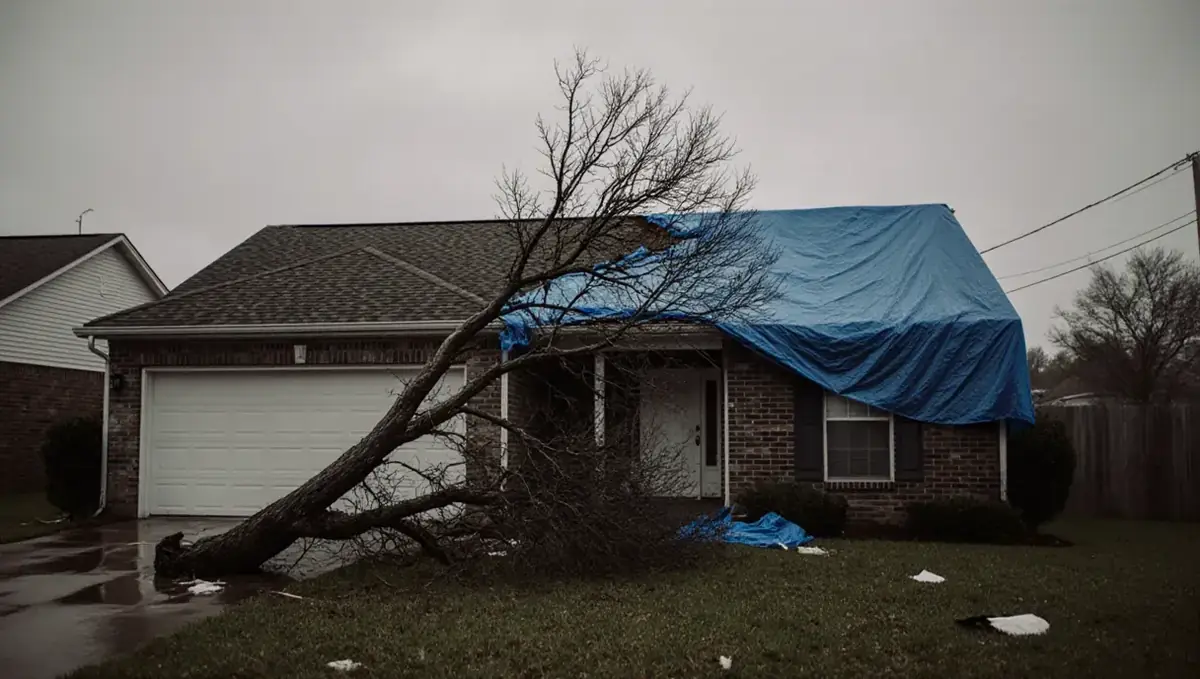
Not every storm loss here starts with rising water. When Hurricane Alicia struck in August 1983, damage in League City was estimated at $100 million, much of it from roofs. After Hurricane Ike made landfall over Galveston on September 13, 2008, the city lost electric power, and CenterPoint Energy warned that restoration could take four weeks or more.
Both problems matter for water damage:
- Damaged roofs let rain soak attic insulation, ceilings and walls, sometimes for days before the opening is covered.
- Extended outages shut down air conditioning, dehumidifiers and sump pumps, so a small amount of water can lead to mold in a closed-up house.
Storm damage cleanup in League City usually begins with tarping, boarding and removing wet ceiling material. Learn more about storm damage cleanup, or call (888) 817-5061 to reach local help.
A Practical Checklist for the First Hour
- Stop or contain the water. Close the main or fixture valve for plumbing leaks. For a roof leak, set out buckets, move belongings away from the drip and stay out from under any sagging ceiling.
- Respect electrical hazards. Keep out of standing water near outlets, cords and appliances. If a generator is running after a storm, keep it outdoors and away from openings.
- Identify the water category. Supply-line water is usually clean (Category 1). Creek water, bay water and anything that crossed a yard is Category 3.
- Make a photo record. Capture every affected room, the source and damaged items before cleanup starts.
- Get professional help. Dial (888) 817-5061, and WaterQ can connect you with a local provider of water extraction and drying.
How Local Pros Handle Extraction and Drying
Water damage restoration in League City generally follows a set sequence. The crew removes standing water with extraction equipment, then uses moisture meters and thermal imaging to trace water beneath flooring, behind baseboards and into wall cavities.
For contaminated creek or storm water, porous materials such as carpet, pad, insulation and lower drywall are typically removed, and remaining surfaces are cleaned and disinfected. Clean-water leaks caught early often allow more materials to be dried in place.
Drying uses air movers and dehumidifiers, with readings checked each day until materials reach dry standards. See how structural drying works. Rebuilding comes after, through water damage repair. Before hiring, it is reasonable to ask about licensing, insurance and training, including IICRC certification.
Mold Concerns in a Humid Bay Climate
According to EPA guidance, mold growth can start within 24 to 48 hours once materials stay wet. With heavy late-summer rain and frequent humidity off the bay, League City homes that sit closed up after a storm are especially vulnerable.
Texas licenses mold work through the Texas Department of Licensing and Regulation (TDLR). For mold of 25 contiguous square feet or more, a license is generally required, and the assessor and the remediator must be different people or companies on any one project. Within 10 days after remediation, a Certificate of Mold Remediation must be issued, and sellers must give buyers copies, according to the Texas Attorney General.
For mold removal in League City, read about mold removal and containment or verify a company on the TDLR License Search.
Flood, Wind and Leak Coverage in Galveston County
- Flood is its own policy. Standard homeowners policies generally exclude flood. NFIP or private flood insurance covers it, and NFIP coverage typically begins after a 30-day waiting period.
- Wind may be written separately. Along the Texas coast, many wind policies come from the Texas Windstorm Insurance Association rather than the homeowners carrier. Confirm how your coverage treats wind and wind-driven rain.
- Sudden leaks only. Per the Texas Attorney General, a typical Texas homeowner policy pays only for leaks that are sudden and accidental, and mold may be excluded or capped.
- Keep the evidence. Hold on to photos, drying logs, invoices and removed materials until the adjuster signs off.
Marina businesses, offices and shops face the same mix of storm and plumbing risks. Owners and property managers can call the same 24/7 number. WaterQ cannot promise a claim outcome, but a complete record helps.
League City Neighborhoods and Clear Lake Area Communities
WaterQ connects callers across League City and neighboring Clear Lake Area and Galveston County communities with independent local restoration providers.
Neighborhoods
- South Shore Harbour
- Waterford Harbor
- Victory Lakes
Nearby communities
- Webster
- Friendswood
- Dickinson
- Kemah
- Seabrook
- Nassau Bay
- Clear Lake Shores
- Texas City
- Santa Fe
- Alvin
League City Water Damage FAQ
How bad did Clear Creek flood in League City during Harvey?
The National Weather Service reported record Clear Creek levels across the watershed, with significant flooding in League City and Friendswood. A gauge about 3 miles south of League City recorded 52.87 inches of rain between August 25 and 31, 2017.
My roof was damaged in a storm. What should I check inside?
Look at ceilings for stains or sagging, check attic insulation for dampness and feel walls near windows. Wet insulation and drywall can hold water for days, so a moisture check is worth it even if the leak has stopped.
What should I do about water damage during a long power outage?
Remove what water you safely can, open windows when outdoor humidity is lower, and move wet items out of the house. Keep generators outside. Call a restoration company as soon as possible, because without AC or dehumidifiers mold can develop quickly.
Does Texas require a license for mold removal in League City?
Generally yes for mold of 25 contiguous square feet or more. TDLR licenses mold assessors and remediators, and the same company cannot do both on one project.
Does WaterQ perform the restoration work?
No. WaterQ is a free referral service available 24/7. We connect you with an independent local restoration company, which inspects the damage and does the work.
Local emergency and flood resources
Official sources for alerts, flood maps and preparedness in and around League City: