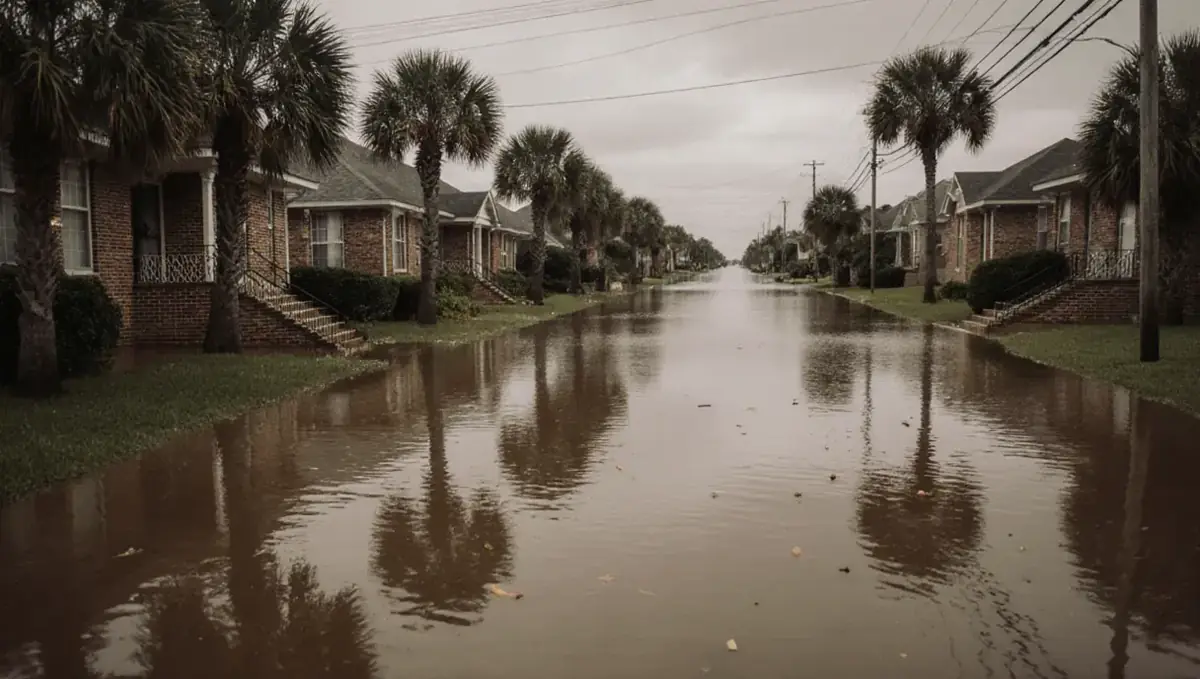
Why Houston Homes Take On Water So Easily
Houston sits on a flat, low-lying coastal plain roughly 50 miles inland from the Gulf of Mexico, built on clay and loosely cemented sand that drains slowly. When a slow-moving tropical system or a spring storm complex parks over the city, rain can outrun the streets and the bayous in a matter of hours.
Harris County has 23 major watersheds, and most of them empty through bayous such as Buffalo, White Oak, Brays, Sims and Greens, or through the San Jacinto River system, into Galveston Bay. Homes near those channels, near Cypress Creek or Clear Creek, or near the Addicks and Barker reservoirs can flood when water overtops the banks. Historic groundwater pumping also caused land subsidence across the region, which adds to the drainage challenge.
Houston's history makes the point. Tropical Storm Allison in 2001 dropped up to 38.78 inches of rain at Greens Bayou, and Hurricane Harvey in 2017 set a continental U.S. single-storm record with 48.20 inches near Clear Creek and I-45. Reporting by the Houston Chronicle found most Harvey-damaged homes were outside the mapped floodplain, so a home does not need to be in a flood zone to need flood cleanup.
The First Few Hours After Water Gets In
What you do before a restoration crew arrives can limit how far the damage spreads. Put people's safety first, then shut off the source and get a record of the damage.
- Stay out of standing water if outlets, cords or appliances may be wet. Turn off power at the breaker only if you can reach it from a dry spot.
- Stop the source. For a burst pipe or failed water heater, shut off the main water valve. If floodwater came from outside, let it recede and do not drive or walk through flooded roads.
- Photograph everything before anything is moved or thrown out: waterlines on walls, soaked flooring, furniture and the source of the leak.
- Move valuables and documents to a dry, higher spot, and lift furniture legs off wet carpet.
- Call for help early. Dial (888) 817-5061 and we will connect you with a local company that offers emergency water removal.
If the water came from a bayou, a street or a sewer backup, treat it as contaminated (Category 3 under IICRC S500 terms). Wear gloves and boots, keep children and pets away, and let professionals handle porous materials it touched.
Pier-and-Beam Crawlspaces, Slabs and Clay Soil
Houston's housing stock ranges from early-20th-century homes to post-war neighborhoods and newer suburban builds. In historic inner-loop areas such as Houston Heights, the City notes most homes sit on raised pier-and-beam foundations. That design keeps the floor off the ground, but it also leaves a crawlspace exposed to moisture and puts plumbing beneath the floor where leaks go unseen.
After heavy rain, it is worth having a pier-and-beam crawlspace checked for standing water and sagging, wet insulation. Much newer construction is slab-on-grade instead, and clay soils that shift can stress under-slab plumbing. A hidden slab leak may show up first as a warm spot on the floor, a rising water bill or flooring that starts to lift.
Either way, the goal is to find all of the water, not just the puddle you can see. That is where professional moisture detection earns its keep.
How a Restoration Crew Dries Out a Houston Property
Most jobs follow the same core steps, although the details depend on the water category and the materials involved.
Extraction
Truck-mounted or portable extractors pull standing water out of carpet, pad and hard floors. The faster bulk water is removed, the less drying time the structure needs.
Moisture mapping
Technicians use moisture meters and thermal imaging to trace water inside walls, under cabinets and into subfloors, then mark the wet zones so nothing is missed.
Drying and dehumidification
Air movers and dehumidifiers run for several days while readings are taken daily. In Houston's humid air, controlled structural drying matters, because simply opening windows often adds moisture rather than removing it.
Removal and repairs
Drywall, insulation and flooring that cannot be saved are cut out and replaced. The restoration company or its partners then handle water damage repair, from new baseboards to cabinet work.
Hurricane Season, Power Outages and Hard Freezes
Atlantic hurricane season runs June 1 through November 30, and Houston's wet season stretches from April through October. Tropical systems bring both wind and extreme rain. When Hurricane Beryl came ashore near Matagorda in July 2024, more than 2.1 million CenterPoint customers lost power, and parts of southern Harris County saw more than 11 inches of rain.
Long outages are a hidden water-damage risk. Without power, sump pumps, dehumidifiers and air conditioning stop, and Houston's heat and humidity can turn a small roof leak into mold growth quickly. After a storm, look for ceiling stains, damp attic insulation and wet window sills, and line up storm damage cleanup as soon as it is safe.
Freezes are rare, but Winter Storm Uri in February 2021 left about 90% of Harris County residents without power and caused widespread burst pipes. Before a hard freeze, insulate exposed pipes, protect outdoor faucets and make sure everyone in the house knows where the main shutoff is.
Mold Rules Texas Homeowners Should Know
Mold can begin growing within 24 to 48 hours on wet drywall, carpet pad and wood, and Houston's climate gives it every advantage. Prompt drying is the best prevention.
When mold is already established, Texas law comes into play. The Texas Department of Licensing and Regulation (TDLR) licenses mold assessors and remediators, and a license is generally required when mold covers 25 contiguous square feet or more. The same person or company may not perform both the assessment and the remediation on the same project, and a Certificate of Mold Remediation must be issued within 10 days after remediation. Sellers must give buyers copies of these certificates, so keep yours on file.
You can confirm a license through the TDLR License Search. For more on the process, see our mold removal page.
Insurance and Paperwork Tips for Houston Claims
- Know what is covered. Standard homeowners policies generally exclude flood. Flood damage is covered through NFIP or private flood policies, and a new NFIP policy typically has a 30-day waiting period, so buy coverage before storm season.
- Read the water and mold language. According to the Texas Attorney General, most Texas homeowner policies cover only sudden and accidental water leaks and may exclude or cap mold remediation.
- Report promptly and keep a log of every call, claim number and adjuster visit.
- Keep drying records. Ask the restoration company for its moisture readings, photos and equipment logs; they help show the work was necessary.
- Check your watershed. Harris County's FEMA flood maps are being updated, so use HCFCD's watershed tools and the FEMA Flood Map Service Center to understand your risk.
Homes, Rentals and Commercial Buildings
Water damage looks different from one property to the next. A bungalow in the Heights may need crawlspace drying and subfloor checks, while an apartment complex in Gulfton or Alief may involve leaks that travel between units. Offices, retail spaces and medical buildings often need drying plans that keep parts of the building open and protect electronics and records.
Homeowners and property managers alike can call (888) 817-5061 and describe the situation. We will connect you with a local restoration professional who handles the kind of property you have. Before work starts, ask any restoration company about its licensing, insurance and training, for example IICRC certification.
Houston Neighborhoods and Nearby Communities
Call (888) 817-5061 from anywhere in the city or its surrounding suburbs to reach a local restoration company that serves your area.
Neighborhoods
- Downtown
- Midtown
- Montrose (Neartown)
- Houston Heights
- River Oaks
- Memorial
- Greater Uptown
- Meyerland
- Braeswood
- Medical Center
- Third Ward
- Fifth Ward
- East End (Second Ward / Magnolia Park)
- Sunnyside
- Gulfton
- Sharpstown
- Alief
- Spring Branch
- Kingwood
- Clear Lake
Nearby communities
- Pasadena
- Bellaire
- West University Place
- Pearland
- Sugar Land
- Missouri City
- Katy
- Cypress
- Spring
- Humble
- Baytown
- League City
Houston Water Damage FAQ
Do I need flood insurance in Houston if my home is not in a flood zone?
It is worth considering. Reporting after Hurricane Harvey found most damaged homes were outside the mapped floodplain, and Harris County's flood maps are being updated. Standard homeowners policies generally exclude flood, and a new NFIP policy typically has a 30-day waiting period.
How do I know if my pier-and-beam crawlspace has water damage?
Look for standing water, sagging or wet insulation, musty odors and soft or cupping floors above. After heavy rain or a plumbing leak, a restoration crew can check the crawlspace with moisture meters and set up drying if needed.
Does Texas require a license for mold removal?
Yes, in most larger cases. TDLR generally requires licensed assessors and remediators for mold of 25 contiguous square feet or more, and the same company cannot do both the assessment and the remediation on one project. You should receive a Certificate of Mold Remediation within 10 days after the work is complete.
Is bayou or street floodwater safe to clean up myself?
Floodwater from bayous, streets or sewers is considered contaminated and can carry bacteria and chemicals. Avoid contact, wear protective gear if you must enter, and leave cleanup of soaked carpet, drywall and insulation to professionals.
What should I do if a power outage stops my sump pump or AC after a storm?
Remove what water you safely can, open cabinets and closets to air them out, and watch for leaks you could not see before. Houston's humidity speeds mold growth, so call (888) 817-5061 to connect with a local restoration company once it is safe.
Local emergency and flood resources
Official sources for alerts, flood maps and preparedness in and around Houston: