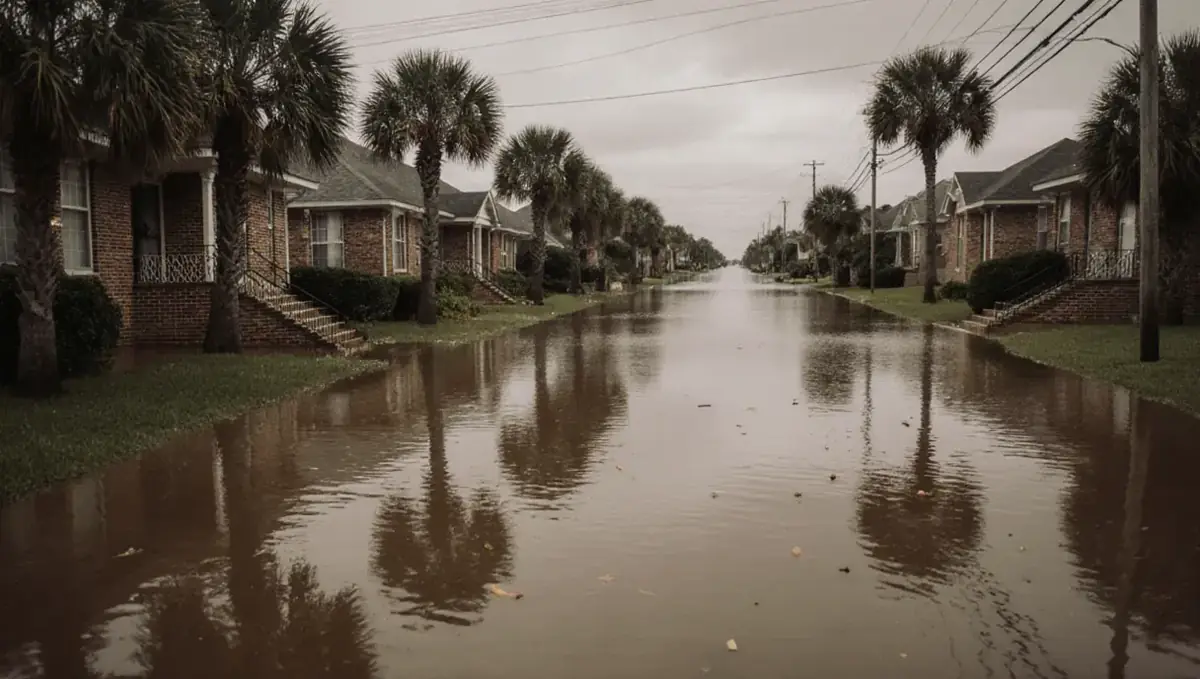
A Dry Border City That Still Floods
Laredo averages only about 19.7 inches of rain a year, and its hot semi-arid climate means long stretches with no measurable rain at all. That dryness can be misleading. Most of the year's rain falls between May and October, with peaks in May and September, and it often arrives in heavy bursts on hard, dry ground that sheds water instead of soaking it up.
The city sits at about 450 feet on the north bank of the Rio Grande, across from Nuevo Laredo. Six major creeks run through the area toward the river: Chacon, San Ildefonso, San Ygnacio, Santa Isabel, Sombrerillito and Zacate. Chacon Creek is dammed on the east side to form Lake Casa Blanca. When a storm stalls overhead, these channels and the streets that feed them can rise quickly.
Inside the home, the everyday culprits are the same as anywhere: a failed water heater, a cracked toilet supply line, an ice maker hose or an air conditioning drain that backs up during the long cooling season. If you are dealing with any of these, call (888) 817-5061 and we will connect you with a local restoration company that handles water damage restoration.
What the Rio Grande Has Taught Laredo
Laredo's most serious floods have come from tropical systems that dump rain across the Rio Grande basin on both sides of the border. Two are worth knowing about:
- 1954, Hurricane Alice. The river crested at Laredo at 62.2 feet, at least 10 feet above the previous record. The International Bridge to Nuevo Laredo was swept away, and water treatment plants failed, interrupting safe drinking water for weeks. Evacuations meant no deaths were recorded in Laredo.
- 2010, Hurricane Alex. Swollen tributaries pushed the Rio Grande's flow to roughly 195,000 cubic feet per second. The Gateway to the Americas and Colombia-Solidarity international bridges were closed on July 8, and the state activated search and rescue resources in Laredo and San Antonio.
These events are reminders that river and creek water should always be treated as contaminated. Floodwater can carry sewage, fuel and debris, which places it in the most serious category (Category 3) under industry terminology. Cleanup of that kind of water is a job for professional flood cleanup, not a shop vacuum.
Before You Pick Up a Mop: Safety and First Moves
A calm first half hour can save a lot of flooring and drywall. Work through these steps in order:
- Shut off the source. Close the fixture valve or the main water shutoff. If you do not know where the main is, find out now, before you need it.
- Keep electricity and water apart. Stay out of standing water near outlets, cords and appliances. Switch off breakers for wet rooms only if you can reach the panel from a dry spot.
- Stay out of moving water. If a creek or street is flooding, do not drive or walk through it. Follow guidance from Webb County Emergency Management.
- Record the damage. Take wide photos of every room, then close-ups of the source, wet materials and damaged belongings.
- Protect what you can. Pull rugs, papers, electronics and photos out of the wet area, and set furniture legs on blocks or foil.
- Get help moving the water. Call (888) 817-5061. The local provider you are connected with can start emergency water extraction and assess hidden moisture.
Drying Out Stucco, Slab and Sandstone
Laredo's buildings range from Spanish Colonial structures downtown to newer subdivisions on the north side. In Barrio Azteca, some buildings date to the 1870s and include rare sandstone construction. Each type of building holds water differently, so a good drying plan starts with understanding what got wet.
Removing the water
Crews use portable or truck-mounted extractors to pull water from tile, carpet and pad. Wet carpet pad is often discarded, especially after dirty water.
Finding where it went
Moisture meters and thermal cameras show how far water wicked into drywall, baseboards and cabinet bases. On slab homes, water can travel under flooring and stay hidden.
Controlled drying
Air movers and dehumidifiers run until readings reach dry standards. Laredo's dry air can help, but masonry, plaster and older materials still need time and monitoring. Learn more about structural drying.
Rebuilding
After the readings confirm the structure is dry, water damage repair in Laredo can begin on drywall, tile, trim and cabinets. Before work begins, ask the company about its licensing, insurance and training, such as IICRC certification.
Storm Leaks, Roof Damage and the Rare Hard Freeze
Strong thunderstorms during the warm season can lift roofing, break windows and drive rain through gaps that are hard to see from the ground. A ceiling stain that appears days later is often the first sign. Tarping openings quickly, then drying the attic and ceiling, is the core of storm damage cleanup in Laredo.
Cold is the less obvious threat. Laredo averages only about 4.6 freezing mornings a year, and the record low is 11 degrees, set in December 1983. Because freezes are rare, many homes have exposed outdoor faucets, attic lines or irrigation backflow assemblies with little insulation. During the February 2021 statewide freeze, pipes burst across South Texas, where killing freezes are uncommon.
- Cover outdoor faucets and wrap exposed pipes when a hard freeze is forecast.
- Open cabinet doors under sinks on exterior walls.
- If a pipe bursts after a thaw, shut off the main first, then document and call for help.
Mold Growth and Texas Licensing Rules
Laredo's dry air does not protect wet materials inside a wall. Per EPA guidance, mold can begin growing within 24 to 48 hours on drywall, carpet pad or wood that stays damp, and summer heat speeds it up. Slow leaks behind dishwashers, under sinks and around AC air handlers are common starting points.
Texas regulates this work. The Texas Department of Licensing and Regulation (TDLR) licenses mold assessment and remediation technicians, consultants, contractors and companies. A license is generally required when mold covers 25 contiguous square feet or more, and the same person or company may not do both the assessment and the remediation on the same project. When the remediation is finished, Texas rules call for a Certificate of Mold Remediation to be issued within 10 days, so keep a copy with your home records.
You can look up licenses through the TDLR License Search. For more on the process, see mold removal and cleanup.
Paperwork That Helps Your Claim
Insurance questions often feel like the hardest part. A few general points apply to most Laredo homeowners:
- Flood is a separate policy. Standard homeowners policies generally exclude flood. Coverage comes through the NFIP or a private flood policy, and NFIP policies typically have a 30-day waiting period.
- Sudden versus gradual. The Texas Attorney General notes that a typical Texas homeowner policy covers sudden, accidental leaks rather than slow ones, and mold remediation may be excluded or capped. Report the loss quickly.
- Keep a record. Save photos, receipts, moisture readings and the restoration company's drying logs.
- Check your flood risk. Look up your address on the FEMA Flood Map Service Center, especially if you live near one of the city's creeks.
WaterQ cannot predict how an insurer will decide a claim, but organized documentation helps.
Homes, Rentals and Commercial Property
Laredo is a major trade gateway, and many calls come from warehouses, offices, retail spaces and rental properties as well as single-family homes. Commercial sites often need moisture mapping across large floor areas, drying planned around business hours, and clear records for owners and insurers.
Property managers can call (888) 817-5061 at any hour to be connected with a local restoration company. If you also manage property up the I-35 corridor, see our pages for San Antonio or along the coast in Corpus Christi.
Laredo Areas and Webb County Communities Served
The free WaterQ line connects callers across Laredo and nearby Webb County communities with independent local restoration providers.
Neighborhoods
- Downtown Laredo
- Barrio Azteca
- San Agustin de Laredo Historic District
- North Laredo
- Central Laredo
- South Laredo
- East Laredo
- Del Mar Blvd area
- Mines Road corridor
- Fort McIntosh area
- Lake Casa Blanca area
Nearby communities
- Rio Bravo
- El Cenizo
- Laredo Ranchettes
- Botines
- Bruni
- Mirando City
- Oilton
- Las Pilas
- Pueblo Nuevo
- Ranchitos East
Laredo Water Damage FAQ
Laredo gets so little rain. Do I really need to worry about flooding?
Yes. Laredo averages only about 19.7 inches a year, but rain tends to arrive in heavy bursts between May and October. Creeks such as Zacate and Chacon drain to the Rio Grande, and tropical systems have pushed the river to record levels, including a 62.2-foot crest in 1954.
Is water from a flooded creek or street safe to clean up myself?
It is best not to. Outside floodwater is treated as contaminated (Category 3) because it can carry sewage, chemicals and debris. Keep children and pets away and let a restoration company remove it with proper protective gear.
Do Texas mold remediation companies need a license?
Generally, yes, for larger jobs. TDLR licenses mold assessors and remediators, and a license is generally required for mold of 25 contiguous square feet or more. The assessor and remediator on a project must be different companies.
Freezes are rare in Laredo. How do I protect my pipes when one is forecast?
Cover outdoor faucets, wrap exposed pipes in the attic or exterior walls, and open sink cabinets on outside walls. If a pipe bursts, shut off the main water valve before doing anything else.
Does WaterQ do the restoration work itself?
No. WaterQ is a free referral service. The 24/7 line connects you with an independent local restoration company, which inspects the damage and does the work.
Local emergency and flood resources
Official sources for alerts, flood maps and preparedness in and around Laredo: