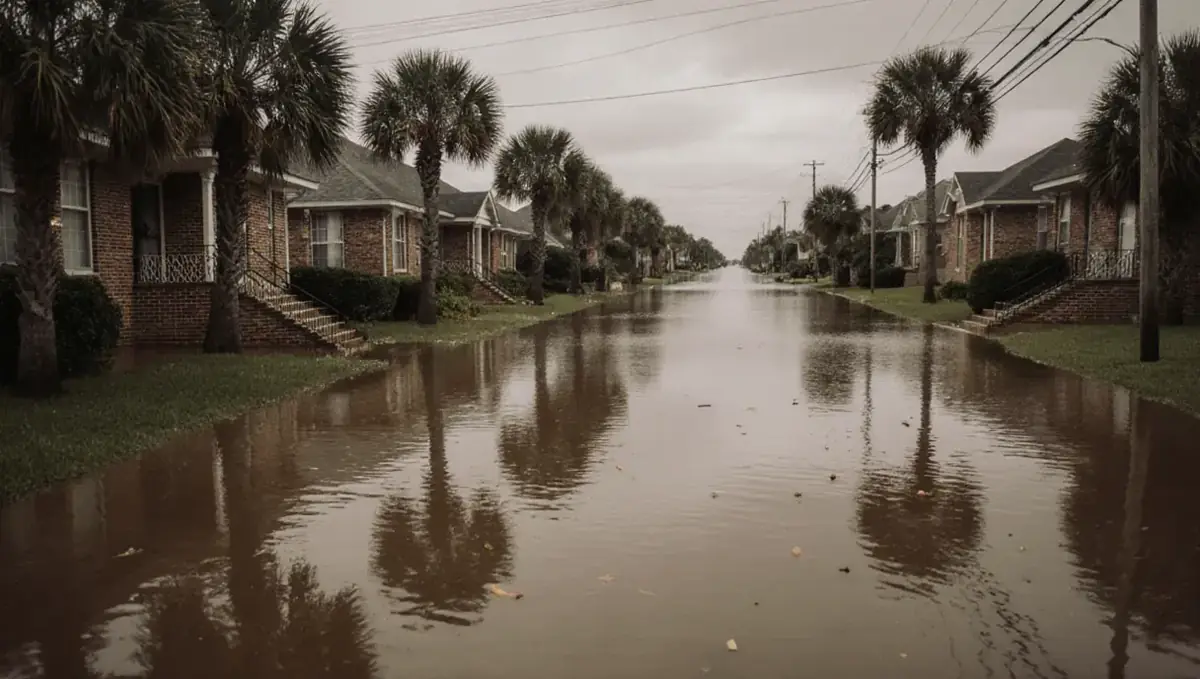
Sixty-Five Inches of Rain a Year on Low Ground
Beaumont sits on the Texas coastal plain about 30 miles inland from the Gulf of Mexico, at an elevation of roughly 16 feet. The Neches River runs along the city's eastern edge and Pine Island Bayou along the north, so water has close neighbors on two sides.
The bigger story is rainfall. Beaumont averages about 65 inches a year, with June, August and September each topping 7 inches on average. That volume, combined with flat ground and humid air, explains why water damage in Beaumont is so often about rain that has nowhere to go rather than one dramatic leak.
- Tropical downpours. Slow storms can stall over Jefferson County and dump historic totals in a day or two.
- River and bayou rises. Upstream rain keeps the Neches high for days after the sky clears.
- Wind-driven roof leaks. Hurricanes and strong storms bring down limbs and peel shingles, letting rain into attics and ceilings.
- Everyday plumbing failures. Supply lines, water heaters and AC drain lines fail here as they do everywhere, and the humidity makes the cleanup harder.
Harvey and Imelda: Back-to-Back Lessons for Jefferson County
Many Beaumont families have been through more than one flood in recent memory. In 2017, Hurricane Harvey brought more than 40 inches of rain to Beaumont and Port Arthur, according to the National Weather Service in Lake Charles, and more than 64,000 homes flooded across Jefferson County. Upstream, the Neches River at Evadale reached its second-highest reading in records going back to 1884.
Just two years later, Tropical Storm Imelda dropped up to 44.29 inches of rain near Fannett, including 31 inches in 12 hours. About 5,100 Jefferson County homes were estimated to have flooded, and vehicles were stranded on I-10 between Beaumont and Winnie for roughly two and a half days.
Two takeaways matter for homeowners. First, homes that never flooded before can still take on water in a record rain. Second, a house that flooded once may have hidden damage from the first event, such as old moisture in wall cavities or subfloors, that complicates the next cleanup.
Your First Moves When Water Gets Into a Beaumont Home
- Put safety first. If water is near outlets, cords or the breaker panel, stay out of it. Never drive or walk through moving floodwater.
- Stop the source if you can. For a plumbing leak, close the main shutoff or the valve at the fixture. Rainwater coming through a roof may need a temporary tarp once it is safe to work outside.
- Sort out what kind of water it is. A burst supply line is usually clean water (Category 1). Water from a slow leak that has sat for days, or from an appliance drain, may be Category 2. Bayou, river or street floodwater is Category 3 and should be treated as contaminated.
- Photograph everything first. Capture the water line on the walls, the source, and damaged furniture and flooring before moving items.
- Save what is portable. Move documents, electronics, photos and rugs to a dry room.
- Get help lined up. Call (888) 817-5061 and we will connect you with a local restoration company that can start emergency water extraction.
From Standing Water to Dry Walls: The Restoration Process
The goal of water damage restoration in Beaumont is the same as anywhere: remove water fast, dry the structure completely, then rebuild. The local climate makes the middle step the hardest.
Water removal
Crews use pumps and extractors to pull standing water out of carpet, pad and hard floors. Saturated carpet pad is usually discarded, especially after Category 2 or 3 water.
Finding hidden moisture
Moisture meters and thermal cameras show how far water wicked up drywall, under cabinets and into the next room. Those readings guide the plan and become part of your claim file.
Drying in humid air
With outdoor air this humid, opening windows rarely helps. Dehumidifiers and air movers do the work, and wet drywall or insulation is often cut out so cavities can dry. Learn more about structural drying.
Rebuild
Once readings confirm materials are dry, water damage repair replaces drywall, trim, flooring and cabinets. Ask any restoration company about its licensing, insurance and training, for example IICRC certification, before you sign anything.
Hurricane Wind, Fallen Trees and Storm Damage Cleanup in Beaumont
Hurricane Rita in 2005 is a reminder that wind can be as damaging as rain here. Rita made landfall near Sabine Pass as a Category 3, gusts reached 105 mph in Beaumont, and more than 125,000 buildings across southeastern Texas were damaged, largely by fallen trees and power lines. Hurricane Ike followed in 2008 with significant damage of its own.
After a storm, water often enters through openings you cannot see from the yard: lifted shingles, a punctured roof deck, damaged soffits or a broken window. Ceiling stains and a musty attic smell are early clues. Storm damage cleanup typically starts with temporary protection such as tarps and board-up, then moves to drying and repairs.
For true flooding from the river, a bayou or overflowing streets, flood cleanup means removing soaked materials, cleaning and sanitizing, and only then drying. Keep an eye on rainfall and water-level readings from Jefferson County Drainage District No. 6 at its rainfall and elevations page.
Mold After a Southeast Texas Leak, and the TDLR Rules
EPA guidance notes that mold can start growing on damp materials within 24 to 48 hours. In Beaumont's warm, wet air, a slow leak behind a dishwasher or a damp crawlspace can turn into a mold problem quickly, which is why fast drying matters as much as the cleanup itself.
Texas regulates this work. In Texas, mold assessment and remediation licenses come from TDLR, the state's Department of Licensing and Regulation; a license is generally needed once mold reaches 25 contiguous square feet or more. One rule surprises many owners: whoever assesses a project cannot also remediate it. Expect a Certificate of Mold Remediation within 10 days of the finished work, and keep it, because Texas sellers must hand copies to buyers.
For mold removal in Beaumont on a larger job, check both the assessor and the remediator on the TDLR License Search before work begins. Our mold removal page explains how containment keeps spores from spreading.
Claims, Renters and Historic Homes
About 46 percent of Beaumont's homes are renter-occupied, so many leaks involve both a tenant and a landlord. Tenants should report water right away and photograph their belongings; owners and property managers should document the building side and get drying started quickly.
- Flood is a separate policy. Standard homeowners policies do not cover flood. NFIP or private flood insurance does, and a new NFIP policy generally has a 30-day waiting period.
- Know what your policy covers. The Texas Attorney General warns that most homeowner policies in the state pay only for sudden, accidental leaks, and mold remediation may be excluded or capped.
- Wind may be separate too. In the 14 first-tier coastal counties, wind coverage is often written through the Texas Windstorm Insurance Association (TWIA), and TWIA covers wind and hail only.
- Older homes need care. Restored early-1900s houses, such as those in the Oaks Historic District, may contain original materials worth drying slowly and carefully.
Businesses, churches and commercial buildings can use the same line. Call (888) 817-5061 to be connected with a local restoration company, and keep every photo, moisture log and receipt for your adjuster.
Beaumont Areas and Southeast Texas Communities
WaterQ's free referral line connects callers across Beaumont and nearby Jefferson, Hardin and Orange County communities with independent local restoration providers.
Neighborhoods
- Downtown Beaumont
- Oaks Historic District
- Crockett Street entertainment district
- Amelia
- Elizabeth
- Voth
- Lamar University area
Nearby communities
- Nederland
- Port Neches
- Groves
- Bevil Oaks
- China
- Nome
- Lumberton
- Vidor
- Port Arthur
- Orange
- Fannett
- Silsbee
Beaumont Water Damage FAQ
Why do Beaumont homes flood in storms that are not hurricanes?
Beaumont averages about 65 inches of rain a year on flat, low ground. When a slow tropical system or a stalled storm drops many inches in a few hours, streets, ditches and bayous can fill faster than they drain, as happened during Tropical Storm Imelda in 2019.
My house flooded during Harvey. Should I worry about the next storm?
It is worth having the home checked if you notice musty odors, warped floors or stains. Materials that stayed damp after an earlier flood can harbor moisture or mold, and a new event adds to that. A moisture inspection gives you a baseline.
What is the 25 square foot rule for mold in Texas?
TDLR generally requires a licensed mold assessor and a separate licensed remediator when mold covers 25 contiguous square feet or more. After the work, a Certificate of Mold Remediation must be issued within 10 days.
Where can I sign up for Jefferson County emergency alerts?
Jefferson County uses STAN, a mass notification system for residents. You can register through the Jefferson County Office of Emergency Management website.
Does WaterQ do the restoration work itself?
No. WaterQ is a free referral service. The 24/7 line connects you with an independent, local restoration company in the Beaumont area, which inspects the damage and performs the work.
Local emergency and flood resources
Official sources for alerts, flood maps and preparedness in and around Beaumont: