How Alabama's Weather Sets Up Water Damage
Warm, moist air from the Gulf shapes Alabama's humid subtropical climate. The state averages about 55 inches of precipitation a year, spread fairly evenly across the calendar, with a relatively dry stretch from August to October.
That dry stretch overlaps the peak of hurricane season, which runs June 1 through November 30. Mobile and Baldwin counties face the greatest surge risk, but storms such as Ivan in 2004 carried damaging winds far inland. The rest of the state deals with heavy-rain flooding, tropical remnants and frequent severe storms.
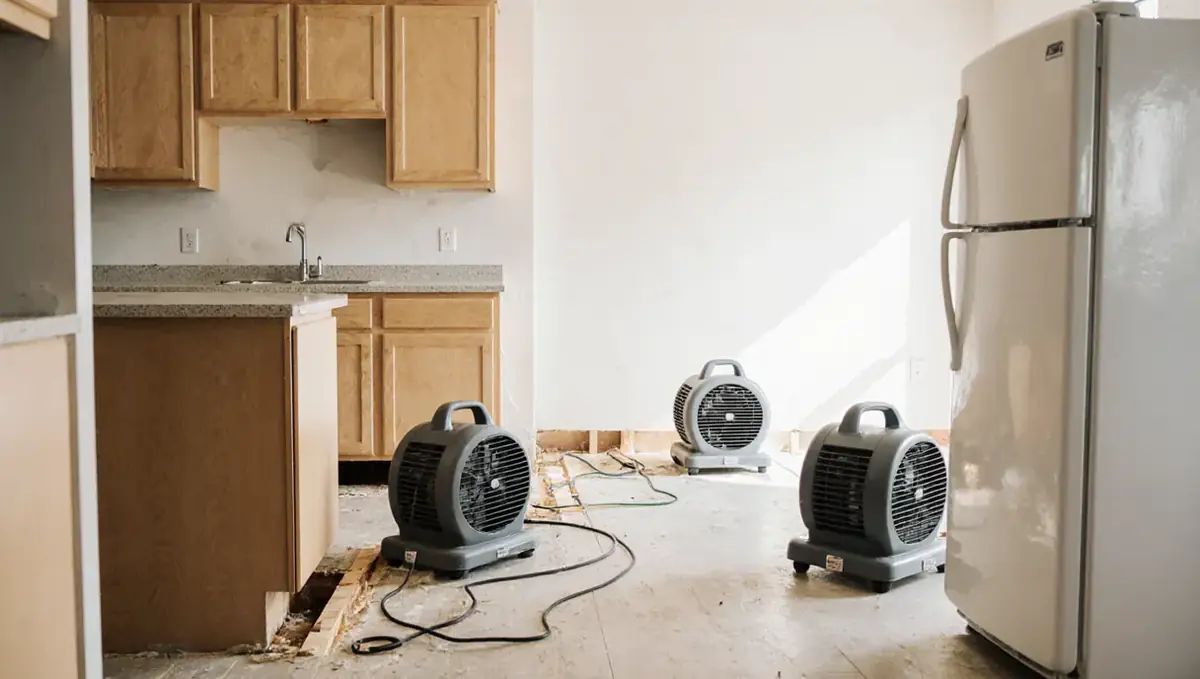
Because rain arrives in every season, there's rarely a long dry spell to let a damp crawlspace or wall cavity air out on its own. Once water gets past the surface, professional structural drying with dehumidifiers and air movers is usually the reliable way to bring materials back to normal moisture levels.
Storms, Surge and Tornadoes: Alabama's Water Risks
Slow hurricanes and extreme rain. Hurricane Sally crawled ashore at Gulf Shores on September 16, 2020 as a Category 2 and dropped 15 to 30 inches of rain across Baldwin County. Rainfall that heavy floods homes well outside surge zones, calling for flood cleanup far from the beach.
Storm surge. Ivan produced 10 to 15 feet of surge along the affected coastline in 2004, and Isaac brought 4.63 feet of surge into Mobile Bay in 2012.
Tornadoes and severe storms. Alabama averages about 43 tornadoes a year. Wind damage often opens roofs and walls, and rain does the rest. Storm damage cleanup typically starts with tarping and moisture mapping.
Everyday leaks. Between storms, burst supply lines, failed water heaters and overflowing appliances cause many Alabama water losses. Clean-water leaks are Category 1, but if they sit for days they can degrade and become harder to clean up.
Rising seas. Local sea level at Dauphin Island rose about 1.6 inches per decade from 1966 to 2020, faster than the global rate.
Five Alabama Regions, Five Different Concerns
Gulf Coast
Mobile, Daphne, Fairhope, Spanish Fort, Foley, Gulf Shores and Orange Beach face hurricane surge and extreme rainfall. Sally pushed 7 to 9 feet of inundation into the back bays. Our Mobile water damage page goes deeper on the coast.
Birmingham metro
Hilly terrain and urban creeks around Birmingham, Hoover, Vestavia Hills and Homewood can flash flood during heavy thunderstorms, and tropical remnants like Ivan have brought damaging winds this far north.
Tennessee Valley
In Huntsville, Madison, Decatur, Athens and Florence, heavy rain and severe storms can push creeks and rivers in the Tennessee River system out of their banks.
West and Central Alabama
Tuscaloosa, Northport, Montgomery and Prattville sit along the Black Warrior and Alabama river systems, where river flooding, severe storms and tornadoes are the main threats.
East and Southeast Alabama
Auburn, Opelika, Dothan, Enterprise and Gadsden get flooding rain when tropical systems move inland. Tropical Storm Alberto caused major flooding in the Choctawhatchee River basin in 1994.
Looking Back at Alabama's Major Water Events
Tropical Storm Alberto's July 1994 flooding struck parts of Georgia, Alabama and Florida, killing 33 people, with damage across the three states estimated at nearly $1 billion.
A decade later, Hurricane Ivan made landfall just west of Gulf Shores as a Category 3 on September 16, 2004, causing major damage in Baldwin County. Hurricane Isaac followed in 2012 with 3 to 5 feet of inundation along the coast. Then, on the same date in 2020 that Ivan hit, Sally came ashore and dropped up to 29.99 inches of rain in Orange Beach.
The pattern across these storms is worth remembering: surge does the most damage right on the coast, but slow-moving systems and their rain can flood homes many miles inland. Planning for both, and knowing who to call afterward, makes recovery less chaotic.
Licensing, Mold Work and Choosing a Contractor
The Alabama Home Builders Licensure Board (HBLB) licenses residential home builders and remodelers when the cost of the work exceeds $10,000, and residential roofers when the job exceeds $2,500. If your water damage repair includes rebuilding or a new roof, check the company with the licensee search at hblb.alabama.gov. Commercial and larger general contracting falls under the separate Alabama State Licensing Board for General Contractors.
For mold removal, ask the company about its training and certifications, such as IICRC, and request written moisture and clearance documentation when the work is done. Mold can begin growing within 24 to 48 hours on wet materials, so the drying plan matters as much as the cleanup.
Insurance and Roof Programs Worth Knowing
Flooding falls outside a standard homeowners policy. Coverage comes from an NFIP or private flood policy, and a new NFIP policy generally has a 30-day waiting period. Sally showed that surge zones are not the only places at risk.
The Alabama Department of Insurance runs Strengthen Alabama Homes, which offers grants to help eligible homeowners upgrade to a FORTIFIED roof that better keeps out wind-driven rain. Eligibility and terms change over time, so check the program directly.
After a tornado or hurricane, tarp roof openings quickly and photograph the damage before cleanup to support your claim. Keep receipts for emergency work, and save a few samples or photos of damaged flooring and materials before they're hauled away.
Connecting With a Local Pro Through WaterQ
WaterQ is a free referral service, not a restoration contractor. Call (888) 817-5061 and we connect you with a trusted, local restoration company that serves your area of Alabama. That company handles the inspection, water extraction, drying and repairs with you directly.
In the meantime, shut off the water main for plumbing leaks, avoid wet areas near electricity, and pull rugs and valuables out of standing water. We're available 24/7, so call (888) 817-5061 any time, day or night.
Frequently Asked Questions
Does my homeowners policy cover hurricane flooding in Alabama?
Usually not. Standard homeowners policies exclude flood. You need an NFIP or private flood policy, and a new NFIP policy generally has a 30-day waiting period.
When does a contractor need an HBLB license in Alabama?
The Alabama Home Builders Licensure Board licenses residential builders and remodelers for work costing more than $10,000, and residential roofers for jobs over $2,500. You can check a licensee on hblb.alabama.gov.
What is a FORTIFIED roof?
It's a roof built to a stronger standard that helps keep wind-driven rain out. The Strengthen Alabama Homes program offers grants to help eligible homeowners upgrade, with terms that change over time.
A tornado damaged my roof. What should I do first?
Make sure everyone is safe, avoid wet electrical areas, photograph the damage, and get the roof tarped as soon as possible to limit rain getting inside.
Does WaterQ send its own crew?
No. WaterQ is a free referral service that connects you with an independent, local restoration company. Call (888) 817-5061, available 24/7.