Where the Two Forks of the San Gabriel Meet
Georgetown, the Williamson County seat, grew up where the North Fork and South Fork of the San Gabriel River come together. A city park marks the confluence, and just upstream on the South Fork is Blue Hole, a well-known swimming spot. The river is a big part of what makes the town pleasant, and it is also the reason water damage in Georgetown has a long local history.
A 25-foot high-water mark at Blue Hole Park records flooding from November 2001. The South Fork spilled over the Blue Hole dam again in July 2002, and the river flooded once more in the summer of 2007. Those were reminders that a river that looks calm most of the year can rise quickly after heavy Hill Country rain.
Georgetown averages roughly 37 inches of rain a year, with May and September typically the wettest months. Much of that can fall in a few hours during a slow-moving storm.
1921, Lake Georgetown and Living With Flood Control
The flood that shaped Georgetown's approach to flood control came in September 1921, when the remnants of a hurricane stalled over Williamson County. Georgetown received more than 18 inches of rain, and Taylor got more than 23 inches. Near Thrall, in the eastern part of the county, the storm total reached 39.7 inches in 36 hours, and the flooding caused heavy loss of life and property across the county.
Decades later the U.S. Army Corps of Engineers built a dam on the North Fork, and Lake Georgetown opened in October 1979. The lake helps manage floodwater and supplies water to both Georgetown and Round Rock. Flood control reduces risk on the main river, but it does not stop smaller tributaries, street drainage or roof leaks from putting water inside homes.
Limestone, Karst and Fast-Moving Runoff
The Balcones Escarpment passes through Georgetown. West of Interstate 35, the ground is honeycombed limestone with caves, sinkholes and fissures; Inner Space Cavern is the best-known example. Rain can disappear quickly into that rock, but on thin soils and paved lots it also races downhill toward low spots, garages and patio doors.
East of the escarpment the county turns flatter, with darker clay soils. That mix means two homes a few miles apart can face very different drainage problems. If water keeps showing up along the same wall or slab edge after storms, a restoration company can trace moisture before the source is repaired.
Single-Story Homes, Sun City and Historic Buildings
Georgetown has grown rapidly, climbing from about 67,000 residents in 2020 to an estimated 101,000 in 2024. Sun City Texas, an age-restricted community that opened in 1995, had roughly 15,700 residents by 2021. Many homes there are single-level, which makes it easier to move around but means a slab leak or supply-line failure can affect most of the living space at once.
For older homeowners, a big leak is also a safety issue. Wet tile and carpet are slippery, and moving furniture is a job for someone else. Ask the restoration company to explain each step, where equipment will go, and how long the fans and dehumidifiers are expected to run.
Downtown, the courthouse square and districts such as Belford and University Avenue/Elm Street preserve Victorian-era buildings. Water damage repair in older structures often calls for extra care with plaster, wood floors and original trim, so ask how a provider handles historic materials.
First Steps When Water Gets Inside
- Stop the flow. Shut the main water valve or the valve at the leaking fixture.
- Watch for electrical hazards. Do not step into standing water near outlets or appliances. If the breaker panel is dry and easy to reach, turn off power to the wet area.
- Know what kind of water it is. A clean supply line is Category 1. River water, storm runoff and sewage backups are Category 3 and should be handled by professionals in protective gear.
- Take photos and video. Record the source, standing water and damaged items before cleanup.
- Check for outages. Georgetown runs its own utility; report electric or water outages through the City's utility outage page.
- Get connected. Call (888) 817-5061 for help finding a local company that offers water extraction and drying.
How Drying and Repairs Usually Unfold
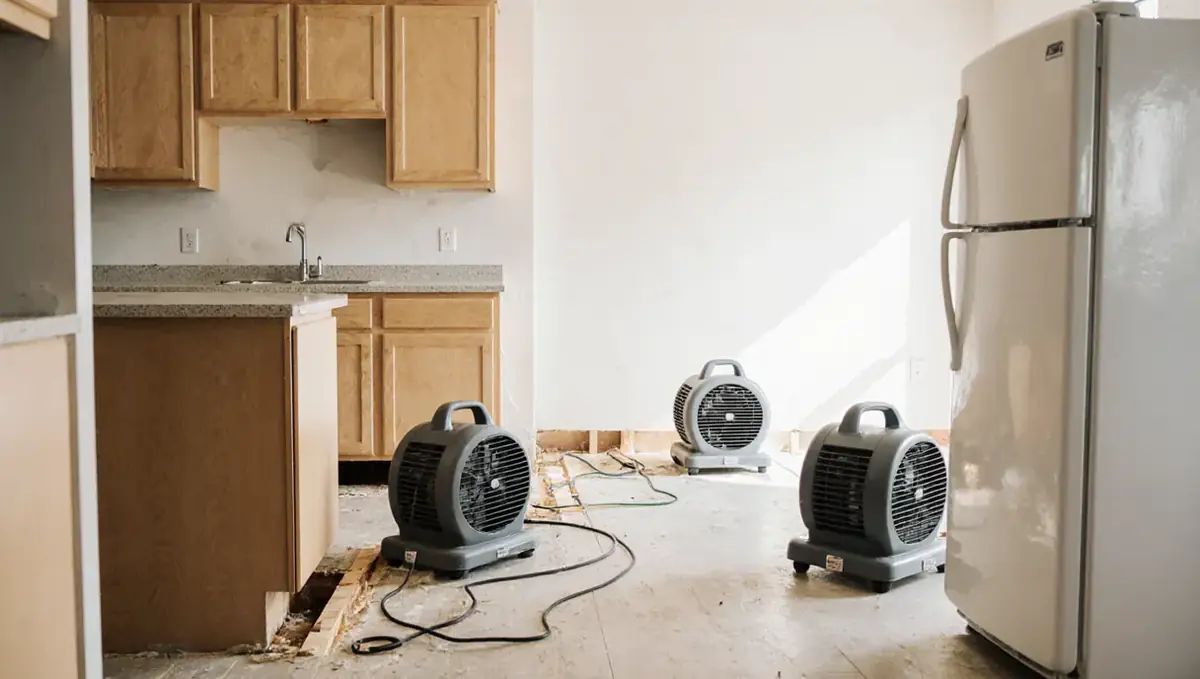
The restoration company you are connected with will usually start by extracting standing water and mapping moisture with meters and thermal imaging. That map guides where drywall is cut, which baseboards come off and how many air movers and dehumidifiers are needed.
Drying is checked with daily readings until materials reach acceptable levels. Then the project moves into water damage repair, from drywall and paint to cabinets and flooring. If river or storm water got in, flood cleanup in Georgetown begins with flood damage restoration: removing contaminated materials and sanitizing before anything is dried.
Ask any company about its licensing, insurance and training, including IICRC certification, and request a written scope before work begins.
Mold Removal, Storms and Your Insurance File
Per EPA guidance, mold can begin to grow within 24 to 48 hours on materials that stay wet. For larger problems, Texas requires licensed professionals: TDLR licenses mold assessors and remediators, and a license is generally needed for 25 contiguous square feet or more. One company may not both assess and remediate the same Georgetown project, and a Certificate of Mold Remediation must be issued within 10 days of completion. Read more about mold removal before hiring anyone for mold cleanup in Georgetown.
Storms are the other big source of claims. On May 27, 1997, damaging hail struck Georgetown during the same outbreak that produced the deadly F5 tornado in nearby Jarrell. For roof and window damage, storm damage cleanup starts with stopping more water from getting in.
- Standard homeowners policies generally exclude flood; NFIP policies usually take 30 days to begin.
- The Texas Attorney General notes many Texas policies cover only sudden and accidental leaks and may limit mold coverage.
- Keep photos, receipts and drying logs together.
Homeowners, landlords and business owners can reach WaterQ at (888) 817-5061 around the clock.
Georgetown Areas and Williamson County Communities
WaterQ's free referral line connects callers across Georgetown and nearby Williamson County towns with independent local restoration providers.
Neighborhoods
- Downtown / Courthouse Square
- Sun City Texas
- Belford National District
- University Avenue/Elm Street District
- Southwestern University area
- Williams Drive corridor
- Serenada
- Heritage Oaks
- Oaks at Wildwood
Nearby communities
- Round Rock
- Jarrell
- Taylor
- Granger
- Leander
- Liberty Hill
- Hutto
- Florence
- Weir
Georgetown Water Damage FAQ
Does Lake Georgetown protect my home from flooding?
It helps manage floodwater on the North Fork of the San Gabriel River, but it does not prevent flooding from smaller creeks, street drainage or heavy rain on your property. Homes outside mapped flood zones can still take on water.
How do I get emergency alerts in Georgetown?
Register with WarnCentralTexas to receive alerts by phone, text or email. Georgetown also has 23 outdoor warning sirens, which are tested the first Saturday of each month at 11 a.m. and are meant to warn people who are outside.
Can the same company test for mold and remove it in Texas?
Not on the same project. Texas rules require the mold assessment and the remediation to be done by different licensed parties when a license is required, generally for 25 contiguous square feet or more.
My Sun City home had a slab leak. What happens next?
A plumber locates and repairs the leak, and a restoration company extracts water, checks moisture under flooring and inside walls, and dries the home before repairs. Document the damage and contact your insurer promptly.
Is WaterQ a Georgetown restoration company?
No. WaterQ is a free referral service available 24/7 that connects you with an independent, local restoration company, which then handles the inspection and the work.
Local emergency and flood resources
Official sources for alerts, flood maps and preparedness in and around Georgetown: