Life Next to Fort Hood Shapes How Water Damage Happens
Killeen is the largest city in Bell County, with about 153,000 residents in 2020, and it sits right against the main cantonment of Fort Hood. Nearly 65,000 soldiers and family members are tied to the post, so the city has a large share of renters, frequent move-ins and move-outs, and homes that may sit vacant between occupants.
That pattern affects water damage in a practical way. A supply line that fails in an empty house, or a pipe that freezes while a family is away on leave, can run for days before anyone notices. By then water has soaked subfloors, wicked up drywall and started the clock on mold.
- Before leaving a home empty, shut off the main water valve and set the thermostat to protect pipes in cold weather.
- Ask a neighbor or property manager to check in during long absences.
- Renters should report leaks to the landlord right away and keep their own photos and records.
If you come home to standing water, call (888) 817-5061 to reach a local restoration professional, day or night.
Lakes, Creeks and Flooded Roads in Bell County
Killeen is part of the Brazos River basin. Stillhouse Hollow Lake, impounded on the Lampasas River in 1968, lies to the south, and Belton Lake on the Leon River lies to the northeast. Both are U.S. Army Corps of Engineers reservoirs built partly for flood control, and they help keep river flooding in check downstream.
Reservoirs cannot stop a cloudburst over a neighborhood, though. In September 2010, the remains of Tropical Storm Hermine caused severe flooding in Bell County, and a 19-year-old drowned after her car was swept off a flooded road. Heavy downpours can quickly overwhelm local drainage, low streets and backyards.
Never drive into water covering a road. At home, water that comes in from outside should be treated as contaminated, and flood cleanup in Killeen usually means removing soaked drywall and flooring, disinfecting surfaces and drying the structure thoroughly.
Newer Subdivisions Still Spring Leaks
Killeen grew from about 49,000 people in 1980 to nearly 128,000 by 2010, so a lot of its housing went up in the last few decades. Newer construction does not rule out water damage. Common culprits include:
- Failed washing machine, dishwasher and refrigerator lines.
- Water heaters in garages or closets that leak slowly or burst.
- Plumbing fittings and toilet supply connections that loosen over time.
- Roof leaks after hail or wind-driven rain.
- Frozen lines in attics or exterior walls. Killeen's record low is -2 F, set in December 1989, and the February 2021 freeze burst pipes across Texas.
Fix the source first. In Texas, plumbers are licensed by the State Board of Plumbing Examiners, and it is worth confirming a license before work begins.
Your First Moves When Water Shows Up
- Stop the source. Turn off the fixture valve or the main shutoff. In a rental, call your landlord or manager as soon as the water is off.
- Protect yourself from shock. Do not wade through water near outlets or appliances. Cut power at the breaker only if you can do it from a dry spot.
- Figure out what kind of water it is. Clean water from a supply line is Category 1. Toilet overflows with waste and outside floodwater are Category 3 and need protective handling.
- Take pictures. Photograph the source, wet areas and belongings, including serial numbers on damaged electronics.
- Move valuables. Uniforms, documents, photos and electronics should go to a dry room first.
Drying a Killeen Home the Right Way
Water damage restoration in Killeen typically follows a set sequence, and skipping steps tends to cause problems later.
Extraction
The job starts with water extraction: pumps and extractors remove standing water from carpet, pad and hard surfaces so less of it soaks into the structure.
Mapping and drying
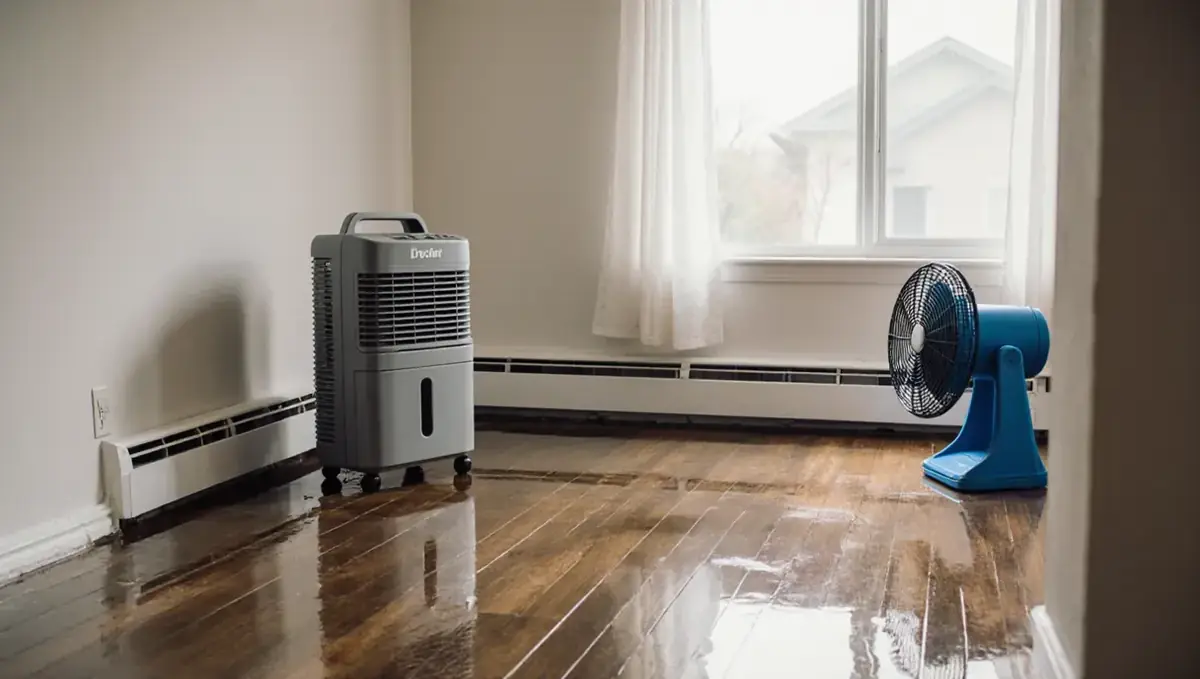
Technicians check walls, floors and cabinets with moisture meters and infrared cameras to find wet areas you cannot see. Dehumidifiers and air movers then run, with readings logged until materials are dry. That process is called structural drying.
Repairs
When the readings say dry, crews replace drywall, baseboards, flooring and cabinetry as needed. Before hiring anyone, ask about licensing, insurance and training, such as IICRC certification.
Mold After a Missed Leak: Texas Rules to Know
Following EPA guidance, mold can begin growing on wet materials in 24 to 48 hours. A leak discovered after a long trip or a move-in inspection may already have mold behind the baseboards or under the carpet pad.
Mold assessment and remediation in Texas are regulated by TDLR, the Texas Department of Licensing and Regulation. When the moldy area adds up to about 25 contiguous square feet or more, a licensed professional is generally required. A Killeen homeowner cannot hire one company to both assess and remediate the same project, because the law keeps those roles separate. Within 10 days after remediation, a Certificate of Mold Remediation must be issued, and sellers must give buyers copies of these certificates.
More on mold removal and how containment works is on our services page.
Renters, Landlords and Insurance Paperwork
Because so many Killeen homes are rentals, a water loss often involves two policies: the landlord's property coverage for the building and the tenant's renters policy for belongings.
- Tenants: notify the landlord in writing, photograph your damaged items and contact your renters insurer.
- Owners and managers: document the unit before and after drying, keep moisture logs and save every invoice.
- Sudden leaks: the Texas Attorney General says most Texas homeowner policies cover only sudden and accidental leaks and may exclude or cap mold work.
- Flood: standard policies generally exclude flood. NFIP or private flood coverage is separate, and an NFIP policy usually has a 30-day waiting period.
For water damage repair in Killeen, call (888) 817-5061 and get connected with a local company that can provide thorough documentation for the claim. Learn more about water damage repair.
Parts of Killeen and Central Texas Towns We Cover
WaterQ's free referral line connects callers across Killeen and the surrounding Bell and Coryell County area with independent local restoration providers.
Neighborhoods
- Downtown Killeen (Avenue D)
- Marlboro Heights
- Killeen Mall area
- Texas A&M University-Central Texas area
- Central Texas College area
- Stan Schlueter Loop corridor
- Trimmier Road corridor
- W.S. Young Drive corridor
- Fort Hood Street corridor
Nearby communities
- Harker Heights
- Copperas Cove
- Nolanville
- Belton
- Fort Hood
- Temple
- Morgan's Point Resort
- Little River-Academy
Killeen Water Damage FAQ
I'm a renter in Killeen and water came through my ceiling. Who fixes it?
The landlord or property manager is usually responsible for repairing the building, so report the leak to them in writing right away. Your renters insurance may cover your belongings. Take photos of everything before it is moved.
How can I protect my Killeen home while I'm away or between assignments?
Shut off the main water valve, keep the heat on during cold weather and ask a neighbor or manager to check the home regularly. Leaks in empty homes can run for days before anyone notices.
Do Stillhouse Hollow and Belton Lake prevent flooding in Killeen?
They are flood-control reservoirs that reduce river flooding downstream, but they cannot stop flash flooding from heavy local rain. Check your address on the FEMA Flood Map Service Center and consider flood insurance.
Where do I find boil water notices in Killeen?
The City of Killeen posts water notices, including boil water notices and waterline work, in its online Alert Center, and residents can sign up to receive alerts.
Who will actually do the work if I call WaterQ?
WaterQ is a free referral service, not a contractor. When you call, available 24/7, we connect you with an independent, local restoration company that performs the inspection, drying and repairs.
Local emergency and flood resources
Official sources for alerts, flood maps and preparedness in and around Killeen: