What mold remediation means
Mold remediation is the process of safely removing mold growth from a building and correcting the moisture problem that allowed it to grow. It is often called mold removal or mold cleanup. Mold spores exist naturally almost everywhere, so the goal is not to make a home sterile. It is to remove active growth and bring mold levels back to normal.
No cleanup lasts if the moisture source remains. Fixing leaks, drying wet materials and controlling indoor humidity are as important as the cleanup itself.
Where mold usually comes from
- Water damage that was not dried quickly or completely
- Slow leaks under sinks, behind walls or around toilets and showers
- Roof leaks that wet attic insulation and sheathing
- Flooding and sewer backups
- High indoor humidity and poor ventilation in bathrooms, basements and crawlspaces
- Condensation on cold surfaces such as windows, ducts and pipes
EPA guidance says drying water-damaged materials within 24 to 48 hours can help prevent mold growth. That is why fast structural drying after a leak is the best prevention.
When to call a professional
EPA guidance suggests that a homeowner can often handle a small mold problem, generally less than about 10 square feet, with proper precautions. Professional help is advisable when:
- The moldy area is larger than about 10 square feet
- Mold is inside walls, in ductwork or in the HVAC system
- The mold followed sewage or contaminated floodwater
- Someone in the home has asthma, allergies, a weakened immune system or other health concerns
- You smell a persistent musty odor but cannot find the source
If you have health concerns, talk with a medical professional.
How professional mold remediation works
- Inspection. The professional looks for visible mold and the moisture source, often using moisture meters and thermal imaging.
- Fix the moisture. The leak or humidity problem is corrected, sometimes by a plumber or roofer.
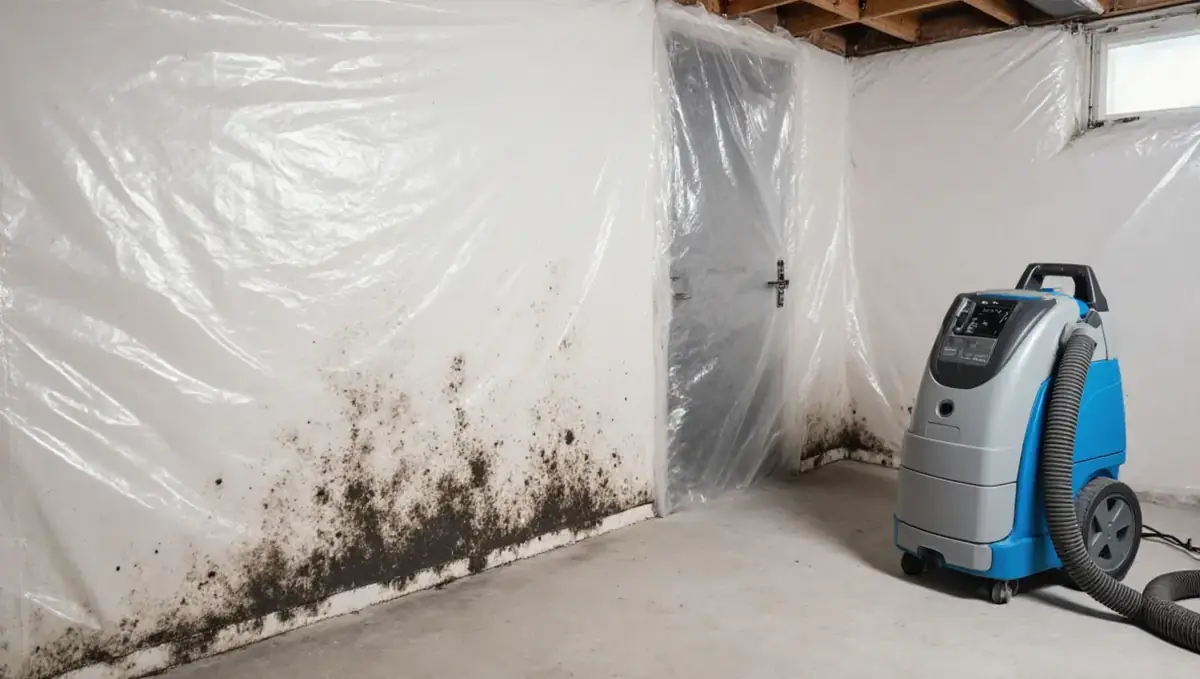
- Containment. Plastic sheeting isolates the work area, and HEPA-filtered air machines create negative air pressure so spores do not spread to the rest of the home.
- Protective equipment. Workers wear respirators, gloves and protective clothing.
- Removal. Porous materials with mold growth, such as drywall, insulation and carpet, are usually removed and bagged. Hard surfaces are cleaned.
- HEPA cleaning. Surfaces are HEPA-vacuumed and wiped to remove spores and debris.
- Drying. Remaining materials are dried to normal moisture levels.
- Verification. The area is checked visually and, in some cases, through post-remediation testing before rebuilding.
Painting over mold or spraying it with bleach does not fix the problem. Mold must be physically removed, and the moisture source must be corrected.
Does mold testing make sense?
If you can see or smell mold, testing is usually not needed to know you have a problem. EPA guidance notes that sampling is generally not required when mold is visible. Testing can make sense when:
- You suspect hidden mold but cannot find it
- There are health concerns and a doctor wants more information
- You need post-remediation verification, such as for a real estate transaction
- There is a dispute or legal question
When testing is done, it is ideally handled by an independent assessor who is not also doing the cleanup.
State mold licensing
Some states license mold work. A few examples:
- Florida licenses mold assessors and mold remediators through the Department of Business and Professional Regulation. The license generally applies to jobs over 10 square feet.
- Texas licenses mold assessors and remediators through the Texas Department of Licensing and Regulation, generally for areas of 25 contiguous square feet or more, and the same person or company may not both assess and remediate the same project.
- Louisiana requires a mold remediation license from the State Licensing Board for Contractors for remediation work above a set dollar amount.
Rules change and vary by state, so check your state's licensing board before you hire. Our service areas pages include state-specific information.
Cost and insurance considerations
Mold remediation costs depend on the size and location of the growth, how much material must be removed, the containment needed, whether HVAC systems are involved, and whether testing is done.
Insurance coverage for mold varies widely. Many homeowners policies cover mold only when it results from a covered water loss, such as a sudden pipe burst, and some policies exclude or cap mold coverage. Mold from long-term leaks or humidity is often excluded. Read your policy and report water damage promptly.
Questions to ask a mold remediation company
- Do you hold any mold license required in this state, and are you insured?
- Are your technicians trained in mold remediation, for example through IICRC courses?
- How will you contain the area and protect the rest of my home?
- Will you find and address the moisture source?
- How will you verify the work is complete?
How WaterQ can help
WaterQ is a free referral service and does not perform mold remediation. Call (888) 817-5061 any time, day or night, and we will connect you with a local restoration company that handles mold cleanup. If your mold started with a leak, our water damage restoration page explains how to stop the moisture first.
Find mold removal help near you
WaterQ connects callers with local restoration companies in these states. Choose yours to find your city:
Frequently Asked Questions
How quickly can mold grow after water damage?
EPA guidance says drying water-damaged materials within 24 to 48 hours can help prevent mold growth. Materials that stay wet longer are at greater risk.
Can I clean mold myself?
EPA guidance suggests homeowners can often handle small areas, generally less than about 10 square feet, with gloves, eye protection and an N95 respirator. Larger areas, hidden mold, mold from sewage or floodwater, or health concerns call for a professional.
Does bleach kill mold?
Bleach does not fix a mold problem. Mold should be physically removed from hard surfaces, porous materials with growth are usually replaced, and the moisture source must be corrected. Never mix bleach with ammonia or other cleaners.
Do I need mold testing?
Usually not if mold is visible. Testing can help when mold is suspected but hidden, when there are health concerns or when verification is needed after cleanup.
Does insurance cover mold removal?
It depends on your policy. Mold is often covered only when it results from a covered water loss, and some policies exclude or limit mold coverage. Check your policy and talk to your insurer.
Will mold come back after remediation?
It can if the moisture problem is not fixed. Correcting leaks, drying materials and controlling humidity are the keys to keeping mold from returning.