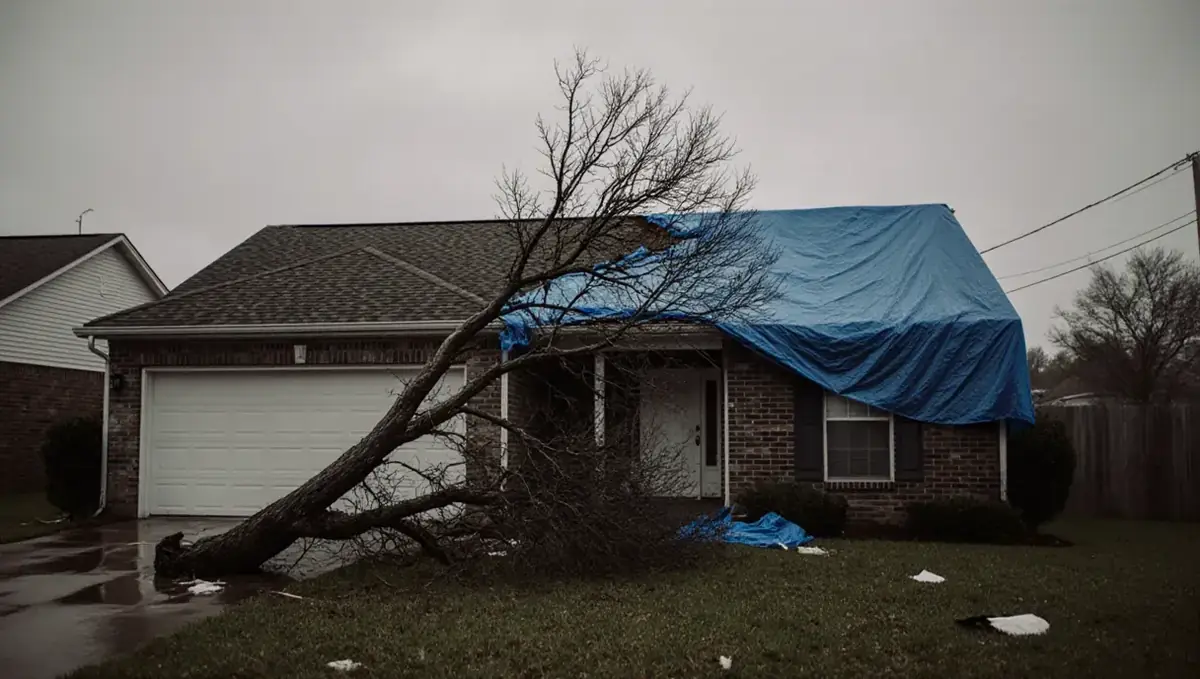
Dallas Weather Hits From Every Direction
Dallas sits at the lower end of Tornado Alley, in the Blackland Prairies of North Texas. Spring and fall are the wettest stretches of the year, with rainfall peaking in May and October, and spring is the main season for large hail and tornadoes. Winters are usually mild, yet the city still sees about 26 nights a year at or below freezing.
That mix means water damage in Dallas comes from more sources than in many cities: roofs punctured by hail, walls opened by wind, pipes split by a hard freeze, and creeks that rise faster than drivers expect. Each one calls for a slightly different response, which is why it helps to know what you are dealing with.
Hail and Wind: The Leak You Might Not See Yet
Dallas-Fort Worth has had some of the costliest hailstorms in U.S. history, including the 1995 Mayfest storm and the June 13, 2012 storm that dropped baseball- to softball-sized hail. Damaged shingles, flashing and skylights often let rain in during the next storm rather than the first one.
Tornadoes and severe thunderstorms can open a building all at once. In October 2019, an EF3 tornado with estimated 140 mph winds tracked more than 15 miles from northwest Dallas into Richardson, damaging homes and businesses along its path.
After a hailstorm, have the roof inspected even if the ceilings look fine, and check the attic for damp insulation or water-stained decking. If water is already coming in, a restoration crew can tarp or board openings, extract water and start drying. Our storm damage cleanup page explains what that usually involves.
Frozen Pipes and Water Main Breaks
Hard freezes are infrequent in Dallas, but they can be severe. During the February 2021 storm, DFW fell to -2 F and stayed at or below freezing for 139 consecutive hours. The city averaged about 30 water main breaks a day, ten times the normal rate, and burst pipes damaged homes across the metro.
Pipes in attics, exterior walls and garages are the most exposed. Before a cold snap:
- Insulate exposed and attic pipes and cover outdoor faucets.
- Let faucets drip during extreme cold.
- Find your main shutoff and keep a meter key handy in case you need to close the valve at the street.
If a pipe bursts, shut off the water right away, then call (888) 817-5061. A frozen line can split in more than one place, so expect the crew to check walls and ceilings well beyond the obvious leak.
Flash Flooding Along Dallas Creeks
The Trinity River runs through a floodway lined with earthen levees about 50 feet tall, strengthened by the U.S. Army Corps of Engineers in the 1950s. The City notes that flooding also happens along White Rock Creek and Five Mile Creek and in interior drainage areas behind the levees, so homes far from the river can still take on water.
Heavy bursts of rain do the most damage. On August 21 and 22, 2022, DFW recorded 9.19 inches in 24 hours, with some Dallas locations getting more than 3 inches in a single hour, and Dallas County issued a disaster declaration. Dallas has an ALERT sensor network and a Flooded Roadway Warning System, but low-water crossings and underpasses still flood fast, so never drive through water on the road.
Check your address on the City of Dallas floodplain map. When floodwater does get inside, it is treated as contaminated, and professional flood cleanup is the safer route.
Clay Soil, Slab Leaks and Older Plumbing
Much of Dallas is built on Houston Black clay, the Texas state soil, which shrinks in dry spells and swells when wet. That movement can shift slab foundations and crack buried water and sewer lines. Older neighborhoods such as Lakewood, largely built from the early 1900s through the 1950s, also have many homes with aging plumbing.
Signs of a hidden supply-line or slab leak include an unexplained jump in the water bill, warm spots on a slab floor, new cracks, or flooring that starts to buckle. A plumber stops the leak; a restoration company finds and dries the water it left behind.
From Wet Floors to Finished Repairs
Once the source is under control, restoration follows a predictable path:
- Inspection and photos to document damage for your insurer and classify the water as clean, gray or contaminated.
- Water extraction with powerful vacuums to remove standing water from carpet, pad and hard surfaces. See water extraction.
- Moisture mapping with meters and infrared cameras to find water hiding in walls, ceilings and subfloors.
- Drying with air movers and dehumidifiers, checked daily until materials reach normal readings. See structural drying.
- Repairs such as replacing drywall, insulation, flooring and trim.
Throughout, keep copies of the restoration company's photos, moisture logs and invoices. Ask any company you hire about its licensing, insurance and training, for example IICRC certification.
Apartments, Offices and Storefronts
Commercial and multifamily properties add layers to a water loss. In a Dallas apartment building, one burst sprinkler or supply line can send water through ceilings into units below. An office in Uptown or a shop in Deep Ellum may have electronics, inventory and records to protect, plus customers and staff to keep safe.
For these properties, a good restoration plan maps every affected unit or suite, sets up drying zones so unaffected areas can stay open, and documents readings for owners, tenants and insurers. Property managers should keep shutoff locations for each building on file and make sure after-hours staff know them.
Single-family homeowners benefit from the same discipline on a smaller scale. For water damage restoration in Dallas at a house, a duplex or a commercial building, call (888) 817-5061 and describe the property so we can connect you with local providers who fit the job.
Mold Prevention and Texas Licensing
Mold can start growing within 24 to 48 hours of materials getting wet, which is why fast drying after a roof leak or burst pipe matters. If mold is already visible or you notice a musty odor, Texas rules apply.
The Texas Department of Licensing and Regulation licenses mold assessment and remediation professionals. A license is generally required for mold of 25 contiguous square feet or more, and the assessor and the remediator on a project must be different people or companies. After remediation, a Certificate of Mold Remediation must be issued within 10 days. Learn more on our mold removal page.
Insurance Notes for Dallas Property Owners
Most Texas homeowner policies cover sudden and accidental water leaks, such as a burst pipe, but the Texas Attorney General notes they may exclude or cap mold remediation. Standard policies generally exclude flood, so creek or street flooding requires NFIP or private flood coverage, and new NFIP policies usually take 30 days to begin.
For hail and wind claims, photograph the roof, attic and any interior stains as soon as it is safe, and report promptly. Apartment managers, offices and retail owners should also document business interruptions and keep a timeline of the event. For any property, call (888) 817-5061 any time, day or night, to connect with local providers who handle residential and commercial losses.
Where in Dallas We Can Connect You With Help
Local restoration companies serve neighborhoods across Dallas as well as the surrounding cities in the Metroplex.
Neighborhoods
- Downtown
- Uptown
- Oak Lawn
- Deep Ellum
- Cedars
- Design District
- Victory Park
- Knox/Henderson
- Lower Greenville
- M Streets
- Lakewood
- East Dallas
- Lake Highlands
- Preston Hollow
- Far North Dallas
- Oak Cliff
- Bishop Arts District
- Kessler Park
- South Dallas
- Pleasant Grove
Nearby communities
- Highland Park
- University Park
- Irving
- Garland
- Mesquite
- Richardson
- Plano
- Grand Prairie
- Addison
- Farmers Branch
- Duncanville
- Balch Springs
Dallas Water Damage FAQ
My roof was hit by hail but nothing is leaking. Should I still have it checked?
Yes. Hail can crack shingles and flashing in ways that only show up during the next heavy rain. Have the roof inspected, look in the attic for damp spots, and photograph any damage for your insurance claim.
What should I do first if a pipe bursts during a Dallas freeze?
Shut off the main water valve right away and turn off power to any wet area if it is safe. Then photograph the damage and call (888) 817-5061 to connect with a local restoration company for extraction and drying.
Can my home flood if I don't live near the Trinity River?
Yes. The City of Dallas notes flooding also occurs along creeks such as White Rock and Five Mile Creek and in interior drainage areas. Check the City's floodplain map and consider flood insurance, since standard homeowners policies exclude flood.
How can I tell if I have a slab leak?
Common warning signs include an unexplained rise in your water bill, warm spots on the floor, new cracks and buckling flooring. Dallas clay soils shift with moisture, which can stress pipes under a slab, so have a plumber locate the leak and a restoration company dry the area.
Do mold removal companies in Texas need a license?
For mold of 25 contiguous square feet or more, Texas generally requires TDLR-licensed assessors and remediators, and they cannot be the same company on one project. You can verify a license through the TDLR License Search.
Local emergency and flood resources
Official sources for alerts, flood maps and preparedness in and around Dallas: