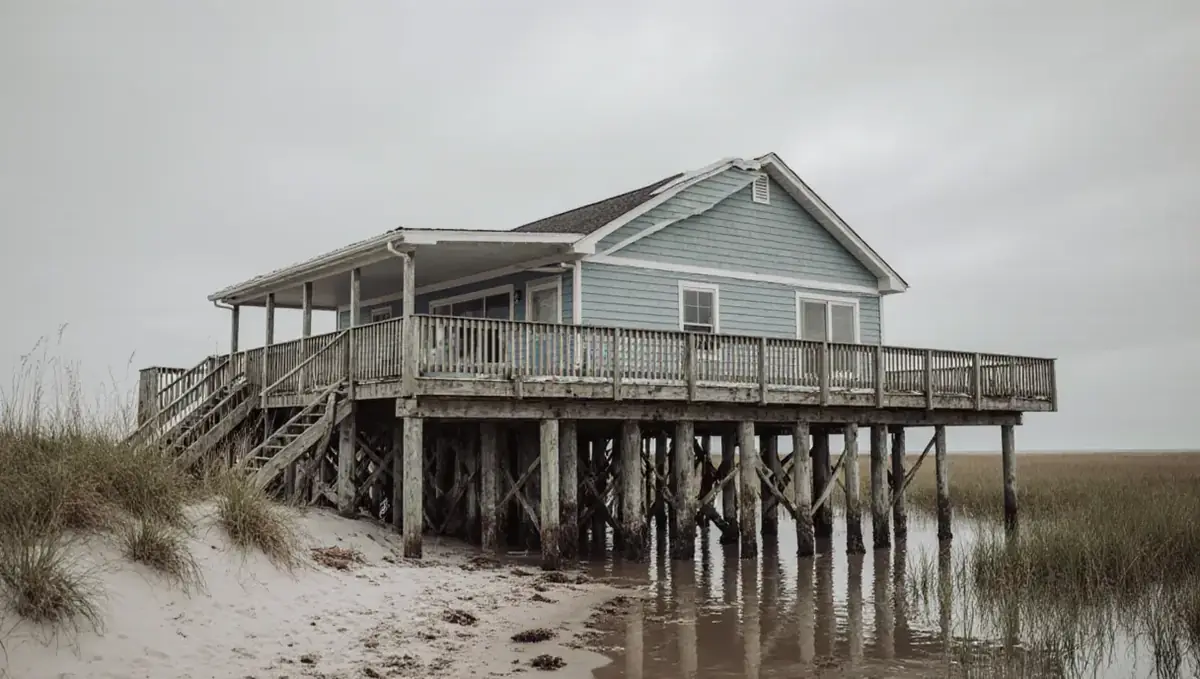
A City Built at the Water's Edge
Port Arthur's official elevation is listed at 0 feet. The city stretches along the west shore of Sabine Lake, the saltwater estuary where the Neches and Sabine rivers meet before flowing through Sabine Pass into the Gulf. Nearly half of the city's 144 square miles is water, and the man-made Pleasure Island separates the shoreline from the Gulf Intracoastal Waterway.
That setting shapes nearly every water damage call in Port Arthur. Heavy rain has very little elevation to drain away from, surge is held back by a hurricane protection system rather than by high ground, and the air itself stays damp. Port Arthur ties with Lake Charles and Astoria, Oregon as the most humid city in the contiguous US, averaging about 90 percent relative humidity in the morning.
Add roughly 62 inches of rain a year, with August the wettest month, and it becomes clear why drying is the hard part of almost every job here.
What the Seawall Does, and What It Cannot Do
During Hurricane Ike in 2008, the Port Arthur seawall protected the city from the major surge flooding that hit surrounding communities. That levee system, a partnership between the US Army Corps of Engineers and Jefferson County Drainage District No. 7, is a big reason many neighborhoods stayed dry that year.
A wall built to stop surge, however, also keeps rain inside. In 2017, Hurricane Harvey dropped 26 inches in a single day at the airport, and nearby storm totals passed 60 inches near Nederland and Groves. The mayor reported about 20,000 homes flooded, some with up to 6 feet of water. Rain floods like that depend on pumps and drainage channels, not the seawall.
- Inside the levee: the main risk is extreme rainfall that outpaces drainage.
- Sabine Pass and Pleasure Island: these areas sit closer to open water. Hurricane Rita's floodwaters wrecked about 90 percent of the homes in Sabine Pass in 2005.
- Everywhere: wind, falling trees and tornadoes can open a roof to rain.
The Jefferson County Drainage District No. 7 site has information on the area's flood protection and drainage work.
Wind Damage, Tornadoes and Storm Damage Cleanup in Port Arthur
Rita came ashore between Johnson Bayou, Louisiana and Sabine Pass as a Category 3. The highest sustained wind recorded anywhere in Texas during that storm, 94 mph, was measured at Port Arthur. More recently, a tornado on December 28, 2024 caused significant damage in the city.
Wind damage becomes water damage the moment it rains. Missing shingles, lifted flashing and broken windows let water into attics, insulation and ceilings, often well before anyone notices a drip. Storm damage cleanup generally starts with tarping and board-up, followed by removal of wet insulation and ceiling material and a full drying setup.
If a storm has opened your roof or windows, call (888) 817-5061 and we will connect you with a local restoration company that handles both the temporary protection and the drying.
First Hour Checklist for Port Arthur Property Owners
- Check for electrical danger. If water is touching outlets, appliances or the panel, stay clear and call the utility or an electrician.
- Shut off the water. For a plumbing break, close the main valve, usually near the meter or where the line enters the house.
- Treat floodwater as dirty. Flood cleanup in Port Arthur starts from the assumption that the water is contaminated: water from flooded streets, ditches or the lake is Category 3 and may carry sewage, fuel and chemicals. Wear boots and gloves and keep kids and pets out.
- Record the damage. Take wide shots of each room and close-ups of the water line, the source and damaged items.
- Lift and move. Get furniture off wet floors and carry valuables, papers and electronics to a dry space.
- Start drying early. In air this humid, waiting a few days invites mold. Emergency water removal should come first, then dehumidification.
Why Dehumidifiers Matter More Than Fans Here
Fans move air, but they cannot dry a room if the air they move is already close to saturated. In Port Arthur, restoration crews rely on commercial dehumidifiers to pull moisture out of the air so wet materials can release theirs.
Step one: extraction
Extractors pull water out of carpet, pad and hard flooring. Pad soaked by floodwater is usually thrown out, along with any contaminated carpet.
Step two: tear-out where needed
After Category 3 water, the lower portion of drywall and the insulation behind it are commonly removed so the wall cavity can be cleaned and dried.
Step three: closed drying
Doors and windows stay shut while air movers and dehumidifiers run, and technicians track moisture readings until materials reach dry targets. That is the core of structural drying.
Step four: repairs
Water damage repair in Port Arthur then covers new drywall, flooring, cabinets and trim. Before you sign, it is fair to ask the company about its licensing, insurance and training credentials, IICRC certification among them.
Mold Cleanup in the Most Humid Corner of Texas
The EPA points to a window of just 24 to 48 hours before mold can take hold on soaked materials. With humidity this high, a wet closet, a leaking AC drain pan or a soaked wall can show growth fast, and it can keep spreading if the space is not dried thoroughly.
Under Texas rules administered by TDLR, mold jobs of roughly 25 contiguous square feet or larger generally call for licensed professionals. Texas splits the job in two: one licensed party assesses and writes the protocol, and a different licensed party carries out the remediation. Within 10 days after the remediation is done, a Certificate of Mold Remediation must be issued, and if you sell the house later, the buyer is entitled to copies.
For mold cleanup in Port Arthur, look up both licenses on the TDLR License Search first. See our mold removal page for how containment and air filtration work.
Insurance, Industry and Rental Property Notes
Port Arthur's refineries, port facilities, shops and rental housing all face the same water, and each has its own paperwork.
- Three kinds of coverage. Homeowners policies generally exclude flood. Flood coverage comes from the NFIP or a private flood policy, usually with a 30-day wait for new NFIP policies. Along the Texas coast, wind is often insured separately through TWIA, which covers wind and hail only.
- Read the leak and mold terms. The Texas Attorney General notes that many policies pay only for sudden and accidental leaks and may limit or exclude mold.
- Commercial sites. Warehouses, offices and storefronts need moisture mapping room by room so drying can be scheduled around operations.
- Landlords and tenants. Report leaks in writing and keep photos on both sides.
When you are ready, call (888) 817-5061. We connect you with a local restoration company whose drying logs and photos can support your claim, though no one can promise what an insurer will decide.
Port Arthur Neighborhoods and Surrounding Communities
Our free referral line connects callers throughout Port Arthur, from Port Acres to Sabine Pass, and across nearby Mid-County towns with independent local restoration providers.
Neighborhoods
- El Vista
- Griffing Park
- Lakeview
- Pear Ridge
- Port Acres
- Sabine Pass
- West Side
- Downtown Port Arthur
- Pleasure Island
Nearby communities
Port Arthur Water Damage FAQ
If Port Arthur has a seawall, why did so many homes flood during Harvey?
The seawall and levee system are designed to keep storm surge out. Harvey's damage came from extreme rainfall, including 26 inches in one day at the airport, which has to be handled by drainage and pumping rather than the wall.
Is Sabine Pass at higher risk than the rest of the city?
Sabine Pass sits right at the outlet to the Gulf, and Hurricane Rita's floodwaters wrecked about 90 percent of its homes in 2005. Properties close to open water generally face more surge exposure.
How fast can mold grow in Port Arthur after a leak?
EPA guidance says mold can begin within 24 to 48 hours on wet materials. Port Arthur's very high humidity makes prompt extraction and dehumidification especially important.
Do I need separate wind and flood policies in Port Arthur?
Often, yes. Standard homeowners policies exclude flood, which comes from the NFIP or a private insurer, and coastal wind coverage is frequently written through TWIA. Check your declarations page to see what you have.
Will WaterQ send someone to my house?
WaterQ is a free referral service, not a contractor. Our line is available 24/7 and connects you with an independent, local restoration company that inspects and performs the work.
Local emergency and flood resources
Official sources for alerts, flood maps and preparedness in and around Port Arthur: