Living on the Edge of Flash Flood Alley
San Antonio sits at about 722 feet on the Balcones Escarpment, part of a crescent of Central Texas often called Flash Flood Alley, the most flash-flood-prone region in the country. The ground here is rocky with shallow clay soils, so instead of soaking in, heavy rain sheets off the hills and pours into creeks within minutes. When warm Gulf air is pushed up the escarpment, storms can wring out extraordinary amounts of rain.
The city averages a little over 29 inches a year, with May, June and October among the wettest months. That moderate total hides how fast water can arrive. The San Antonio River and creeks such as Salado, Leon, San Pedro and Olmos run through neighborhoods across Bexar County, and low-water crossings can turn dangerous in a single storm.
Of course, many calls have nothing to do with weather: a split washing machine hose, a slab leak, an overflowing tub. In every case, the goal is the same: stop the water, remove it and dry the structure before mold takes hold. Our free referral line at (888) 817-5061 can connect you with a local company for water damage restoration.
Floods That Shaped the City
San Antonio's flood control system exists because of hard lessons. The disastrous September 1921 flood led to construction of Olmos Dam, completed in 1926, and a cut-off channel finished in 1929 that lets excess water bypass the river's Great Bend downtown. The San Antonio River Authority today maintains more than 40 dams and flood control structures.
Big floods still happen:
- October 1998. Over the weekend of October 17 and 18, rain centered on San Antonio and Austin produced one of the costliest floods in U.S. history, with about $750 million in damage and 32 deaths. The San Antonio River at Loop 410 peaked at 36.15 feet, and Leon Creek reached 28.52 feet.
- Summer 2002. From June 30 to July 7, 2002, roughly 35 inches of rain fell in the San Antonio area, bringing widespread flooding and 12 fatalities.
If water from a creek, river or street gets inside, it should be handled as contaminated. Professional flood damage restoration includes removing soaked materials, cleaning and disinfecting, and then drying the structure.
Early Steps While You Wait for Help
- Get safe. If water is rising from outside, move to higher ground and never drive through a flooded crossing. Inside, stay clear of standing water near outlets or appliances.
- Stop the flow. Close the shutoff at the fixture or the main valve. For a water heater, also turn off its gas or power.
- Cut power to wet rooms only if the breaker panel is in a dry area.
- Sort out the water type. Clean supply-line water (Category 1) is far less risky than sewage backup or floodwater (Category 3). Keep kids and pets away from contaminated water.
- Take pictures. Photograph the source, the water line on walls and every damaged item before cleanup starts.
- Call for extraction. Dial (888) 817-5061 to reach a local provider for emergency water removal.
Old Plaster and New Drywall: How Drying Works
San Antonio's housing spans more than a century. In the King William Historic District, most homes were built between 1880 and 1910, while far north subdivisions like Stone Oak are much newer. A good restoration crew adjusts its approach to the building in front of it.
Bulk water removal
Extractors pull standing water from carpet, pad, tile and hardwood. Removing water quickly limits how far it wicks up walls and into cabinets.
Moisture mapping
Meters and thermal imaging trace water behind baseboards and under floors. In older homes with plaster walls or pier-and-beam floors, readings help decide what can be dried in place and what has to come out.
Drying and monitoring
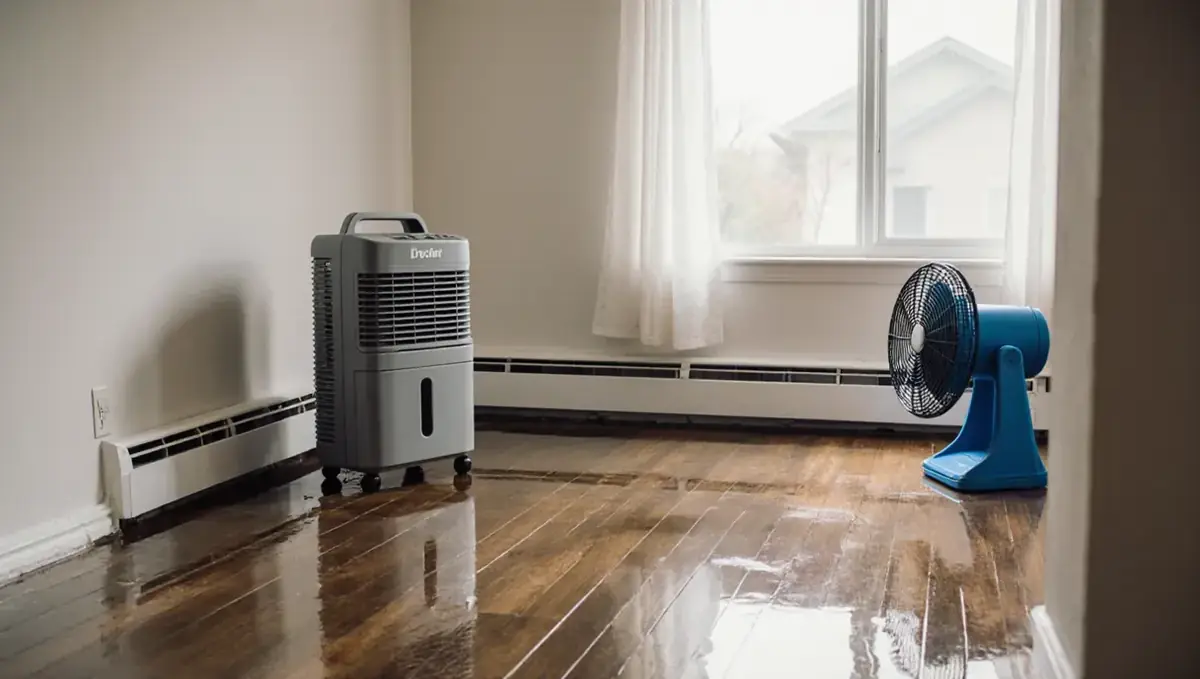
Air movers and dehumidifiers run on a plan, and readings are logged until materials reach dry goals. This structural drying record also supports your insurance file.
Repairs
When everything tests dry, water damage repair in San Antonio restores drywall, flooring, trim and cabinetry. Ask any contractor about its licensing, insurance and training, such as IICRC certification.
Thunderstorm Roof Leaks and Winter Pipe Bursts
Severe spring and fall thunderstorms can tear shingles, crack skylights and let rain into attics. Leaks from storm damage often show up first as a brown ring on the ceiling. Tarping the roof, drying insulation and checking framing are part of storm damage cleanup.
Winters are usually mild, but the city still sees about a dozen subfreezing nights a year. During the February 2021 statewide freeze, pipes burst across Texas as record cold and power outages lingered. When a hard freeze is forecast:
- Wrap exposed pipes in attics, garages and exterior walls.
- Cover outdoor hose bibs and drain irrigation lines.
- Know where your main shutoff is, because many pipes leak only once they thaw.
Mold After a Leak: Texas Rules to Know
EPA guidance notes that mold can start to grow within 24 to 48 hours on materials that stay wet. San Antonio's warm, humid summers make quick drying especially important after a hidden leak or flood.
In Texas, mold assessors and remediators, from individual technicians to consultants, contractors and companies, hold licenses issued by the Texas Department of Licensing and Regulation (TDLR). A license is generally required for mold covering 25 contiguous square feet or more. On a given project, one company cannot be both the assessor and the remediator. Once the remediation work is complete, the homeowner should receive a Certificate of Mold Remediation, which must be issued within 10 days.
Check any company's credentials with the TDLR License Search, and read more about mold removal and mold cleanup for San Antonio homes.
Coverage Questions for Bexar County Owners
- Flood needs its own policy. Homeowners insurance generally excludes rising water from outside. NFIP and private flood policies fill that gap, and NFIP coverage typically starts after a 30-day waiting period.
- Leaks versus long-term seepage. The Texas Attorney General explains that many homeowner policies in the state pay only for sudden, accidental leaks and may limit or exclude mold work.
- Know your flood risk. The San Antonio River Authority's BexarFlood.org site and the FEMA Flood Map Service Center can help you check your address.
- Document as you go. Keep photos, invoices, drying logs and a list of discarded items.
WaterQ does not decide or promise claim outcomes, but thorough records give your adjuster what they need.
Help for Rentals, Offices and Shops
Landlords, HOA boards and business owners deal with water damage too, from a sprinkler line that breaks in a medical office to a storm that floods a strip-center storefront. Commercial jobs often need drying scheduled around operating hours and clear moisture reports for owners and tenants.
Call (888) 817-5061 to be connected with a restoration company that handles commercial work. If your portfolio reaches up I-35, see our pages for New Braunfels and Austin.
San Antonio Neighborhoods and Surrounding Cities
WaterQ's free 24/7 line connects callers throughout San Antonio, its enclave cities and nearby Bexar County communities with independent local restoration providers.
Neighborhoods
- Downtown
- King William Historic District
- Stone Oak
- Medical Center (Northwest Side)
- Rogers Ranch
- Deerfield
- Churchill Estates
- Hunter's Creek
- Oak Meadow
- Inwood
- Elm Creek
- Prospect Hill
- Collins Garden
- Las Palmas
- Loma Park
- Memorial Heights
- Westwood
- Rainbow Hills
Nearby communities
- Alamo Heights
- Olmos Park
- Terrell Hills
- Castle Hills
- Shavano Park
- Hollywood Park
- Leon Valley
- Balcones Heights
- Kirby
- Hill Country Village
- New Braunfels
San Antonio Water Damage FAQ
Why does San Antonio flood so quickly during heavy rain?
The city sits on the Balcones Escarpment in Flash Flood Alley. Rocky, shallow clay soils do not absorb much water, so rain runs off into creeks like Salado and Leon very fast, and low-water crossings can flood within minutes.
Is a sewage backup or creek water safe to clean up on my own?
Generally no. Sewage and outside floodwater are Category 3 water and can carry bacteria and chemicals. Keep people and pets out of the area and let a restoration company remove, clean and disinfect affected materials.
What mold license should a San Antonio remediation company have?
In Texas, TDLR licenses mold assessors and remediators. A license is generally required for mold of 25 contiguous square feet or more, and the assessment and remediation on one project must be done by different companies.
My older home has plaster walls. Can they be dried instead of replaced?
Often they can, depending on how long they were wet and what kind of water it was. Moisture readings guide that decision, so ask the restoration company to explain what it finds before any demolition.
Will someone answer if I call WaterQ at night or on a weekend?
Yes. The referral line is available 24/7. WaterQ connects you with an independent local restoration company, which then schedules the inspection and work directly with you.
Local emergency and flood resources
Official sources for alerts, flood maps and preparedness in and around San Antonio: