A City Split by the Balcones Escarpment
Round Rock sits about 15 miles north of Austin, and Interstate 35 roughly follows a geologic dividing line. East of the highway the land is flat Blackland Prairie with dark, fertile clay soils. West of it, the Balcones Escarpment lifts into hilly, karst-like limestone terrain. That split shapes how water behaves around your home.
On the western side, rain runs quickly off rocky slopes and into creeks. On the eastern side, clay soaks up water slowly and can shed it across flat lots toward foundations and garages. Brushy Creek, whose namesake round rock once marked a low-water crossing on the Chisholm Trail, carries much of that runoff through the middle of town.
Round Rock averages about 36.5 inches of rain a year, with May and October usually the wettest months. That total often arrives in short, intense bursts rather than steady soaking rain, which is why flash flooding and sudden roof leaks are the main concerns here.
Lake Creek, Brushy Creek and the Floodplain Question
The City of Round Rock is candid about its flood-prone spots. Lake Creek drains a watershed of roughly 28 square miles, starting in Austin and emptying into Brushy Creek inside the city. In the Greater Round Rock West neighborhood, more than 80 homes and every roadway crossing Lake Creek sit in the 100-year floodplain. Homes there flooded several times in the 1980s, and Tropical Storm Hermine caused the most recent significant damage in 2010.
The City has identified that area as the largest damage center in its watershed study and is planning two upstream earthen dams to slow floodwater. Until projects like that are finished, residents near the creeks should treat heavy storms seriously.
There is also a bigger-picture issue. Round Rock notes that NOAA's Atlas 14 rainfall study shows Central Texas flash floods drop more rain than earlier estimates assumed, and current FEMA maps do not yet reflect it. The City suggests the true 100-year floodplain may look more like today's 500-year floodplain. You can look up your address on the City's floodplain map.
What to Do Before the Restoration Crew Gets There
Most Round Rock water damage is not a creek flood. It is a failed water heater in the garage, a washing machine hose, a leaking ice-maker line or rain getting past hail-damaged shingles. The early steps are similar either way:
- Shut off the source. Close the main valve, usually near the curb meter or where the line enters the house, or the valve at the fixture.
- Keep power and water apart. Stay out of standing water near outlets or appliances, and flip breakers only if the panel is dry and easy to reach.
- Sort out the water type. A clean supply-line leak (Category 1) is handled differently from creek water or a sewer backup (Category 3), which can carry bacteria and debris.
- Photograph everything. Capture the source, the water line on walls and damaged belongings before anything is thrown out.
- Pull valuables to dry ground. Lift furniture onto blocks and move rugs, documents and electronics.
- Call for help. Reach us at (888) 817-5061 and we will connect you with a local company that offers emergency water removal.
For a drainage or stormwater emergency in city streets, Round Rock lists a 24/7 stormwater line at 512-218-5555.
From Extraction to Rebuild in a Round Rock Home
A typical water damage restoration job moves through four stages, though the order can shift depending on what the inspection finds.
Removing the water
Portable or truck-mounted extractors pull water from carpet, pad and hard floors. Getting bulk water out fast limits how far it wicks into drywall, baseboards and cabinet bases.
Finding hidden moisture
Moisture meters and thermal cameras show where water moved under tile, behind walls and into the next room. In Round Rock houses built on a concrete slab, water tends to spread sideways across the floor rather than dropping into a crawlspace.
Drying the structure
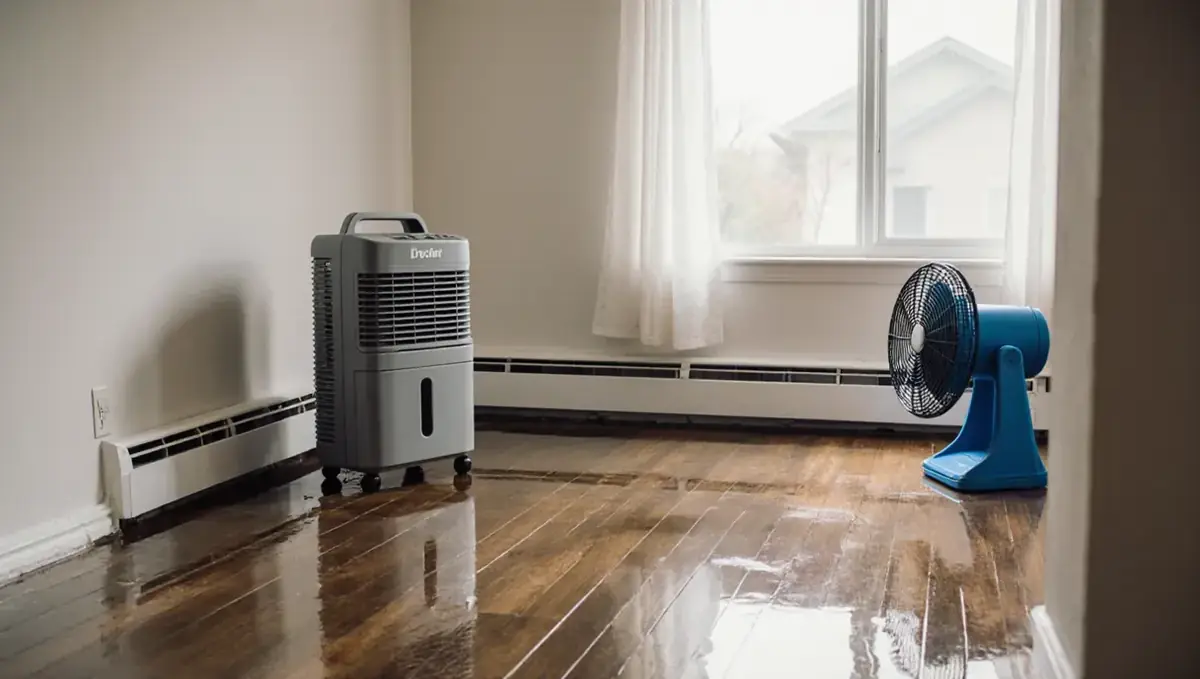
Air movers and dehumidifiers run while readings are logged daily. Wet insulation and the lower portion of drywall are often removed so wall cavities can dry. Learn more about structural drying.
Putting it back together
Once readings confirm materials are dry, the work turns to water damage repair: drywall, paint, flooring, trim and cabinetry. Ask any company about its licensing, insurance and training, such as IICRC certification, before you sign a contract.
Tornadoes, Hail and Storm Damage Cleanup
Round Rock knows severe weather firsthand. On March 21, 2022, a high-end EF2 tornado heavily damaged parts of the city and injured 16 people. Spring supercells also bring hail that can crack shingles and skylights, and the leak may not show up until the next heavy rain.
After a storm, storm damage cleanup usually starts with tarping or boarding openings to stop more water from getting in. Then wet ceilings, insulation and flooring are assessed and dried. If creek or street water came inside, flood cleanup should include removing contaminated materials and sanitizing surfaces before drying begins.
Sign up for WarnCentralTexas alerts, the regional emergency notification system for Williamson and Travis counties, so you get warnings by text, phone or email.
Mold Cleanup and Texas Licensing Rules
Following EPA guidance, mold can start growing on wet drywall, carpet pad and wood within 24 to 48 hours. In a closed-up house during a humid Central Texas summer, that window can pass quickly, so drying should start as soon as possible.
Texas regulates mold work closely. In Round Rock, as anywhere in the state, assessors, remediation contractors, technicians and companies are licensed by TDLR (the Texas Department of Licensing and Regulation). Licensing generally kicks in at 25 contiguous square feet of mold, and on any one project the firm that assesses the mold cannot also be the firm that removes it. After remediation, a Certificate of Mold Remediation must be issued within 10 days, and sellers must give buyers copies.
For a larger mold removal job in Round Rock, ask for both license numbers and check them on the TDLR License Search. See our overview of mold removal to understand containment and cleanup.
Insurance, Paperwork and Commercial Properties
- Flood coverage is separate. Standard homeowners policies generally exclude flood. Round Rock participates in the National Flood Insurance Program, and new NFIP policies typically have a 30-day waiting period.
- Sudden versus gradual. The Texas Attorney General notes most Texas homeowner policies cover only sudden and accidental water leaks and may exclude or cap mold remediation. Report damage promptly.
- Keep a file. Save photos, moisture logs, invoices and the restoration company's drying reports.
Round Rock grew from about 31,000 people in 1990 to nearly 120,000 in 2020, and offices, retail centers and apartment communities grew with it. Property managers dealing with a sprinkler break, roof leak or flooded suite can call (888) 817-5061 to be connected with a local provider experienced in commercial drying. WaterQ cannot predict how any insurer will respond, but a complete record helps the claim move forward.
Round Rock Neighborhoods and Neighboring Towns
The WaterQ referral line connects callers throughout Round Rock and the surrounding Williamson and Travis County communities with independent local restoration companies.
Neighborhoods
- Old Town
- Greater Round Rock West
- Palm Valley
- Wyoming Springs
- Fern Bluff
- Highlands at Mayfield Ranch
- Meadows at Chandler Creek
- Paloma Lake
- Parkside at Mayfield Ranch
- Siena
- Teravista
- Vista Oaks
- Walsh Ranch
Nearby communities
- Georgetown
- Austin
- Cedar Park
- Pflugerville
- Hutto
- Taylor
- Brushy Creek
- Leander
- Jollyville
Round Rock Water Damage FAQ
Is my Round Rock home in a floodplain?
Check your address on the City of Round Rock's online floodplain map. The City also cautions that NOAA Atlas 14 rainfall data suggests the true 100-year floodplain may be closer to the current FEMA 500-year floodplain, so homes just outside mapped zones can still flood.
Why does Greater Round Rock West flood?
The neighborhood sits along Lake Creek, which drains about 28 square miles before reaching Brushy Creek. More than 80 homes there are in the 100-year floodplain, and the City is planning upstream dams to reduce the risk.
Do I need a licensed company for mold removal in Texas?
Generally yes for mold areas of 25 contiguous square feet or more. TDLR licenses mold assessors and remediators, and one company may not do both the assessment and the remediation on the same project.
Will homeowners insurance pay for water from a hail-damaged roof?
Many policies cover sudden storm damage, but terms vary and some limit mold coverage. Photograph the roof and interior damage, make temporary repairs to prevent more water entry, and report the claim promptly.
Does WaterQ do the restoration work in Round Rock?
No. WaterQ is a free referral service available 24/7. We connect you with an independent local restoration company, and that company inspects the property and performs the work.
Local emergency and flood resources
Official sources for alerts, flood maps and preparedness in and around Round Rock: