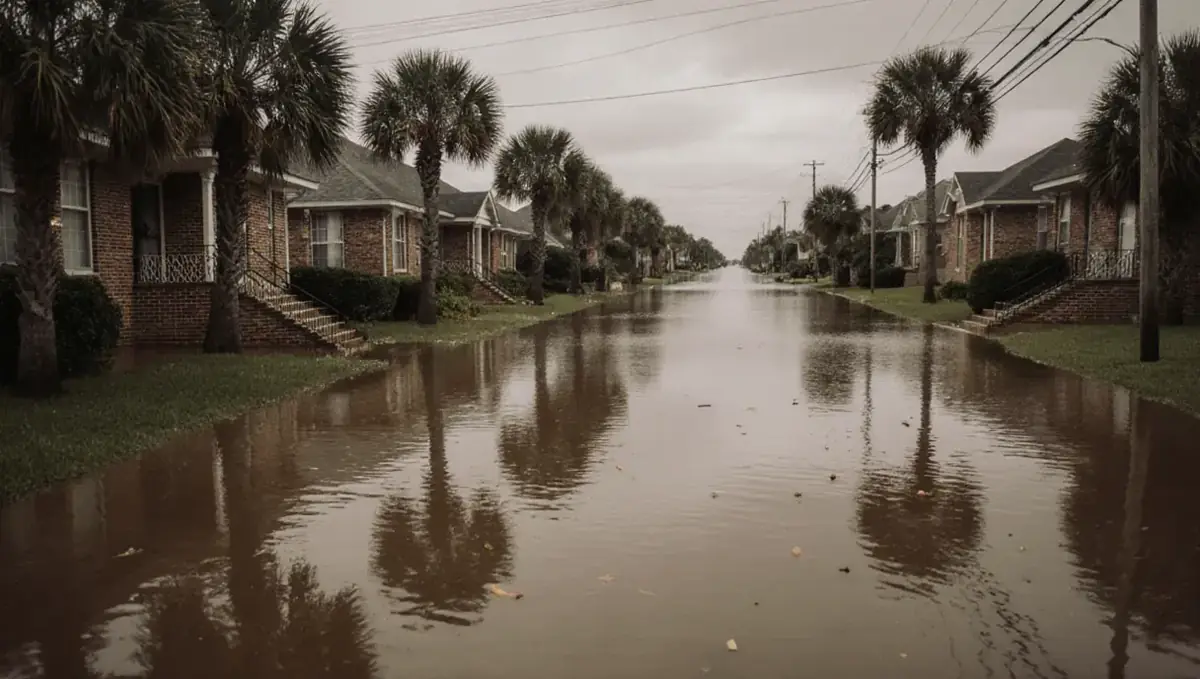
A City Shaped by the Ship Channel and Its Bayous
Pasadena covers about 44.7 square miles of flat ground in southeast Harris County, at an elevation of roughly 30 feet. The Houston Ship Channel forms its northern edge, and the southeastern corner of the city reaches the shore of Galveston Bay. In between, rain has to travel a long, gentle path to get anywhere, and that is the root of most local flood problems.
Three different drainage systems serve the city, which is why two homes a mile apart can have very different risk:
- Vince Bayou and Little Vince Bayou. According to the Harris County Flood Control District, most of this 16-square-mile watershed lies inside Pasadena and South Houston. Vince Bayou runs from Genoa-Red Bluff Road north to the Ship Channel.
- Sims Bayou. The lower reach of this 94-square-mile watershed drains South Houston and Pasadena on its way to the channel.
- Armand Bayou. It begins near Deer Park and flows south to Clear Lake, draining portions of Pasadena along with Houston, Deer Park, La Porte and Taylor Lake Village.
You can see which watershed you are in, and follow live rain and bayou levels, through the Harris County Flood Warning System.
Harvey, Tornadoes and Other Storms Pasadena Remembers
Storms have tested this city for more than a century. The 1900 Galveston hurricane heavily damaged early Pasadena. More recently, during Hurricane Harvey in late August 2017, a rain gauge about 4.4 miles west-northwest of Pasadena recorded 45.74 inches, according to the National Weather Service. The Flood Control District estimates that nearly 136,000 structures flooded across Harris County during that storm.
Wind has been a separate problem. An EF2 tornado struck a warehouse inside city limits on October 31, 2015, and an EF3 tornado hit northwestern Pasadena on January 24, 2023. A torn roof or a broken window lets rain in long after the wind dies down, so storm damage cleanup often starts with tarping and stopping that secondary water.
If a storm has left water in your house, call (888) 817-5061. The line is answered 24/7, and we connect you with an independent local restoration provider.
What to Do Before the Restoration Company Gets There
A few calm steps in the first hour make the rest of the job simpler:
- Shut off the source. For a plumbing leak, close the fixture valve or the main shutoff. Know where yours is before you need it.
- Stay clear of live electricity. Do not step into water near outlets, extension cords or appliances. Use the breaker only if it is in a dry, safe spot.
- Judge the water. A broken supply line is usually clean water (Category 1). Water that came in from a street, yard or bayou is Category 3 and should be treated as contaminated.
- Take pictures first. Before moving anything, get photos of where the water came from, how high it reached on the walls and what it ruined.
- Protect what you can. Lift furniture onto blocks or foil, roll up loose rugs and move documents and electronics to a dry room.
Then get professional help with emergency water extraction. Every hour that water sits, it wicks farther up drywall and into cabinets.
Inside a Typical Pasadena Drying Job
Water damage restoration in Pasadena generally follows the same order, whether the cause is a failed water heater or bayou overflow.
Pulling out the water
Crews use extraction units on carpet, pad and hard floors to remove as much standing water as possible before evaporation becomes the main tool.
Finding where it went
Moisture meters and thermal cameras show how far water traveled under baseboards, behind tile and into wall cavities. Those readings guide the plan and become part of your insurance file.
Drying with control
Air movers and dehumidifiers run while the technician checks readings over several days. In the Gulf Coast humidity, dehumidification does a lot of the work. Wet insulation and the lower portion of drywall are often cut out so walls can breathe. Learn more about structural drying.
Putting it back together
Only after materials test dry does the job move to water damage repair, such as new drywall, trim, flooring and cabinets. Many Pasadena neighborhoods were built during the city's fast growth between 1940 and 1960, so older plumbing and finishes may come up during this stage.
Bayou Floodwater Needs a Different Cleanup
Flood cleanup in Pasadena is not the same as drying a clean pipe leak. Water that rises out of a bayou or spreads across a street can carry sewage, fuel and debris, so porous materials it touched usually have to go.
- Wear boots and gloves, and keep children and pets out of flooded rooms.
- Expect carpet, pad, soaked insulation and lower drywall to be removed rather than dried.
- Hard surfaces get cleaned and sanitized before any drying equipment is set up.
- Refrigerated food, mattresses and upholstered items that sat in floodwater are generally discarded.
A restoration company experienced in flood cleanup can handle the tear-out and disposal safely. Keep a list of everything removed for your adjuster.
Mold After a Pasadena Leak or Flood
Per EPA guidance, damp drywall, carpet and wood can start to grow mold in as little as 24 to 48 hours. A slow leak under a sink or behind a washing machine is a common culprit, because nobody notices it until the smell or staining shows up.
Texas regulates this work through the Texas Department of Licensing and Regulation (TDLR). Generally, once mold covers 25 contiguous square feet or more, the job calls for licensed professionals, and Texas does not allow one person or company to both assess and remediate the same project. When the remediation is finished, the homeowner should receive a Certificate of Mold Remediation, which must be issued within 10 days. You can look up any assessor or remediator on the TDLR License Search.
For mold removal in Pasadena, call (888) 817-5061 to reach a local provider, and read more about mold removal and containment.
Claims, Coverage and Records for Homes and Businesses
Standard homeowners policies generally exclude flood, which is covered by NFIP or private flood insurance. A new NFIP policy typically has a 30-day waiting period, so it needs to be in place well before a storm is in the Gulf. The Texas Attorney General notes that most Texas homeowner policies cover only sudden and accidental leaks and may exclude or cap mold remediation.
- Report the loss promptly and ask what your policy needs from you.
- Keep the photos, moisture readings, drying logs and receipts the restoration company provides.
- Do not throw away damaged items until the adjuster has seen them or approved photos.
Pasadena also has warehouses, shops and offices tied to its industrial economy. Commercial owners and property managers can call the same line for wet carpet tiles, roof leaks or flooded storage areas. WaterQ cannot predict how an insurer will decide, but good records help the process.
Pasadena Neighborhoods and Neighboring Communities
Our free referral line connects callers across Pasadena and nearby southeast Harris County communities with independent local restoration companies.
Neighborhoods
- Old Downtown
- Allendale
- Bayport
- Baywood Oaks
- Brookwood
- Burke Meadows
- Burkeshire
- Clear Lake City (Pasadena)
- Country Meadows
- Deepwater
- El Jardin del Mar
- Golden Acres
- Parkland Village
- Parkview Manor
- Pasadena Gardens
- Pasadena River Oaks
- Red Bluff Terrace
- Turtle Creek
- Village Grove
- Vista Villas
Nearby communities
- Houston
- South Houston
- Deer Park
- La Porte
- Taylor Lake Village
- Seabrook
- Galena Park
- Baytown
- Pearland
- League City
Pasadena Water Damage FAQ
Which bayou drains my part of Pasadena?
It depends on your address. Vince and Little Vince Bayou drain much of the city toward the Ship Channel, the lower reach of Sims Bayou drains other areas, and Armand Bayou drains toward Clear Lake. The Harris County Flood Control District's watershed tools and the FEMA Flood Map Service Center can show your location.
A tornado or windstorm damaged my roof. Is that water damage too?
Often, yes. Once shingles or decking are torn away, rain can soak attic insulation, ceilings and walls. Cover the opening if it is safe, photograph everything and have the interior checked for moisture even if the ceiling looks fine.
Do I need a licensed company for mold in my Pasadena home?
In Texas, a TDLR license is generally required for mold of 25 contiguous square feet or more, and the assessor and remediator on the same project must be different. You can check licenses on the TDLR License Search.
Can I dry out my house myself after bayou flooding?
Water from a bayou or street is considered contaminated, so porous materials usually need to be removed and surfaces sanitized before drying. Small clean-water spills can be handled with care, but floodwater cleanup is best left to a professional restoration company.
Is WaterQ a restoration company?
No. WaterQ is a free referral service. When you call, we connect you with an independent local restoration provider who inspects the damage and does the work, and the line is open 24/7.
Local emergency and flood resources
Official sources for alerts, flood maps and preparedness in and around Pasadena: