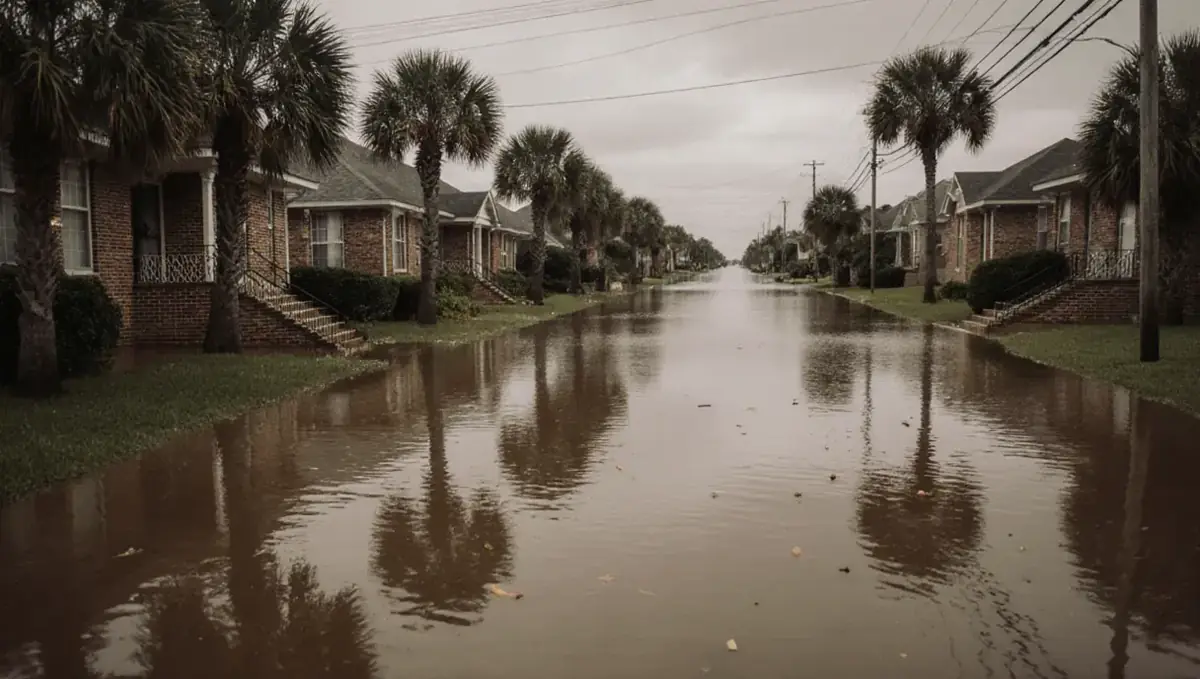
A Levee City on Galveston Bay
Texas City sits on the southwest shore of Galveston Bay, on a flat coastal plain about 9.8 feet above sea level, with marshland to the south and west. Moses Lake and Moses Bayou lie to the north, Dollar Bay is nearby, and the Texas City Dike, a granite breakwater built in the 1930s, reaches about 5.2 miles out into the bay.
After Hurricane Carla's surge inundated most of the city in 1961, despite partial levee protection, Texas City built a 17-mile levee system in the early 1960s, backed by pump stations around its northeast edge. The levee is designed to keep the bay out. The trade-off is that rain falling inside the levee has to drain or be pumped away, so a heavy downpour can leave streets and low yards ponding even when the bay is calm.
Add aging plumbing, water heater failures and roof leaks, and water damage in Texas City comes from several directions.
Surge, Rain and the Storms That Shaped Texas City
- Hurricane Carla, 1961. Surge flooded most of the city and led to the levee system that protects it today.
- Hurricane Ike, 2008. A surge greater than 12 feet overtopped the Texas City Dike, destroying its buildings, piers and road. The dike road did not reopen until September 2011.
- Hurricane Harvey, 2017. The National Weather Service reported catastrophic flooding of homes, businesses and roads across Galveston County from flash flooding, sheet flow and overflowing creeks and bayous.
Harvey in particular showed that rain, not just surge, can flood homes along the bay. When storms are forecast, follow updates from Galveston County Emergency Management and keep drains and ditches near your home clear.
Coming home after an evacuation, walk the property before going inside. Look for a waterline on exterior walls, sagging ceilings and wet insulation in the attic, and photograph all of it. Leave the power off to any circuit that was underwater, and keep windows open only if the outside air is drier than the air indoors.
When Water Comes In: A Short Checklist
- Stop it at the source. Shut the main valve or the fixture supply. For rising floodwater, follow official guidance and leave if told to.
- Stay clear of electricity. Do not touch switches or appliances while standing in water.
- Know the water. Clean supply-line water is Category 1. Washer or dishwasher overflow can be Category 2. Bay water and street flooding are Category 3 and may carry sewage or chemicals.
- Record everything. Photograph the source, the waterline and each damaged item.
- Save what you can. Move documents, photos and electronics up and away.
- Call (888) 817-5061. We connect you with a local restoration company for water extraction and drying, 24/7.
Extraction, Drying and Rebuild, Step by Step
Water damage restoration in Texas City follows the same core steps whether the source was a cracked pipe or a flooded street.
Removing water
Pumps and extraction tools clear standing water. For Category 3 water, contaminated carpet, pad and porous materials are usually discarded rather than dried.
Measuring moisture
Meters and infrared imaging map how far water traveled into walls, cabinets and subfloors, setting a baseline for the drying plan and the insurance record.
Drying the structure
Commercial dehumidifiers and air movers run for several days, with readings logged until materials hit dry targets. More on structural drying.
Repairs
Then crews move to water damage repair: drywall, paint, flooring, baseboards and cabinets. Ask any company about its licensing, insurance and training, including IICRC certification, before agreeing to the work.
Port, Refinery and Commercial Properties
Texas City's economy centers on petroleum and petrochemical refining and the Port of Texas City, one of the busiest ports in the country by tonnage. Offices, warehouses, shops and service businesses that support that industry face water risks on a larger scale: roof leaks across big footprints, sprinkler or supply-line failures, and flooding of ground-floor space.
For commercial water damage, property managers usually need a provider that can stage equipment across large areas, keep careful moisture logs and work around operating hours. The city also has more than 21,000 housing units, from owner-occupied homes to rentals. Owners of rental homes can call (888) 817-5061 to be connected with a local company that coordinates with tenants.
Mold, Humidity and Texas Remediation Law
Texas City's Gulf Coast humidity gives mold an easy start. Per EPA guidance, mold can begin growing within 24 to 48 hours on wet materials, so prompt drying is the main defense.
When mold is already present, Texas law steps in. The Texas Department of Licensing and Regulation (TDLR) licenses mold assessors and remediators, and licensing generally applies to 25 contiguous square feet or more of mold. A single company may not do both the assessment and the remediation on one project. Within 10 days after remediation, a Certificate of Mold Remediation must be issued, and sellers must share these certificates with buyers.
Learn about mold removal and mold cleanup in Texas City, and check any license on the TDLR License Search.
Claims on the Coast: Wind, Flood and Leaks
Galveston County is a first-tier coastal county, where wind coverage is often written through the Texas Windstorm Insurance Association (TWIA). TWIA covers wind and hail only.
- Flood insurance is separate, through the NFIP or a private carrier. New NFIP policies typically take 30 days to begin, and a levee does not replace flood coverage.
- The Texas Attorney General warns that most homeowner policies in Texas cover only sudden and accidental leaks and may exclude or limit mold coverage.
- Keep a single folder of photos, moisture readings, drying reports and receipts.
How a claim is decided is up to your insurer, not WaterQ. For storm damage cleanup in Texas City or nearby Galveston and League City, call (888) 817-5061.
Texas City Areas and Nearby Mainland Communities
The free WaterQ line connects callers in Texas City and nearby Galveston County mainland communities with independent local restoration providers.
Neighborhoods
- Downtown Texas City
- Moses Lake area
- Shoal Point
- Texas City Dike area
Nearby communities
- La Marque
- Dickinson
- League City
- Hitchcock
- San Leon
- Kemah
- Galveston
- Bacliff
Texas City Water Damage FAQ
If Texas City has a hurricane levee, do I still need flood insurance?
It is worth considering. The 17-mile levee is built to hold back bay surge, but rain falling inside it must drain or be pumped out, and Harvey caused catastrophic flooding across Galveston County. Standard homeowners policies generally exclude flood.
What happened to the Texas City Dike in Hurricane Ike?
Ike's storm surge of more than 12 feet overtopped the dike in 2008 and destroyed its buildings, piers and road. The dike road reopened in September 2011.
Is bay floodwater in my house dangerous?
Treat it as Category 3 water, which may contain sewage, fuel or chemicals. Avoid contact, keep children and pets away, and have porous materials it touched assessed by a professional.
Do Texas mold remediators need a license?
Yes, for most larger jobs. TDLR generally requires a license for mold of 25 contiguous square feet or more, and the assessor and remediator must be separate on the same project.
Who actually does the work when I call WaterQ?
An independent, local restoration company. WaterQ is a free referral service available 24/7 that connects you with that provider.
Local emergency and flood resources
Official sources for alerts, flood maps and preparedness in and around Texas City: