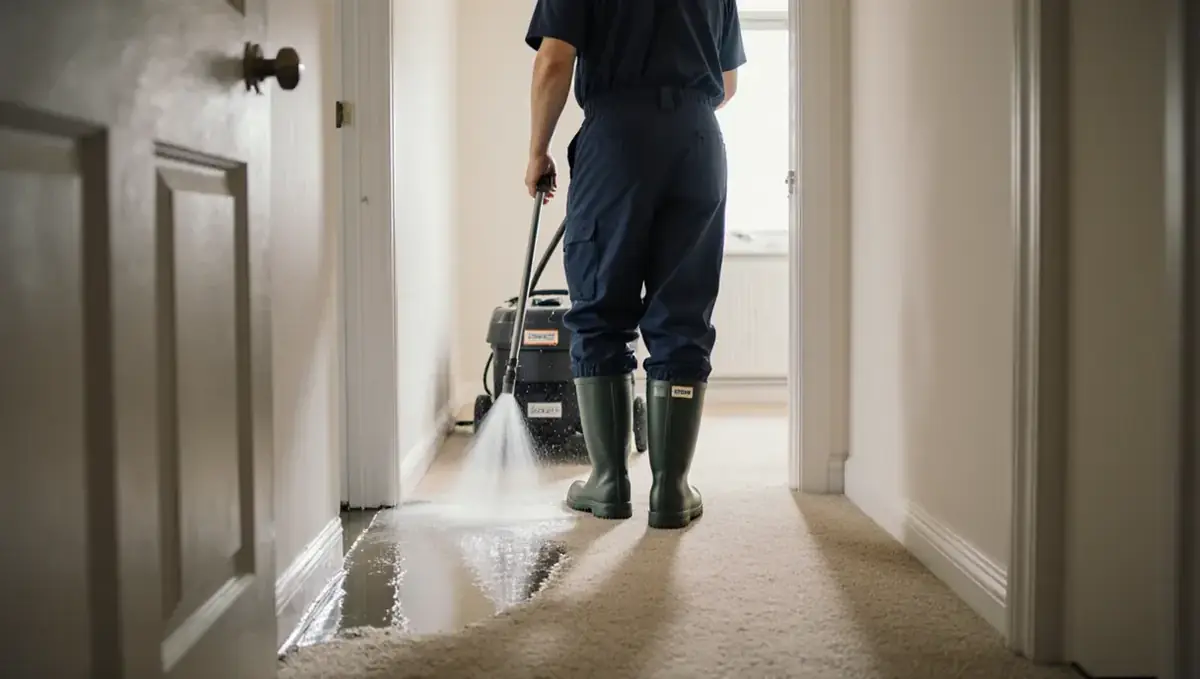
What water extraction means
Water extraction is the physical removal of standing and absorbed water from a building. It is the first hands-on step of most water damage jobs, and it makes everything after it faster. Pulling water out as liquid is far more efficient than waiting for it to evaporate, so thorough extraction can shorten drying time and help save materials.
Extraction is not the same as drying. Once the visible water is gone, walls, subfloors and framing still hold moisture. That is handled next through structural drying.
Situations that call for emergency water removal
- A burst pipe or failed supply line flooding a room
- A water heater that has ruptured or is leaking heavily
- A washing machine, dishwasher or ice-maker line that has overflowed
- A flooded basement or crawlspace after heavy rain or a sump pump failure
- A sewage or drain backup into a bathroom or basement
- Water entering through a storm-damaged roof or windows
If the water came from outside, such as rising floodwater, see our flood cleanup page for extra safety steps.
Why every hour of standing water matters
Water moves quickly. It runs under baseboards, soaks into carpet pad, wicks up drywall and seeps into subfloor. The longer it sits, the farther it spreads and the more material ends up being removed instead of dried.
Clean water also does not stay clean. Over time, and as it passes through dirty materials, it can become contaminated. EPA guidance says drying wet materials within 24 to 48 hours can help prevent mold growth, and that clock starts the moment the water arrives.
How professional water extraction works
- Safety check. The crew checks for electrical hazards and structural concerns, and identifies whether the water is clean, gray or black water.
- Stop the source. The leak is shut off or isolated before extraction begins.
- Pump deep water. Submersible or trash pumps remove deep standing water, such as in a flooded basement.
- Extract from floors. Truck-mounted or portable extractors with wands remove water from carpet, hard floors and pads. Weighted extraction tools can press more water out of carpet.
- Find hidden water. Moisture meters and thermal cameras show where water has spread into walls and under flooring.
- Remove what cannot be saved. Soaked carpet pad, wet insulation and contaminated materials are often removed so the structure can dry.
- Set up drying. Air movers and dehumidifiers go in to dry what remains, with readings taken regularly.
With gray or black water, crews typically wear protective gear, remove more porous materials and clean and sanitize surfaces after extraction.
Safe first steps while you wait
- Stay away from electricity. Do not walk through water near outlets, cords or appliances. Shut off power at the breaker only if you can reach it without standing in water.
- Shut off the water main if the source is a plumbing leak.
- Photograph the damage before you move anything.
- Get belongings off the floor, and put foil or blocks under furniture legs.
- Use a wet vacuum only for small amounts of clean water. Never use a regular household vacuum.
- Avoid sewage and floodwater. If the water may be contaminated, keep people and pets out.
Signs water has spread farther than you can see
Standing water is the obvious part. The water you cannot see is what causes trouble later. Watch for:
- Baseboards that are swelling, separating or darker at the bottom
- Drywall that feels soft or shows a stain line creeping upward
- Carpet that squishes or feels damp several feet away from the visible water
- Hardwood or laminate starting to cup, lift or gap at the seams
- Water stains on the ceiling below a wet upstairs room
- A musty smell that grows stronger over the next day or two
These signs usually mean water has moved into wall cavities, under flooring or into the floor below. A crew with moisture meters and a thermal camera can trace it so nothing is missed before drying starts.
Cost and insurance considerations
The cost of water extraction depends on how much water there is, how many rooms are affected, the water category, the flooring types and how much material must be removed. Extraction is usually billed as part of the larger mitigation job that includes drying.
Many homeowners policies cover sudden and accidental water damage, but flood from rising surface water is generally excluded and requires a separate flood policy. Policies often expect you to take reasonable steps to limit damage, which is one more reason to act quickly. Keep photos, receipts and the company's documentation for your adjuster.
Questions to ask before you hire
- Do you have equipment for the amount of water I have, including pumps for deep water?
- Are your technicians trained in water damage restoration, for example through IICRC certification?
- Are you licensed where required and insured?
- How will you document moisture readings and drying progress?
- Will you give me a written estimate, and will you work with my insurer?
Reaching a local crew through WaterQ
WaterQ is a free referral service, not a restoration company. When you call (888) 817-5061, we connect you with a trusted, local restoration company that offers emergency water removal in your area. Our phone line is available 24/7.
After extraction, the same company can often handle drying and repairs. Learn more about the full process on our water damage restoration page, or browse our service areas.
Find water extraction help near you
WaterQ connects callers with local restoration companies in these states. Choose yours to find your city:
Frequently Asked Questions
How is water extraction different from drying?
Extraction removes standing and absorbed water as liquid using pumps and extractors. Drying comes next and uses air movers and dehumidifiers to remove the moisture left inside walls, floors and framing.
Can wet carpet be saved?
Carpet wet with clean water and extracted quickly can often be dried and kept, though the pad underneath is usually replaced. Carpet soaked with sewage or floodwater is typically discarded.
Can I use a shop vac to remove the water?
A wet vacuum can help with a small amount of clean water if there is no electrical risk. For larger amounts, water under flooring or contaminated water, professional extraction equipment is much more effective and safer.
Should I turn off the electricity?
If water is near outlets or appliances, turning off power at the breaker can reduce risk, but only if you can reach the panel without standing in water. Otherwise, stay out of the area and call your utility or an electrician.
Is the WaterQ phone line open at night?
Yes. You can call (888) 817-5061 any time, day or night, and we will connect you with a local restoration company.