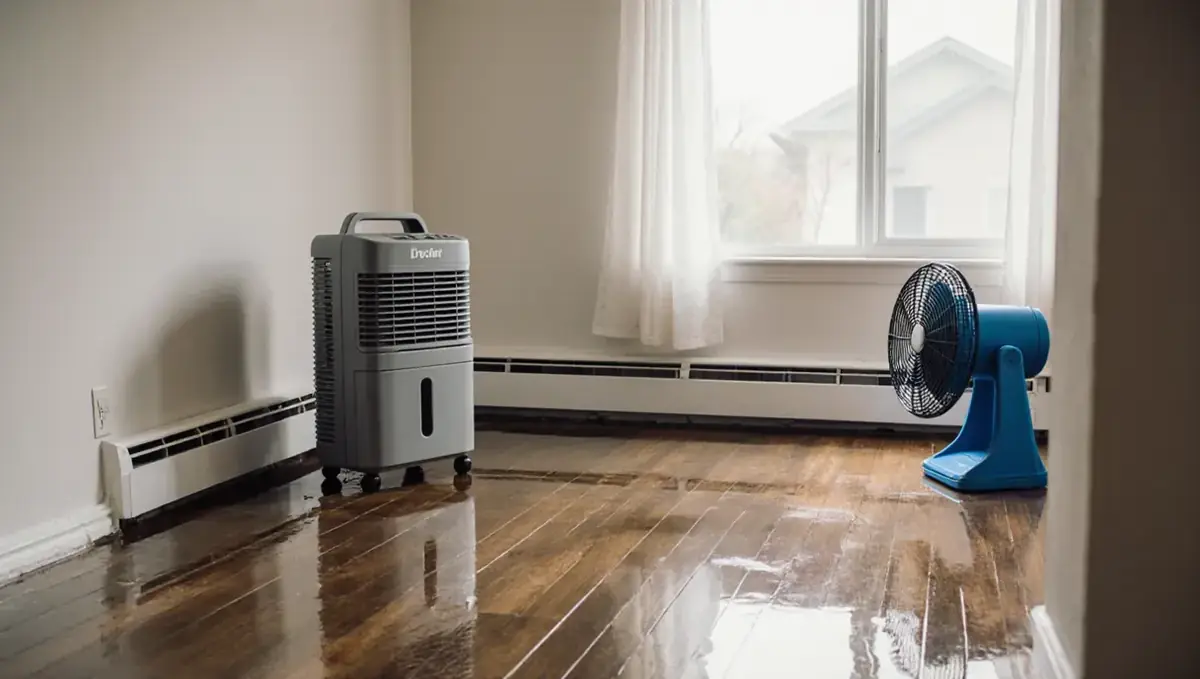
What water damage restoration actually involves
Water damage restoration is the full process of returning a wet building to a dry, safe and usable condition. It starts with stopping the water and removing what is standing, continues with drying the structure to a measured goal, and ends with cleaning, sanitizing and repairing whatever could not be saved.
It is more than mopping up. Water travels under flooring, wicks up drywall, soaks into insulation and settles in wall cavities you cannot see. A professional restoration company uses moisture meters, thermal imaging and specialized drying equipment to find that hidden water and remove it before it leads to warped floors, odors or mold.
Most jobs fall into four overlapping phases:
- Emergency response: stopping the source, making the area safe and protecting belongings.
- Water removal: pumping and extracting standing water from floors, carpet and pads. See emergency water removal and extraction.
- Drying and dehumidification: controlled drying of walls, floors and framing. See structural drying.
- Cleaning and rebuilding: sanitizing affected areas and replacing drywall, flooring, cabinets and trim. See water damage repair.
Where water damage comes from
Some water damage arrives suddenly and some builds slowly over weeks. Common sources include:
- Burst or leaking supply lines, including frozen pipes in a cold snap
- Failed water heaters, washing machine hoses, dishwashers and refrigerator ice-maker lines
- Toilet overflows and sewer or drain backups
- Roof leaks, damaged flashing and wind-driven rain after a storm
- Rising water from heavy rain, overflowing creeks, rivers or storm surge
- Slab leaks, foundation seepage and sump pump failures
- Slow leaks under sinks, behind showers or around windows
The source matters because it determines how contaminated the water is, how far it may have spread and, often, how an insurance policy will treat the loss.
Clean, gray and black water: why the category matters
The restoration industry commonly uses terminology from the IICRC S500 standard to describe how contaminated water is. Knowing the category helps you understand why a crew may save some materials and remove others.
- Category 1 (clean water): water from a sanitary source, such as a broken supply line or an overflowing sink with no contaminants. It poses little risk at first.
- Category 2 (gray water): water with significant contamination that could cause illness, such as discharge from a washing machine or dishwasher, or a toilet overflow containing urine.
- Category 3 (black water): grossly contaminated water that may carry bacteria, viruses or chemicals, such as sewage backups and floodwater from rivers, streams or storm surge.
Water can also get worse over time. Clean water that sits for a day or two, or that flows through dirty materials, can become gray or black water. That is one reason speed matters so much.
Professionals also describe the class of a loss, which reflects how much water is present and how hard the materials will be to dry. A small spill on tile is a low class. Saturated carpet, walls and subfloor across several rooms is a higher class, and dense materials such as hardwood, plaster or concrete may need specialty drying methods.
Why the first 24 to 48 hours count
Water keeps doing damage after the leak stops. Drywall softens and crumbles, wood swells and cups, laminate and particleboard can delaminate, and metal fasteners can begin to rust. Furniture and stored items wick up moisture from wet floors.
Mold is the bigger long-term concern. According to EPA guidance, drying water-damaged materials within 24 to 48 hours can help prevent mold growth. After that window, the chance of mold, musty odors and lingering health complaints rises, and the job often grows from drying into mold remediation.
Fast action also tends to keep repairs smaller. Materials that are dried quickly can often be saved, while materials that stay wet for days usually have to be cut out and replaced.
The restoration process, step by step
Every job is different, but a well-run restoration project usually follows this order:
- Inspection and safety check. The crew looks for electrical hazards, structural concerns and the source of the water, then identifies the water category.
- Source control. The leak is stopped or isolated. A plumber or roofer may be needed for the permanent fix.
- Moisture mapping. Meters and thermal cameras show how far water has spread, including inside walls and under floors. The results are documented.
- Contents protection. Furniture is moved or blocked up, and belongings may be packed out for cleaning or drying.
- Water extraction. Pumps and extraction tools pull out standing and absorbed water, which is far faster than letting it evaporate.
- Controlled demolition. Materials that cannot be dried or are contaminated, such as soaked carpet pad, insulation or the lower section of drywall, are removed.
- Drying and dehumidification. Air movers and dehumidifiers are set up to pull moisture out of the structure. Readings are taken regularly until materials reach a drying goal.
- Cleaning and sanitizing. Surfaces are cleaned, and antimicrobial treatments may be applied where contamination is present.
- Repairs and rebuild. Drywall, flooring, cabinets, paint and trim are replaced so the space is usable again.
Drying alone commonly takes several days, depending on the materials, the amount of water and the weather. Repairs can take longer, especially if materials must be ordered.
What you can safely do before help arrives
Your safety comes first. If water is near outlets, appliances or the electrical panel, or the ceiling is sagging, stay out of that area.
- Shut off the water. Find the main shutoff valve, often near the water meter, where the line enters the house, or in a garage or utility area.
- Cut power only if it is safe. Never stand in water to reach a breaker. If you cannot reach the panel safely, call your utility or an electrician.
- Document everything. Take photos and video of the water, damaged materials and belongings before anything is moved or thrown out.
- Move valuables. Lift furniture onto blocks or foil, and get documents, electronics, photos and rugs to a dry place.
- Remove small amounts of clean water with towels or a wet vacuum rated for water, if the water is clean and you can do it safely.
- Avoid contact with gray or black water. Sewage and floodwater can make you sick. Keep children and pets away.
- Do not use a household vacuum on wet floors, and do not turn on ceiling fans or lights below a wet ceiling.
When the situation is more than you can handle, call (888) 817-5061. The phone line is available 24/7.
Costs and insurance: what shapes the bill
There is no single price for water damage restoration. The total depends on how much area is wet, the water category, the materials involved, how long the water sat, how much demolition and rebuilding is needed, and local labor and material costs. A clean-water leak caught early usually costs far less to fix than a sewage backup or a flood that sat for days.
Insurance coverage varies widely, so read your policy and talk to your insurer or agent. Some general patterns:
- Standard homeowners policies often cover sudden and accidental water damage, such as a burst pipe, but may exclude damage from long-term leaks or poor maintenance.
- Sewer and drain backups are frequently excluded unless you added a specific endorsement.
- Flood damage from rising surface water is generally not covered by standard homeowners policies. It is covered by a separate flood policy, such as one through the National Flood Insurance Program (NFIP) or a private flood insurer. Learn more on our flood damage restoration page.
- Many policies require you to take reasonable steps to prevent further damage, so prompt mitigation and good documentation matter.
Ask the restoration company how it documents moisture readings, photos and equipment use. Clear records make it easier for your adjuster to review the claim.
How to choose a restoration company
When you are stressed, it is tempting to hire the first truck that pulls up. A few questions can help you choose with confidence:
- Is the company licensed where required in your state, and does it carry liability and workers' compensation insurance?
- Are its technicians trained in water damage restoration, for example through IICRC certification?
- Will it provide a written scope of work and an estimate before major work starts?
- How will it measure and document drying progress, and how will you know when the job is done?
- Does it handle repairs and rebuilding, or will you need a separate contractor?
- Will it work with your insurance company, and what will you owe out of pocket?
Be cautious with anyone who pressures you to sign right away, asks for full payment upfront or asks you to sign over your insurance benefits without explaining what that means.
How calling WaterQ works
WaterQ is a free referral service. We do not send technicians or do the work ourselves. When you call (888) 817-5061, we connect you with a trusted, local restoration company that serves your area, so you can talk with a professional about your situation right away.
The restoration company you are connected with will assess the damage, explain its process and give you an estimate. You decide whether to hire them. There is no cost to call.
To see where local providers are available, visit our service areas page.
Find water damage restoration help near you
WaterQ connects callers with local restoration companies in these states. Choose yours to find your city:
Frequently Asked Questions
How long does water damage restoration take?
Drying usually takes several days, depending on how much water there was, the materials involved and the weather. Repairs such as new drywall, flooring or cabinets can add days or weeks, especially if materials need to be ordered. The restoration company should give you a timeline after inspecting the damage.
Can I dry out water damage myself?
A small amount of clean water caught right away can sometimes be handled with towels, a wet vacuum, fans and a dehumidifier. Larger leaks, water inside walls or under flooring, and any gray or black water are better handled by professionals with moisture meters and commercial drying equipment, because hidden moisture can lead to mold.
What is the difference between water damage restoration and water damage repair?
Restoration usually refers to the whole process, including emergency water removal, drying and cleaning. Repair refers to the rebuilding phase, such as replacing drywall, flooring and cabinets once the structure is dry.
Does homeowners insurance cover water damage?
Many policies cover sudden and accidental water damage, such as a burst pipe, but often exclude gradual leaks, poor maintenance and flooding from rising surface water. Sewer backups may need a separate endorsement. Check your own policy and talk to your insurer.
When should I worry about mold after a leak?
EPA guidance says drying wet materials within 24 to 48 hours can help prevent mold growth. If materials stayed wet longer, or you notice a musty smell or visible growth, ask a professional to check for mold.
Does WaterQ do the restoration work?
No. WaterQ is a free referral service. When you call (888) 817-5061, we connect you with a local, independent restoration company that performs the work and provides its own estimate.