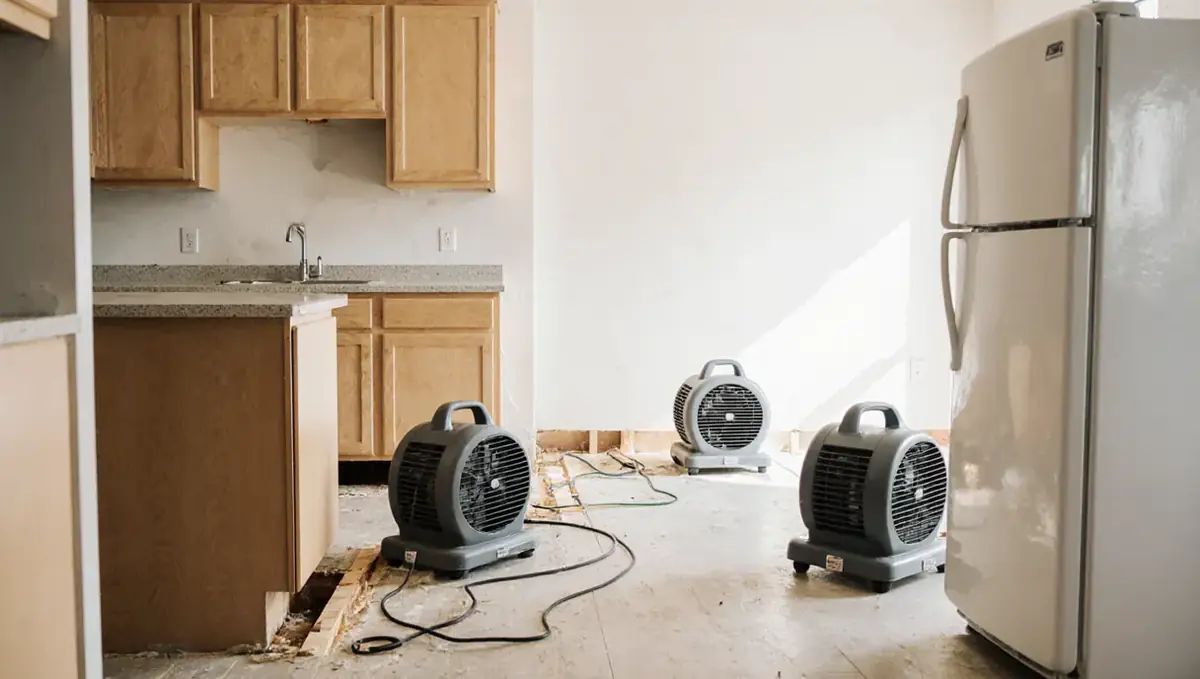
Repair is the last step, not the first
Water damage repair is the rebuilding phase of a water loss. It covers replacing the drywall, insulation, flooring, cabinets, trim and paint that had to be removed, and fixing anything the water weakened, such as subfloor or framing.
The most common mistake is rebuilding too soon. If new drywall or flooring goes over framing or subfloor that is still damp, moisture gets trapped and can cause mold, odors, buckled floors and peeling paint. Repairs should start only after the area has been properly dried and moisture readings confirm it. If that has not happened yet, start with structural drying.
What typically needs to be repaired or replaced
Drywall and insulation
Drywall wicks water upward. Wet sections are usually cut out a little above the highest point the water reached, a technique often called a flood cut. Wet fiberglass or cellulose insulation behind it is generally replaced because it holds moisture and loses effectiveness. After drying, new drywall is hung, taped, textured to match and painted.
Flooring
Carpet pad is usually replaced after it gets wet, and carpet exposed to contaminated water is typically discarded. Laminate and many engineered floors swell at the seams and often cannot be saved. Solid hardwood may cup or crown, and sometimes it can be dried in place and refinished, while other times boards must be replaced. Tile usually survives, but the grout, underlayment or subfloor beneath it may not.
Cabinets and built-ins
Base cabinets made from particleboard or MDF tend to swell and fall apart when wet. Crews often remove toe kicks or cabinet backs to dry the wall behind them. Depending on the damage, cabinets may be dried and kept, partly rebuilt, or replaced. Countertops are often removed carefully and reinstalled.
Subfloor and framing
Plywood and OSB subfloors can delaminate or swell, leaving soft spots and squeaks. Framing is usually dried rather than replaced, but rot, prolonged wetting or mold may call for sections to be cut out and sistered or replaced.
Doors, trim and paint
Baseboards, door casings and hollow-core doors often swell or separate. Paint may bubble or peel. These finishing items usually come last.
Why waiting makes repairs bigger
The longer a structure stays wet, the more there is to rebuild. Drywall that could have been dried may have to be cut out. Swelling particleboard does not shrink back. And EPA guidance notes that drying wet materials within 24 to 48 hours can help prevent mold growth, so delays raise the odds that the scope grows to include mold removal.
Leaving damaged materials in place can also hide problems such as weakened subfloors or rusted fasteners that become harder and more costly to fix later.
How the repair process usually unfolds
- Confirm the structure is dry. Moisture readings in framing, subfloor and remaining drywall should match normal, unaffected materials in the home.
- Write the scope. The contractor lists everything to be replaced or repaired and the materials to be used. This often becomes the basis for the insurance estimate.
- Check for hazards in older homes. Homes built before 1978 may contain lead-based paint, and some older materials may contain asbestos. Testing and safe work practices may be needed before cutting or sanding.
- Pull permits where required. Electrical, plumbing and structural work often needs a permit and inspection.
- Rebuild in order. Framing and subfloor first, then insulation, drywall, cabinets, flooring, trim and paint.
- Final walkthrough. Review the work, check that finishes match, and get final documentation for your records and your insurer.
What you can do while you wait
- Keep photos and video of all damage, including materials before they are removed.
- Save receipts for anything you buy, such as fans, tarps or temporary lodging.
- Ask the drying company for its moisture logs, which show when the structure reached its drying goal.
- Keep a small sample or photo of flooring, cabinets and countertops to help match replacements.
- Do not reinstall baseboards, close up walls or lay new flooring yourself until dryness is confirmed.
Working with your insurance on repairs
Repair costs depend on the materials you have, how much must be replaced, matching existing finishes and local labor rates. Coverage depends on your policy and the cause of loss. Policies often cover sudden and accidental water damage but may exclude long-term leaks, and flood damage from rising water is generally covered only by a separate flood policy.
A few habits help claims go smoothly:
- Let your adjuster see the damage, or provide thorough photos, before materials are thrown away when possible.
- Ask for a written, line-item estimate and compare it with the adjuster's estimate.
- Understand your deductible and any limits for things like matching or code upgrades.
- Read any assignment of benefits or direction to pay form carefully before signing.
If the original cause was a flood, our flood damage restoration page explains how NFIP claims differ.
Questions to ask a repair contractor
- Do you hold any contractor license required in this state, and do you carry liability and workers' compensation insurance?
- Will you confirm the structure is dry before rebuilding, and how?
- Do you handle both mitigation and rebuilding, or only one?
- Who pulls permits, and who are your subcontractors?
- What warranty do you offer on workmanship?
- How will you handle changes in scope if hidden damage turns up?
Getting connected through WaterQ
WaterQ does not perform repairs. We are a free referral service. Call (888) 817-5061 any time, day or night, and we will connect you with a local restoration company that can talk through drying, repairs or both. You review their estimate and decide whether to move forward.
Want the big picture first? Read our water damage restoration overview or check our service areas.
Find water damage repair help near you
WaterQ connects callers with local restoration companies in these states. Choose yours to find your city:
Frequently Asked Questions
How soon can repairs start after water damage?
Repairs should start only after moisture readings show that framing, subfloor and remaining materials are dry. Drying commonly takes several days. Rebuilding over damp materials can trap moisture and lead to mold.
Can wet drywall be saved?
Sometimes. Drywall wet with clean water and dried quickly may be kept. Drywall that is soft, crumbling, sagging, wet for a long time, or exposed to gray or black water is usually cut out and replaced.
Can hardwood floors be saved after water damage?
Solid hardwood can sometimes be dried in place with specialized equipment and then sanded and refinished. Laminate and many engineered floors swell at the seams and usually need replacement.
Will insurance pay for water damage repairs?
It depends on your policy and the cause. Sudden and accidental leaks are often covered, while gradual leaks are often excluded and flood damage needs a separate flood policy. Talk to your insurer and keep detailed documentation.
Do I need a permit for water damage repairs?
Cosmetic work often does not, but electrical, plumbing and structural repairs commonly require permits. Requirements vary by city and county, so ask your contractor or local building department.