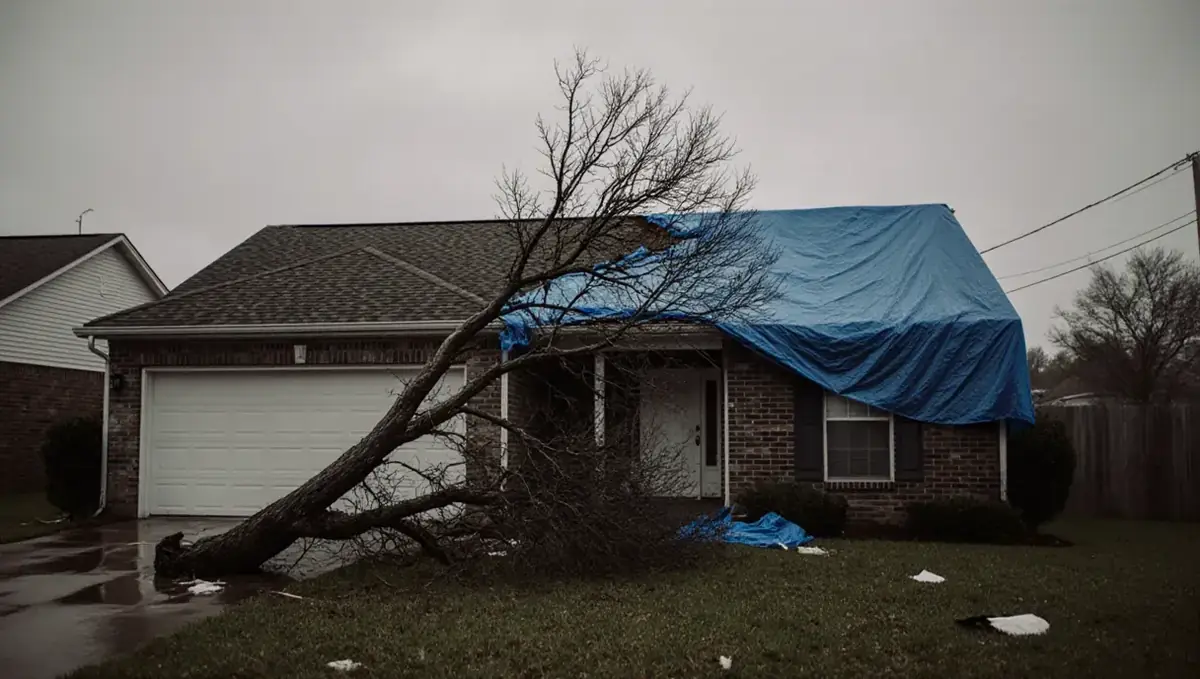
What storm damage cleanup covers
Storm damage cleanup and restoration deals with what wind, hail and heavy rain do to a building. That often means securing openings in the roof, walls and windows, removing water that came inside, drying the structure and making repairs.
The hallmark of storm damage is that the building envelope has been breached. Until the roof and windows are sealed, every rain shower can add new water damage, so protecting the home comes first.
Common types of storm damage
- Wind damage: missing or lifted shingles, torn flashing, damaged siding and soffits, and fallen trees or limbs.
- Hail damage: bruised or cracked shingles, dented gutters and vents, broken skylights and damaged siding.
- Roof leaks: water entering through damaged roofing and showing up as ceiling stains, sagging drywall or wet insulation in the attic.
- Wind-driven rain: water forced in around windows, doors and vents during hurricanes and tropical storms.
- Broken windows and doors: from flying debris during hurricanes, tornadoes and severe thunderstorms.
- Flooding and storm surge: rising water from heavy rain or coastal surge, covered on our flood cleanup page.
- Power outages: which can stop sump pumps and lead to flooded basements.
When storm water gets inside
Storm leaks often do their worst damage out of sight. Water that enters through a damaged roof soaks attic insulation first, then spreads across the top of the ceiling drywall before showing up as a stain or a bulge.
- Attics: wet insulation compresses, holds moisture against the ceiling and usually needs to be replaced.
- Ceilings: drywall that sags or bubbles may be holding water and can fall. Keep people out from under it.
- Exterior walls: wind-driven rain can soak sheathing, insulation and framing around windows and doors.
- Floors: water dripping from above can soak carpet, pad and subfloor in the rooms below.
A restoration crew can trace that moisture with meters and thermal cameras and dry or remove what is affected.
Why quick protection matters
An open roof or broken window lets more water in with every storm that follows. Wet attic insulation, drywall and framing can begin growing mold, and EPA guidance says drying wet materials within 24 to 48 hours can help prevent it.
Many insurance policies also expect homeowners to take reasonable steps to prevent further damage after a loss. Temporary tarping and board-up are typical examples, so keep photos and receipts.
How storm damage restoration usually works
- Safety and inspection. The crew checks for structural damage, downed lines, gas leaks and unsafe areas before going in.
- Emergency protection. Damaged roof sections are tarped, and broken windows and doors are boarded up.
- Debris removal. Branches, broken materials and debris are cleared from the home and, where needed, the property. Large trees may require a tree service.
- Water removal. Water that entered the home is extracted. See water extraction.
- Drying. Wet ceilings, walls, insulation and floors are dried with dehumidifiers and air movers. See structural drying.
- Repairs. Roofing, siding, windows, drywall and interior finishes are repaired or replaced, sometimes with different trades for each.
Staying safe after a hurricane, tornado or severe storm
- Stay off the roof, especially during wind or rain. Leave roof work to professionals with fall protection.
- Stay away from downed power lines and anything touching them, and report them to your utility.
- Never run a generator indoors, in a garage or near open windows. Carbon monoxide is a serious danger after storms.
- Avoid rooms with sagging ceilings. A ceiling holding water can collapse.
- Turn off power to wet areas only if you can reach the breaker safely.
- Document the damage with photos and video, inside and outside, before cleanup begins.
- Place buckets and towels under active drips and move belongings out of the way.
Insurance considerations for storm damage
Storm repair costs depend on the extent of roof, window and structural damage, how much water got inside, and how much drying and rebuilding is needed.
Coverage depends on the cause of damage and your policy. In general:
- Wind and hail damage is often covered under homeowners policies, but some coastal areas use separate windstorm policies or special hurricane deductibles.
- Rain entering through storm-created openings is often treated differently from gradual leaks.
- Flooding and storm surge are generally excluded from homeowners policies and covered only by a separate flood policy. See flood damage restoration.
Read your policy, report the claim promptly and keep receipts for emergency repairs.
Avoiding storm-chasing contractors
After major storms, out-of-area contractors often go door to door. Before you hire anyone, ask:
- Are you licensed where required in this state, and can I verify it?
- Do you carry liability and workers' compensation insurance?
- Do you have a local address and references?
- Will you put the scope, price and timeline in writing?
- Who handles the roofing, and who handles the interior water damage?
Avoid paying large deposits in cash, and be careful about signing anything that hands over your insurance claim before you understand it.
How WaterQ connects you with help
WaterQ is a free referral service. We do not tarp roofs or perform repairs ourselves. Call (888) 817-5061, available 24/7, and we will connect you with a local restoration company that handles storm damage in your area. You can also explore our service areas.
Find storm damage cleanup help near you
WaterQ connects callers with local restoration companies in these states. Choose yours to find your city:
Frequently Asked Questions
What should I do first after storm damage?
Make sure everyone is safe, stay away from downed lines, and avoid rooms with sagging ceilings. Then document the damage with photos, protect belongings from leaks and contact your insurer and a restoration company.
What is emergency tarping and board-up?
Tarping covers damaged roof areas and board-up covers broken windows and doors with temporary materials. Both help keep rain and debris out until permanent repairs can be made.
Is storm damage covered by insurance?
Wind and hail damage is often covered under homeowners policies, though some areas have separate windstorm coverage or hurricane deductibles. Flooding and storm surge are generally covered only by a separate flood policy.
How can I tell if my roof has hail damage?
Signs include dented gutters and vents, granules washing out of downspouts and cracked or bruised shingles. Do not climb on the roof yourself. A professional roofer can inspect it safely.
Why does storm damage lead to mold?
Wet insulation, drywall and framing can grow mold if not dried quickly. EPA guidance says drying wet materials within 24 to 48 hours can help prevent mold growth.