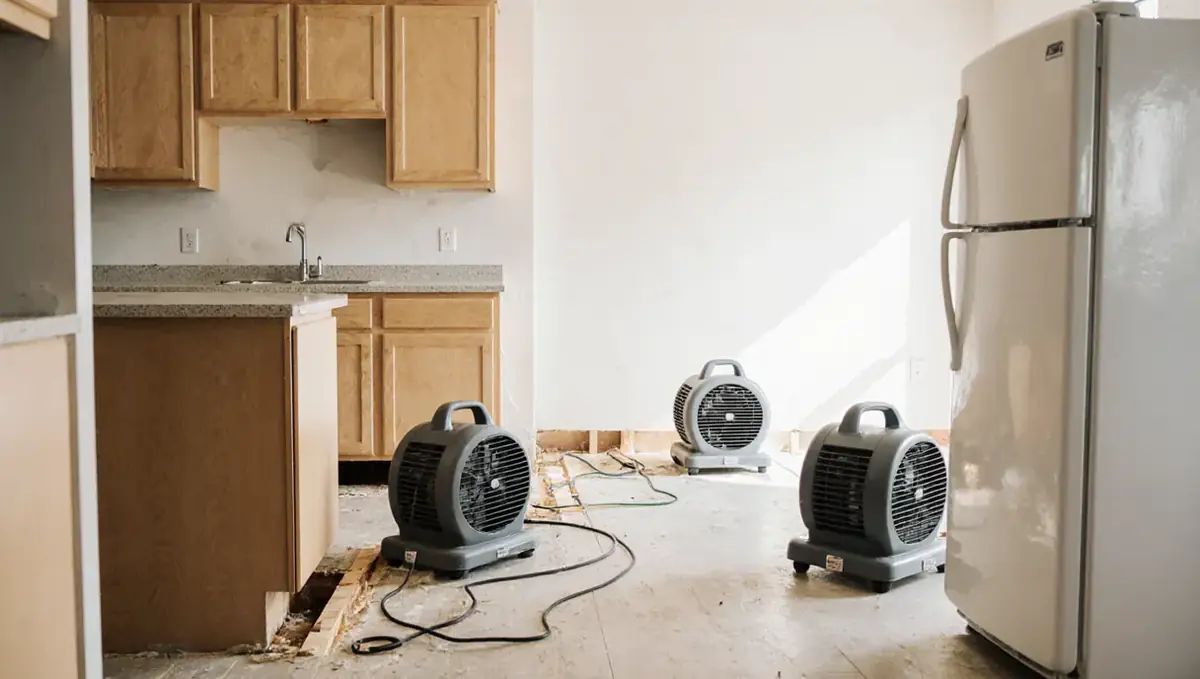
What structural drying is
Structural drying is the controlled process of removing moisture from a building's materials after a water loss, including drywall, framing, subfloor, concrete and cabinets. It begins after standing water has been removed through water extraction, and it continues until measurements show the materials are dry.
The goal is not just to make surfaces feel dry. It is to get moisture out of wall cavities, wood and other materials where it can hide and cause mold, odors, swelling and failed repairs later.
The science behind it: psychrometry in plain English
Psychrometry is the study of air and the water vapor it holds. Restoration professionals use it to decide how to set up and adjust drying equipment. A few basic ideas:
- Relative humidity is how full the air is with moisture compared with what it could hold at that temperature.
- Humidity ratio, often measured in grains per pound, is the actual amount of water vapor in the air. It lets technicians compare air inside, outside and at the dehumidifier.
- Dew point is the temperature at which moisture in the air condenses. Keeping surfaces above it prevents new condensation.
- Vapor pressure drives moisture from wetter materials into drier air. Drier, warmer air over wet materials speeds evaporation.
In short, drying works by evaporating water out of materials with moving air, capturing that moisture with dehumidifiers so it does not come back, and managing temperature to keep the process efficient.
Equipment used for drying
- Air movers: high-velocity fans that blow air across wet surfaces to speed evaporation.
- Refrigerant dehumidifiers: including low-grain refrigerant (LGR) units that can pull moisture from air to lower humidity levels than conventional units.
- Desiccant dehumidifiers: which use a moisture-absorbing material and can be useful in cooler conditions or for dense materials.
- Specialty systems: such as wall cavity drying tools, floor drying mats for hardwood and heat drying in some situations.
- Air scrubbers: HEPA-filtered units used when there is contamination, dust or mold concern.
The right setup depends on the amount of water, the materials, the size of the space and the weather. More fans is not always better: too much air movement without enough dehumidification can just raise humidity and spread moisture.
Moisture mapping, drying goals and daily monitoring
Good drying is measured, not guessed. Professionals typically:
- Map the moisture. Using penetrating and non-penetrating moisture meters and thermal cameras, they mark where water spread, including inside walls and under floors.
- Set a drying goal. Readings from similar, unaffected materials elsewhere in the home serve as the target, sometimes called a dry standard.
- Plan the drying system. Under IICRC S500 terminology, the class of loss reflects how much water is present and how hard the materials are to dry. It helps determine equipment needs.
- Open up where needed. Drilling small holes, removing baseboards or pulling toe kicks can let air reach trapped moisture.
- Monitor and adjust. Temperature, humidity and material readings are recorded regularly, often daily, and equipment is moved or adjusted as areas dry.
- Verify and remove equipment. Equipment comes out when readings reach the drying goal, and records are kept for the homeowner and insurer.
Materials that take longer to dry
Not every material gives up water at the same rate. Drywall and carpet dry fairly quickly once air and dehumidification reach them. Dense materials such as solid hardwood flooring, plaster, concrete slabs and masonry release moisture slowly. Under IICRC S500 terminology, losses that involve these deeply soaked, low-permeance materials are often described as needing specialty drying.
For these situations, a crew may use floor drying mats, injection systems that push dry air into wall cavities, lower humidity targets or targeted heat. Patience matters here. Pulling equipment too early can leave moisture trapped in the slab or under the floor.
Why drying quickly and correctly matters
EPA guidance says drying water-damaged materials within 24 to 48 hours can help prevent mold growth. Slow or incomplete drying gives mold time to start and can lead to warped flooring, swollen cabinets and peeling paint.
It also affects repairs. Rebuilding over damp framing or subfloor traps moisture inside new walls and floors. Proper drying keeps water damage repairs smaller and helps them last.
What you can do to help
- Leave equipment running and in place unless the crew tells you otherwise.
- Keep windows and doors closed if the crew asks, since outdoor humidity can slow drying.
- Keep the thermostat at the setting the crew recommends.
- Keep children and pets away from cords and equipment.
- Tell the crew if you notice new stains, odors or wet spots.
Cost, insurance and questions to ask
Drying costs depend on the affected area, the amount and category of water, the materials and how many days equipment runs. Insurance coverage depends on what caused the water and your policy. Detailed moisture logs help your adjuster see what was done and why.
Ask any drying company:
- Are your technicians trained in water damage restoration and applied structural drying, for example through IICRC courses?
- How will you measure moisture, and what is the drying goal?
- How often will you check readings, and will I get copies?
- Why did you choose this equipment, and how long do you expect drying to take?
- Are you licensed where required and insured?
Get connected through WaterQ
WaterQ is a free referral service. We do not install drying equipment ourselves. Call (888) 817-5061 any time, day or night, and we will connect you with a trusted, local restoration company. For the whole process, see our water damage restoration overview, or visit our service areas.
Find structural drying help near you
WaterQ connects callers with local restoration companies in these states. Choose yours to find your city:
Frequently Asked Questions
How long does structural drying take?
Many jobs take several days, but it depends on the amount of water, the materials, the class of loss and the weather. Dense materials such as hardwood, plaster and concrete can take longer.
Can I just use household fans?
Household fans move some air but do not remove moisture from it, and they cannot dry wall cavities or subfloors well. Professional dehumidifiers and air movers, guided by moisture readings, are far more effective for anything beyond a minor spill.
Why are the drying machines so loud and warm?
Air movers move a lot of air at high speed, and dehumidifiers give off heat as they work. Warmer, drier air helps pull moisture out of materials faster.
How do professionals know when everything is dry?
They compare moisture readings in affected materials with similar, unaffected materials in the home. When readings match the drying goal, the area is considered dry.
Do walls always have to be torn out to dry?
Not always. Walls wet with clean water can sometimes be dried in place, using small holes or removed baseboards to get air into the cavity. Contaminated or badly damaged materials are usually removed.