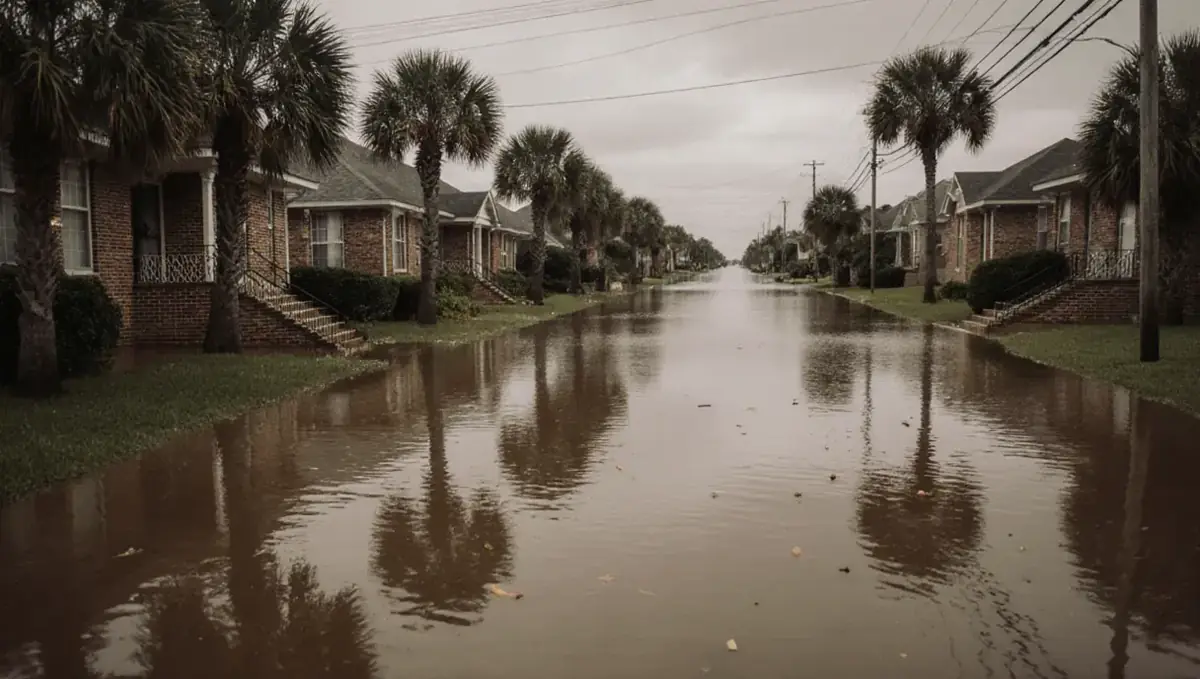
Resacas, Clay and a Flat Delta: Brownsville's Water Story
Brownsville sits at the bottom of Texas on the Rio Grande, across from Matamoros, at roughly 33 feet above sea level. Winding through town are the resacas, old channels of the river that now hold water like long, narrow lakes. They give the city its character, and in a hard rain they can also rise over their banks.
The ground itself does not help. Soils here are mostly clay to silty clay loam, and the land is very flat, so water soaks in slowly and has few places to run. Several parts of the city carry a high risk of localized flooding for exactly those reasons, along with limited drainage funding over the years.
Average rainfall is only about 26.78 inches a year (1991-2020), but it tends to arrive in bursts. The wet season peaks in September, the same month the tropical threat is highest. A dry spring can be followed by a few hours that drop a big share of the year's rain at once, and that pattern drives a lot of water damage in Brownsville.
What Recent Floods Taught Brownsville Homeowners
Two recent events show how quickly things can change. During the Great June Flood of 2018 (June 18-22), a gauge near downtown measured 13.20 inches. The National Weather Service reported flooding in downtown, west and northwest Brownsville, along with water rescues, and more than 7,400 homes and businesses in Cameron and Willacy counties had flood damage.
On October 1, 2021, Brownsville picked up 8.09 inches in a single day, far above the old daily record of 2.44 inches set in 1958. Parts of east and northeast Brownsville got 7 to 8 inches in about two hours. A resaca overflowed near Vermillion Ave, and streets around Paredes Line Road and Morrison Road, plus Kingsway and Canterbury Road, went under. Hundreds of homes took on water, from a few inches to more than a foot.
The lesson is simple. You do not need to live beside the river to flood here. A home near a resaca, a low street or a slow ditch can take water in an afternoon storm.
Before the Restoration Crew Arrives
Your first moves can save a lot of flooring and drywall. Put safety ahead of belongings:
- Stay out of moving water. Streets in east Brownsville have flooded waist to chest deep in past storms. Never drive or wade through it.
- Cut the source if it's plumbing. Close the main shutoff for a broken supply line, water heater or toilet.
- Keep clear of electricity. Don't step into a flooded room with live outlets or cords. Shut off the breaker only if you can reach the panel from a dry spot.
- Sort clean water from dirty. A burst pipe is usually Category 1 clean water. Resaca overflow and street runoff are Category 3 and can carry sewage, so keep kids and pets away.
- Take pictures. Photograph waterlines on walls, the source and any damaged contents before you move things.
- Call for help. Dial (888) 817-5061 to be connected with a local company that handles emergency water extraction.
Extraction, Drying and Rebuilding on a Concrete Slab
Most water damage restoration in Brownsville follows the same basic path, adjusted for how dirty the water was and how long it sat.
- Water removal. Pumps and extractors pull out standing water and wring wet carpet and pad. Pad soaked by floodwater is usually discarded.
- Tear-out. With Category 3 water, wet drywall, baseboards and insulation are typically cut out above the waterline so cavities can be cleaned and dried.
- Moisture checks. Meters and thermal cameras show where water wicked into walls, cabinets and subfloor.
- Drying. Dehumidifiers and air movers run until readings reach dry standards. Humid Gulf air makes dehumidification essential. Learn more about structural drying.
- Repairs. Then comes water damage repair: drywall, paint, flooring and trim.
It is reasonable to ask any Brownsville company you hire to describe its licensing, insurance and staff training (IICRC certification is one example) before work begins.
Hurricane Season on the Lower Rio Grande
Atlantic hurricane season runs June 1 through November 30, and Brownsville has a long storm record. Hurricane Beulah made landfall near the mouth of the Rio Grande just south of the city in September 1967 as a Category 3. In July 2008, Hurricane Dolly came ashore on South Padre Island and dropped 10 to 20 inches of rain across the delta, and about 155,000 homes lost power at the peak. Even the historic Stillman House Museum needed restoration afterward.
Storms bring two problems at once: wind that opens roofs and windows, and rain that floods from the ground up. Storm damage cleanup often starts with tarping and boarding, then moves into flood cleanup, sanitizing and drying.
Check your evacuation zone on the RGV hurricane evacuation zone map and sign up for alerts through Cameron County Emergency Management.
Mold in a Humid Border City, and What Texas Requires
EPA guidance says mold may start to form on damp building materials in as little as 24 to 48 hours. In Brownsville's heat and humidity, a soaked wall cavity or wet carpet pad can turn into a mold problem quickly if drying is delayed.
Texas regulates this work. The Texas Department of Licensing and Regulation (TDLR) licenses mold assessment and remediation professionals, and a license is generally required when mold covers 25 contiguous square feet or more. The same person or company may not do both the assessment and the remediation on one project. After remediation, a Certificate of Mold Remediation must be issued within 10 days, so keep it with your home records.
Small, surface spots can sometimes be handled by a homeowner. For bigger growth, see our page on mold removal and ask for TDLR license numbers before work starts.
Claims, Records and Brownsville Rental or Retail Space
Standard homeowners policies generally exclude flood, so resaca or street flooding is usually covered only by an NFIP or private flood policy. New NFIP policies typically carry a 30-day waiting period, which means buying one in September may be too late for that season. The Texas Attorney General notes most Texas homeowner policies cover only sudden and accidental leaks and may exclude or cap mold remediation.
- Report the loss to your insurer promptly.
- Keep photos, moisture readings, drying logs and receipts in one place.
- Save damaged items until the adjuster has seen them, if it is safe to do so.
Store owners, landlords and property managers in Brownsville deal with the same risks on a larger scale, from flooded retail floors to leaks between apartment units. Call (888) 817-5061 and we will connect you with a local provider that handles residential or commercial work. WaterQ cannot predict how a claim will be decided, but good records make the process smoother.
Brownsville Areas and Nearby Cameron County Towns
The free WaterQ line connects callers throughout Brownsville and nearby Cameron County communities with independent local restoration companies.
Neighborhoods
- Downtown Brownsville
- Central Brownsville Historic District
- East Brownsville
- Northeast Brownsville
- Paredes Line Road / Morrison Road area
- West Brownsville
Nearby communities
- Cameron Park
- Olmito
- Los Fresnos
- San Benito
- Port Isabel
- South Padre Island
- Harlingen
- Rio Hondo
Brownsville Water Damage FAQ
Why does my Brownsville street flood when the Rio Grande isn't high?
Most local flooding comes from intense rain, not the river. Brownsville is very flat and has clay soils that absorb water slowly, so a few inches in a couple of hours can overwhelm ditches and resacas. In October 2021, parts of east and northeast Brownsville got 7 to 8 inches in about two hours.
Is resaca water safe to clean up on my own?
Treat it as contaminated. Overflow from resacas and street runoff can carry sewage, chemicals and debris, which places it in Category 3. Wear protection, keep children and pets away, and consider having a professional remove soaked materials and sanitize the area.
Who licenses mold remediation companies in Texas?
The Texas Department of Licensing and Regulation (TDLR). A license is generally required for mold areas of 25 contiguous square feet or more, and the assessor and the remediator on one project must be different people or companies.
Will homeowners insurance pay for flood damage in Brownsville?
Usually not. Standard homeowners policies generally exclude flood, which is covered by NFIP or private flood insurance. NFIP policies typically have a 30-day waiting period, so it is best to buy coverage well before hurricane season peaks.
Is WaterQ a restoration company?
No. WaterQ is a free referral service. When you call, you are connected with an independent, local restoration company that inspects the damage and does the work. The line is available 24/7.
Local emergency and flood resources
Official sources for alerts, flood maps and preparedness in and around Brownsville: