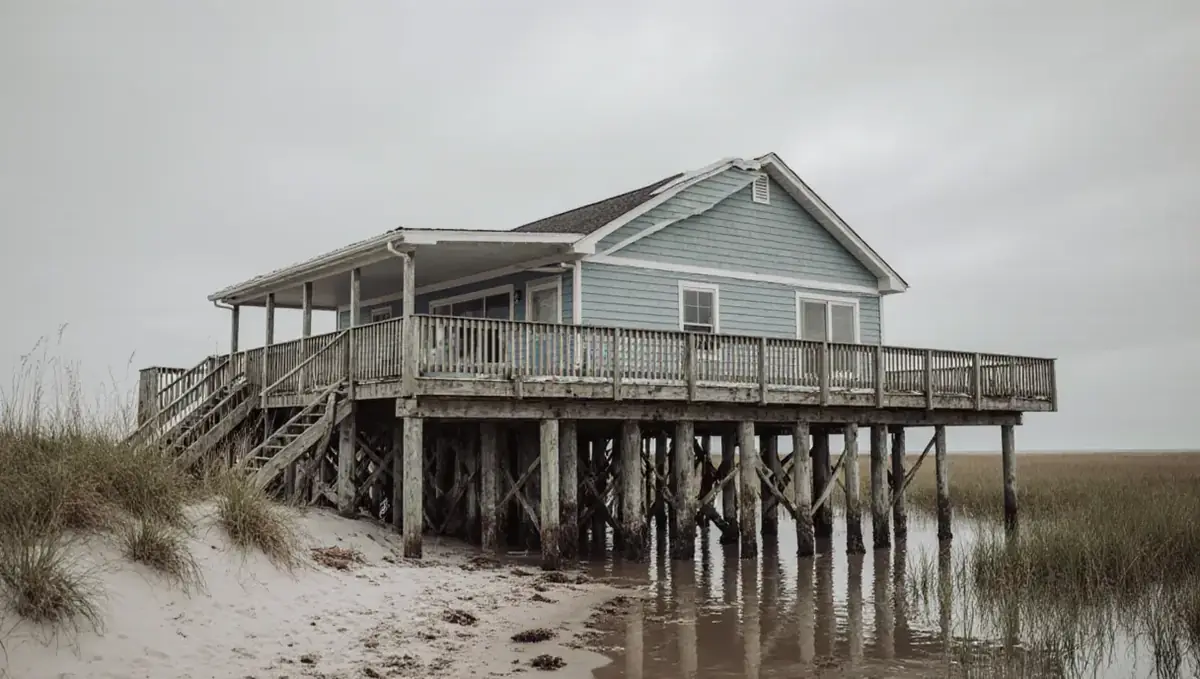
Life Behind the Seawall
Galveston occupies Galveston Island and Pelican Island, a barrier-island city with the Gulf of Mexico to the south and east and West Bay and Galveston Bay to the north. The official elevation is only about 6.6 feet. After the September 8, 1900 hurricane killed an estimated 6,000 to 8,000 people on the island, the city built a 10-mile seawall about 17 feet high and raised much of the existing city's grade behind it.
The seawall changed the city, but it does not make Galveston dry. Water can come from the Gulf side as surge, from the bay side as rising water that floods streets downtown, and from above as heavy rain. Annual rainfall is well over 40 inches, with some areas topping 50. The West End, beyond the western end of the seawall, has no wall at all.
Ordinary leaks happen here too, and the humid air means wet materials rarely dry on their own.
Lessons From 1900, Carla and Ike
The island's storm history is long, and each event showed a different way water and wind cause damage.
- 1900 hurricane. Still the deadliest natural disaster in US history, it led directly to the seawall and grade raising.
- Hurricane Carla, 1961. Carla spawned an F4 tornado in Galveston that killed eight people and damaged more than 200 buildings between 19th and 25th streets.
- Hurricane Ike, 2008. Ike made landfall on the northeast end of the island on September 13 as a Category 2 storm with 110 mph winds. Surge had begun topping the seawall the afternoon before, and widespread flooding reached downtown, including the University of Texas Medical Branch.
Ike is a reminder that a big surge can flood bay-side neighborhoods and downtown even when the Gulf-facing seawall stands. After any storm, have a professional check walls, floors and under-house systems before you rebuild.
Saltwater, Surge and What Gets Removed
Floodwater from surge or the bay is Category 3 water. It can carry sewage, fuel and debris, and seawater leaves salt behind in wood, drywall and insulation. That is why flood cleanup in Galveston tends to be aggressive.
- Safety check. Power stays off to flooded circuits until an electrician says otherwise.
- Mud and water out. Standing water and sediment are removed, followed by soaked carpet, pad and furniture that cannot be cleaned.
- Flood cuts. Drywall and insulation are cut out above the waterline so cavities can be cleaned and dried.
- Clean and sanitize. Studs, subfloors and slab surfaces are washed and treated.
- Dry and verify. Dehumidifiers and air movers run until readings show materials are dry. See structural drying.
Learn more about flood damage restoration and storm damage cleanup.
Victorian Homes and Houses on Stilts
Galveston has one of the largest collections of historically significant 19th-century buildings in the country. The East End Historic District alone holds 463 buildings, and the Silk Stocking District between Broadway and Seawall Boulevard is lined with homes built from the Civil War era through World War II. The Strand's Victorian commercial buildings now house shops, restaurants and galleries.
Older homes call for careful work: original wood floors, trim and plaster can often be dried and saved rather than torn out, if moisture is caught early. Raised homes, common on the West End, bring their own issues, with plumbing, ductwork and insulation exposed beneath the floor, where wind-driven rain and surge can reach them.
For water damage repair in Galveston on a historic property, ask the restoration company about experience with older materials, along with its licensing, insurance and training (such as IICRC certification).
Leak Response for Island Homes and Rentals
- Turn off the water. Use the main valve or the fixture shutoff. On a raised house, the main may be under the home or near the street.
- Avoid shock hazards. Stay away from wet outlets and appliances, and do not wade into floodwater.
- Tell the owner or tenant. If the property is a rental or a second home, alert the owner or tenant right away so nothing sits wet for days.
- Document it. Photos and video of the source, the rooms and belongings help any claim.
- Call (888) 817-5061. We connect you with a local company for emergency water removal, drying and repairs.
Mold Control on a Humid Island
Summer nights in Galveston often stay around 80 degrees, and humidity is high most of the year. Following EPA guidance, mold can start on wet materials within 24 to 48 hours, and a home closed up after a storm can develop it quickly.
The Texas Department of Licensing and Regulation (TDLR) issues the state's mold assessment and remediation licenses. Licensing generally applies when mold covers 25 contiguous square feet or more, and the company that assesses a project may not also remediate it. A Certificate of Mold Remediation must be issued within 10 days after remediation; hold onto it, since sellers must give buyers copies.
See how mold removal works, including containment for mold cleanup in Galveston homes and businesses.
Wind, Flood and Windstorm Coverage
Galveston County is one of the first-tier coastal counties where wind coverage is often written through the Texas Windstorm Insurance Association (TWIA). TWIA covers wind and hail, not flood.
- Flood needs its own NFIP or private policy, and NFIP coverage typically starts after a 30-day waiting period, so buy well before a storm.
- Most Texas homeowner policies cover only sudden and accidental leaks, according to the Texas Attorney General, and mold may be excluded or capped.
- After a storm, separate wind damage (roof, windows) from flood damage (waterline) in your photos.
WaterQ cannot predict claim results. For storm damage cleanup or a leak today, call (888) 817-5061 to be connected with a local restoration professional.
Galveston Neighborhoods and Nearby Coastal Communities
The free WaterQ line connects callers across Galveston Island, Pelican Island and the nearby mainland with independent local restoration providers.
Neighborhoods
- East End Historic District
- Silk Stocking District
- The Strand
- Lindale
- Kempner Park
- San Jacinto
- Central City
- Fort Crockett
- Bayou Shore
- Lasker Park
- Carver Park
- Havre Lafitte
- Offatts Bayou
- West End
- Pelican Island
Nearby communities
- Jamaica Beach
- Texas City
- La Marque
- Hitchcock
- Bolivar Peninsula
- Tiki Island
- Bayou Vista
- League City
- Dickinson
Galveston Water Damage FAQ
Does the seawall protect all of Galveston from flooding?
No. The roughly 10-mile seawall faces the Gulf, but the West End lies beyond it, and bay-side water can flood downtown and other neighborhoods. In Hurricane Ike, surge overtopped the seawall and widespread flooding reached downtown.
Does TWIA cover flood damage?
No. TWIA policies cover wind and hail. Flood damage requires a separate NFIP or private flood policy, and new NFIP policies usually have a 30-day waiting period.
Can water-damaged woodwork in a historic Galveston home be saved?
Often, if drying starts quickly and the water was clean. Floors, trim and plaster soaked by surge or floodwater may need more removal because of contamination and salt. A restoration company can assess each material.
What mold license rules apply in Texas?
TDLR licenses mold assessors and remediators. A license is generally required for 25 contiguous square feet or more, and the same company may not both assess and remediate a project.
Is WaterQ a restoration company?
No. WaterQ is a free referral service available 24/7. Your call connects you with an independent, local restoration company that does the work.
Local emergency and flood resources
Official sources for alerts, flood maps and preparedness in and around Galveston: