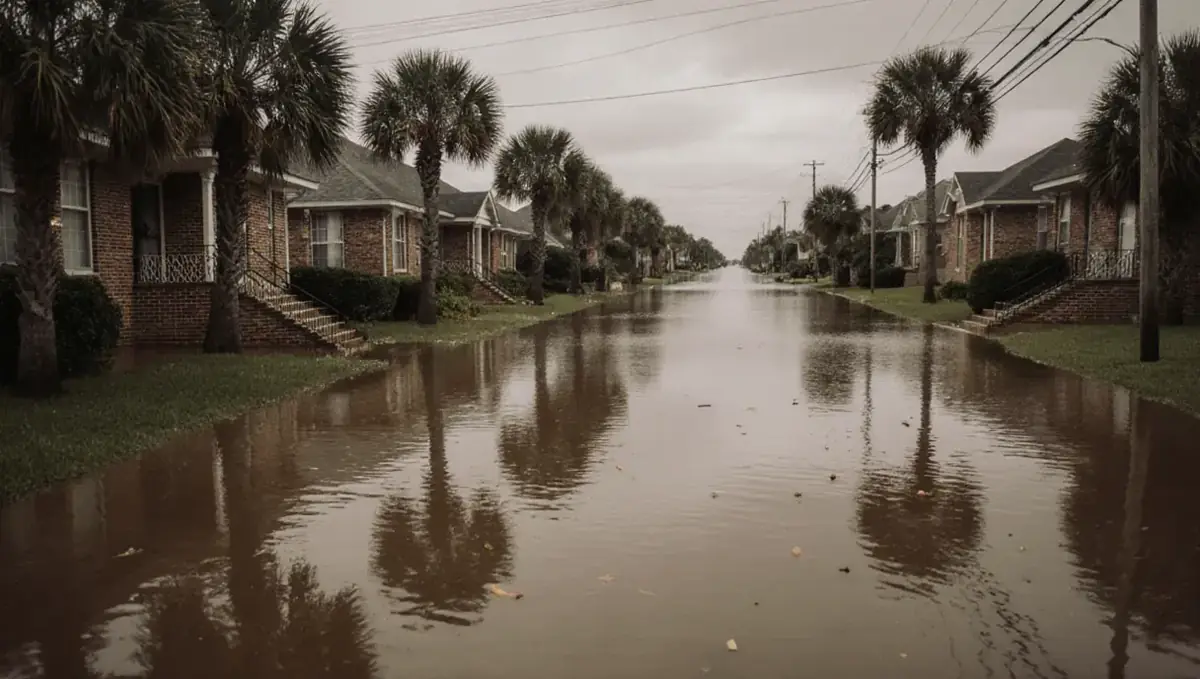
Most Fort Worth Flooding Happens Outside the FEMA Map
Fort Worth spreads across nearly 350 square miles of Tarrant County and reaches into four neighboring counties. The Clear Fork and West Fork of the Trinity River meet near downtown, and the West Fork arrives after passing through Eagle Mountain Lake and Lake Worth. Benbrook Lake sits to the southwest, and Marine Creek winds through the north side.
You might expect the river to cause most of the trouble, but the City says otherwise. According to Fort Worth's stormwater program, most reported flooding in the city actually occurs outside the FEMA floodplain, in places where intense rain overwhelms streets, small channels and storm drains. The City maps these as City Flood Risk Areas and Potential High Water Areas. It also reports that in the past few years eight people have died on flooded roadways and more than 300 homes and businesses have had major flood damage.
Check your address on the City's Flood Risk Viewer, even if your lender has never asked about flood insurance.
Low-Water Crossings and the High-Water Warning System
Fort Worth monitors about 55 flood-prone low-water road crossings with its High-Water Warning System. When water rises, roadside flashers turn on and automated alarms notify first responders, who put up barricades. The City's guidance is simple: never drive around barricades, and turn around when the flashers are going.
The Trinity has a history too. The City keeps a photo collection from the Fort Worth Flood of May 1949, and the Panther Island project, which began as Trinity River Vision in 2005, is re-channeling the river just north of downtown for flood control and redevelopment.
If floodwater reaches your home or business, flood cleanup in Fort Worth starts with treating the water as contaminated. Wet carpet, pad, insulation and lower drywall are usually removed, and surfaces are cleaned and sanitized before flood damage restoration and drying move forward.
Supercells, Softball Hail and Downtown's 2000 Tornado
Fort Worth is very susceptible to supercell thunderstorms that produce large hail and sometimes tornadoes. The May 5, 1995 Mayfest storm dropped softball-sized hail on Dallas-Fort Worth, with about $1.1 billion in insured losses and roughly $2 billion in total damage. On June 13, 2012, baseball- to softball-sized hail hit the area again, causing about $900 million in damage.
On March 28, 2000, an F3 tornado struck downtown Fort Worth and severely damaged many buildings, including the Bank One Tower. It was the first major tornado to hit the city proper since the early 1940s.
Hail and wind open roofs, windows and skylights, and the water damage often shows up later as ceiling stains and wet insulation. Storm damage cleanup begins with tarping or boarding openings, then drying the attic, ceilings and walls before repairs.
139 Hours Below Freezing: Lessons From February 2021
Winter is usually mild here, but hard freezes still happen. During the February 2021 winter storm, DFW Airport fell to -2 F on February 16 and stayed below freezing for 139 consecutive hours, from the evening of February 13 until noon on February 19. Pipes burst all across Texas.
Burst pipes often do the most damage after the thaw, when water flows again through a split line inside a wall or attic. Before a hard freeze, insulate exposed pipes, open cabinet doors on exterior walls and know where your main shutoff is. If a line does split, close the main right away and call (888) 817-5061 to be connected with a local company for water extraction and drying.
First Moves After a Leak or Flood
- Shut off the water at the main or the fixture.
- Put safety first. Avoid standing water near outlets, appliances or extension cords. Switch off breakers only from a dry spot.
- Classify the water. Clean supply water is Category 1. Street floodwater, creek water and sewage are Category 3 and need professional handling.
- Record the damage with photos and video before cleanup starts.
- Report street flooding or drainage problems through the City's MyFW app.
- Line up help. Our 24/7 line at (888) 817-5061 connects you with an independent local restoration professional.
How Restoration Pros Dry Older and Newer Buildings
Fort Worth's housing spans more than a century. Arlington Heights grew after World War I and is known for 1920s bungalows and Tudors, the North Side expanded after meatpacking plants opened in 1903, and postwar neighborhoods spread to the south and east in the 1950s and 1960s. Each era has its own materials, from plaster and old wood floors to drywall and slab foundations.
Most water damage restoration in Fort Worth still follows four steps: extract standing water, map hidden moisture with meters and thermal imaging, dry the structure with air movers and dehumidifiers while logging readings, and then rebuild. Learn more about structural drying and water damage repair. In older homes, ask how a provider handles plaster walls and original woodwork, and ask any company about its licensing, insurance and training, such as IICRC certification.
Mold, Claims and Commercial Spaces
EPA guidance says mold can begin growing within 24 to 48 hours on wet materials. For mold removal in Fort Worth involving 25 contiguous square feet or more, Texas generally requires a TDLR-licensed assessor and a separately licensed remediator; the same firm may not do both on one project. A Certificate of Mold Remediation must be issued within 10 days after the work. See mold removal for how containment works.
- Standard homeowners policies generally exclude flood, which needs an NFIP or private flood policy; NFIP coverage usually starts after 30 days.
- The Texas Attorney General notes many Texas policies cover only sudden and accidental leaks and may exclude or cap mold.
- Keep photos, moisture logs and invoices organized for your adjuster.
Downtown offices, Near Southside businesses and apartment owners can call (888) 817-5061 for help with sprinkler breaks, roof leaks or flooded suites. WaterQ cannot predict any insurer's decision, but solid records help.
Fort Worth Neighborhoods and Tarrant County Neighbors
WaterQ's free referral line connects callers across Fort Worth and surrounding Tarrant County cities with independent local restoration providers.
Neighborhoods
- Downtown / Sundance Square
- Near Southside
- Fort Worth Cultural District
- Arlington Heights
- Rivercrest
- Fairmount
- Ryan Place
- Mistletoe Heights
- Polytechnic Heights
- Historic Southside
- Terrell Heights
- Overton Park
- Tanglewood
- Mira Vista
- Stockyards
- Upper West Side
- North Side
Nearby communities
- Arlington
- Benbrook
- Saginaw
- White Settlement
- River Oaks
- Lake Worth
- Westworth Village
- Westover Hills
- Everman
- Forest Hill
- Blue Mound
- Sansom Park
Fort Worth Water Damage FAQ
Can my Fort Worth home flood if it is outside the FEMA floodplain?
Yes. The City of Fort Worth says most reported flooding happens outside the FEMA floodplain. Check the City's Flood Risk Viewer for City Flood Risk Areas and Potential High Water Areas near you.
What do the flashing lights at Fort Worth low-water crossings mean?
They are part of the City's High-Water Warning System, which monitors about 55 crossings. When the lights flash, water is rising over the road. Turn around and never drive around barricades.
A pipe burst during a freeze. What should I do first?
Close the main water valve, turn off power to wet areas if you can do so safely, and photograph the damage. Then have a plumber repair the line and a restoration company extract water and dry the walls and floors.
Do I need a licensed contractor for mold in Texas?
Generally yes for 25 contiguous square feet or more. TDLR licenses mold assessors and remediators, and the same company may not assess and remediate the same project.
Does WaterQ have a Fort Worth office or crew?
No. WaterQ is a free referral service that connects you with an independent local restoration company. The line is available 24/7, and the company you are connected with does the work.
Local emergency and flood resources
Official sources for alerts, flood maps and preparedness in and around Fort Worth: