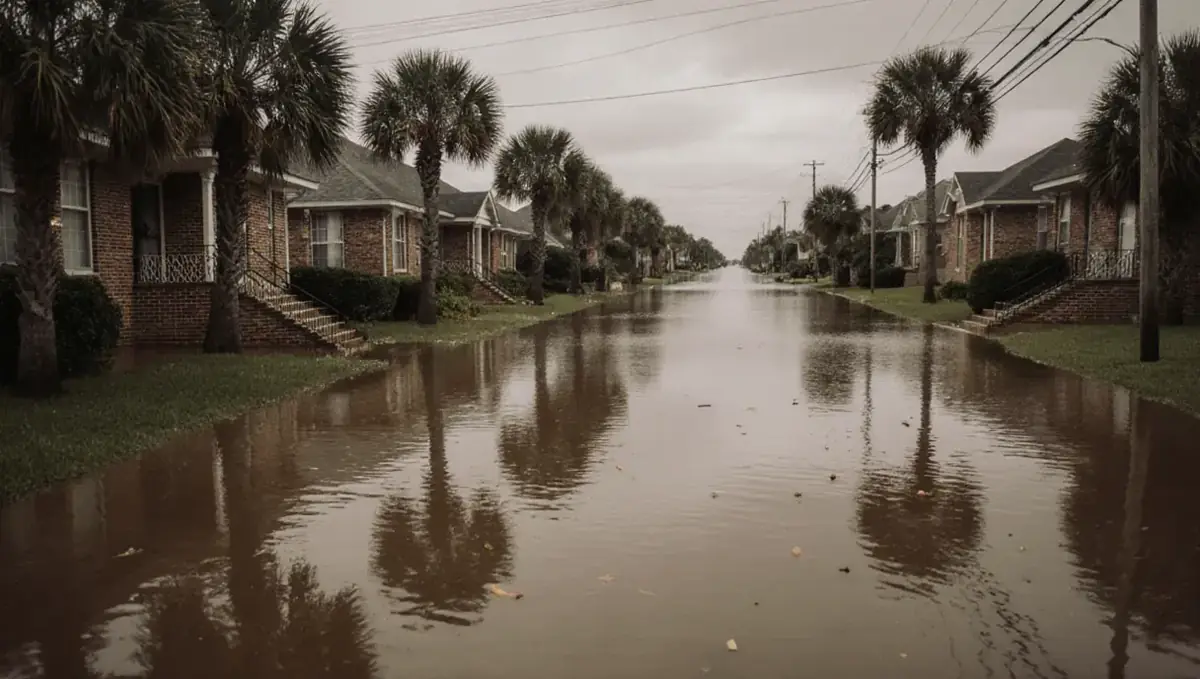
Thirteen Feet Above Sea Level, Surrounded by Levees
Stockton's official elevation is just 13 feet. The city lies on the San Joaquin River at the southeastern corner of the Sacramento-San Joaquin Delta, and a dredged river channel, the Stockton Deepwater Channel, links its port to the San Francisco Bay Area. San Joaquin County is described as a marshy delta that tends to flood in spring when Sierra Nevada snow melts.
Levees hold much of that water back. A 2018 federal study found that San Joaquin River flooding could possibly put much of Stockton under 10 to 12 feet of water if the levees are not upgraded. That is a projection, not a forecast, but it explains why flood planning matters so much here.
Day to day, most homeowners deal with smaller events: a failed water heater, a roof leak in a winter storm or a supply line that lets go while nobody is home. Water damage restoration in Stockton covers both ends of that range.
What the Jones Tract Break Showed About Delta Levees
On June 3, 2004, a levee on Upper Jones Tract, a Delta island roughly 15 kilometers west of Stockton, failed in early summer. More than 150,000 acre-feet of water filled the entire island. Repairing the breach took about three weeks, pumping the island dry continued until December 18, and repairs cost about $90 million.
The lesson for local owners is that a levee can fail outside the rainy season. During wet winters the risk rises further. Between December 26, 2022 and January 11, 2023, Stockton recorded 8.10 inches of precipitation as a series of atmospheric rivers moved across California.
The City's flood information page explains local flood zones, the state's 200-year protection standard and how to look up your address.
Flood Zones, SB 5 and Insurance Questions
FEMA's flood maps for Stockton were updated in 2009 and designate Special Flood Hazard Areas as Zones A, AO, AH and AE. If your home is in one and has a federally backed mortgage, flood insurance may be required. You can check your zone, base flood elevation and elevation certificates through the City's Forerunner flood portal.
California's 2008 Central Valley Flood Protection Act, known as SB 5, goes further than federal rules. It calls for a 200-year level of flood protection, a 0.5 percent annual chance, for new homes and certain projects, with requirements in effect since July 2016.
- Standard homeowners policies generally exclude flood. Coverage comes from an NFIP or private flood policy.
- A new NFIP policy generally takes effect 30 days after purchase.
- The City lists NFIP at 1-888-379-9531 and FEMA at 1-800-611-6122.
Steps That Protect Your Home and Your Claim
- Turn off the water at the fixture or the main shutoff if the source is plumbing.
- Leave if floodwater is rising. Follow official evacuation instructions and never drive through flooded roads.
- Watch for electrical danger. Do not step into water that may be in contact with outlets or appliances.
- Treat outside water as contaminated. River and street floodwater is Category 3 and can carry sewage and chemicals.
- Photograph and film everything before cleanup begins, including high-water lines on walls.
- Call for help. Reach (888) 817-5061 day or night, and we will connect you with a local company for water extraction and cleanup.
Report the loss to your insurer promptly and keep every receipt for emergency work.
How Local Restoration Companies Dry a Building
Assessment
A technician identifies the water source and category, then checks how far moisture spread into walls, floors and cabinets with meters and thermal imaging.
Extraction and tear-out
Standing water is pumped or extracted. After floodwater, wet drywall, insulation and carpet usually have to go.
Cleaning and drying
Surfaces are cleaned and sanitized. Then dehumidifiers and air movers run, with readings logged, until materials reach dry targets. See structural drying for details.
Rebuild
Water damage repair in Stockton finishes with new drywall, flooring and trim once everything is verified dry. Ask any company about licensing, insurance and training such as IICRC certification before you sign.
Winter Storm Damage Cleanup
Nearly 95 percent of Stockton's 13.45 inches of yearly precipitation falls between October and April. Back-to-back storms can overwhelm gutters, soak attics through damaged roofing and push water into garages and low entries.
Storm damage cleanup in Stockton often starts with tarping and debris removal, then moves into drying. Flood cleanup after outdoor water enters a home requires more removal and sanitizing. Our storm damage cleanup and flood damage restoration guides walk through each stage for Delta-area homes.
Before the rainy season, clear gutters and drains and fix roof or grading problems so water moves away from the foundation.
Mold Cleanup and Checking a Contractor
Mold may begin forming on wet building materials within 24 to 48 hours, according to EPA guidance, so fast drying is the best prevention. Hidden moisture behind baseboards or under flooring is a common culprit.
According to an industry roundup of state requirements, California does not license mold assessors or remediators specifically. The Toxic Mold Protection Act of 2001 asked the state health department to study mold and develop standards, though no statewide mold licensing program was found. Mold removal in Stockton that includes construction work is still subject to CSLB licensing rules.
Since January 1, 2025, the CSLB requires a license for jobs of $1,000 or more in labor and materials, or any job that needs a permit. Use the CSLB Check a License tool before hiring, and read about mold removal.
Renters, Owners and Commercial Sites
Close to half of Stockton's housing units are rented, so landlords and tenants often share a water loss. Tenants should report damage in writing right away. Owners should get drying started quickly to protect the structure and neighboring units.
Warehouses, shops and offices near the port and along the river face the same process at a larger scale. Property managers can call (888) 817-5061 to be connected with a local provider for commercial water removal and drying. If you also own property nearby, see our pages for Modesto and Sacramento.
Stockton Neighborhoods and San Joaquin County Communities
WaterQ's free referral line connects callers across Stockton and nearby San Joaquin County communities with independent local restoration providers.
Neighborhoods
- Downtown
- Miracle Mile
- Weston Ranch
- Venetian Bridges
- Little Manila
- Brookside
- Spanos Park
Nearby communities
- Lodi
- Manteca
- Tracy
- Lathrop
- French Camp
- Country Club
- Garden Acres
- Lincoln Village
- Morada
- Escalon
- Ripon
Stockton Water Damage FAQ
How do I find my flood zone in Stockton?
The City of Stockton points residents to its Forerunner flood portal and the San Joaquin County Flood Zone Viewer. Both show FEMA flood zones, and Forerunner can also show base flood elevations and elevation certificates.
What is the 200-year flood protection rule?
California's 2008 Central Valley Flood Protection Act (SB 5) requires a 200-year level of flood protection, a 0.5 percent annual chance, for new homes and certain projects. The requirements took effect in July 2016.
Do I need flood insurance if my Stockton home is behind a levee?
Levees reduce risk but do not remove it. A 2018 federal study warned much of Stockton could be submerged if levees are not upgraded. Standard homeowners policies generally exclude flood, so many owners consider an NFIP or private flood policy.
Are mold remediators licensed in California?
California has no state license specifically for mold remediators, according to an industry roundup. Remediation that involves construction falls under CSLB rules, which require a license for jobs of $1,000 or more or any job needing a permit.
Does WaterQ send workers to Stockton homes?
No. WaterQ is a free referral service, available 24/7. We connect you with an independent local restoration company, which handles the inspection and the work.
Local emergency and flood resources
Official sources for alerts, flood maps and preparedness in and around Stockton: