Mesas, Canyons and Where Runoff Collects
San Diego is built across mesas separated by roughly 200 deep canyons and hills, with elevations running from the Pacific shoreline up to 1,591 feet at Cowles Mountain. When rain does fall, it moves quickly off pavement on the mesa tops and into canyon bottoms, storm channels and creeks.
Two waterways shape much of the city's flood picture:
- The San Diego River drains a 420-square-mile watershed and splits the city into north and south. It runs west through Tierrasanta, Mission Trails Regional Park and Mission Valley before reaching the ocean near Mission Bay and Ocean Beach.
- Chollas Creek begins in Lemon Grove and La Mesa and runs through City Heights, Encanto and southeastern San Diego before emptying into San Diego Bay at Barrio Logan.
Homes at the low end of a canyon, along a creek channel or below a steep driveway are usually the first to see water. Knowing where your property sits in that flow helps you prepare.
Lessons From the January 2024 Flash Flood
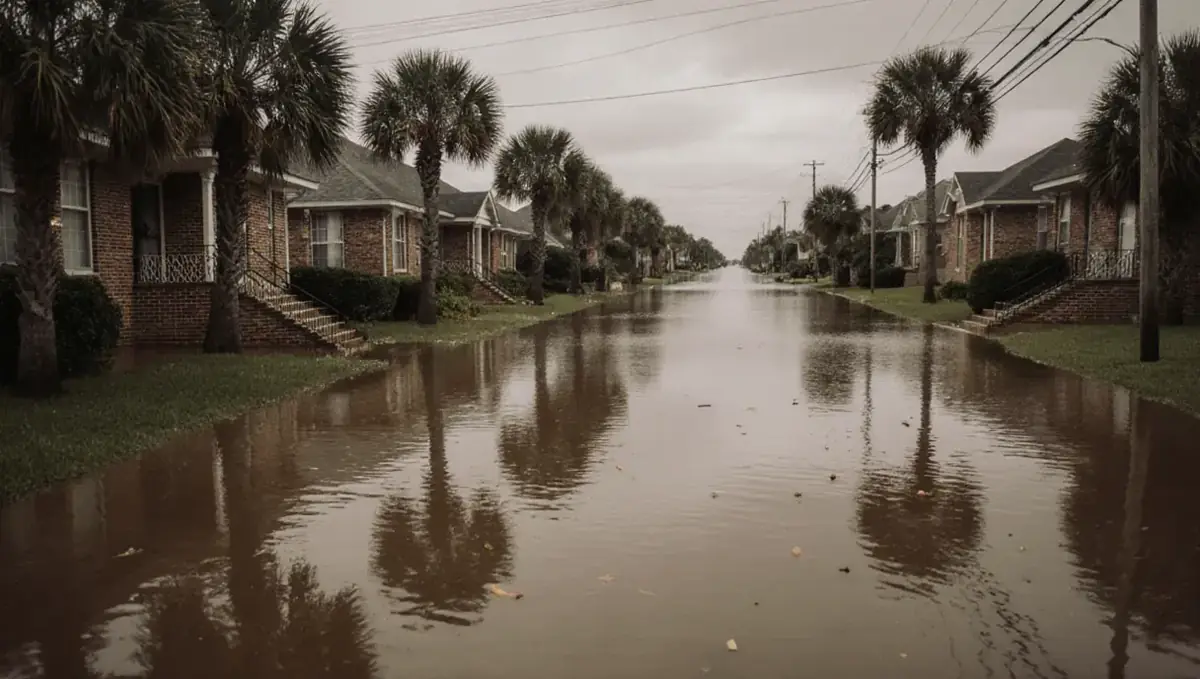
On January 22, 2024, rain fell at 1.5 to 2.5 inches per hour over parts of the city, a rate NOAA's storm records describe as roughly a 1,000-year return interval. Chollas Creek overflowed its channel, and Mountain View, Encanto, Valencia Park, Shelltown, Southcrest and Lincoln Park were the most heavily flooded neighborhoods.
About 1,000 homes were damaged, around 600 of them with major damage, and San Diego Fire-Rescue performed more than 200 water rescues. Some 1,200 households spent months in temporary shelter. The storm showed how a city that averages under 10 inches of rain a year can still be overwhelmed in a single morning.
Floodwater like this is Category 3, meaning it can carry sewage, soil and chemicals. Flood damage restoration after an event of this kind typically means removing soaked drywall, insulation and flooring, then cleaning and sanitizing before drying begins.
Mission Valley and River-Adjacent Properties
The San Diego River has a long flood history. In 1862, Mission Valley was inundated and houses in lower Old Town flooded. In 1916, in what has been called San Diego's worst flood, an upstream dam was overtopped and floodwater poured down Mission Valley, causing about $4 million in damage at the time.
El Capitan Dam, finished in 1935 about 27 miles upstream, changed the river, but Mission Valley is still the primary flood concern. Businesses along the riverbanks flood during heavy rain, and the valley carries Interstate 8 and the Trolley Green Line.
If you manage a retail, office or hotel property in the valley, plan ahead for flood cleanup. Call (888) 817-5061 and we will connect you with a local provider that handles commercial water damage, from carpet tile in offices to multi-unit buildings.
Leaks Are Still the Most Common Call
Most of the year San Diego is dry. Lindbergh Field averages about 9.79 inches of rain annually, almost all of it from December through March, and May through September is nearly rainless. That means many claims start indoors: a burst washing machine hose, a cracked toilet tank, a water heater that finally gives out or a slow leak under a kitchen sink.
Here is what to do as soon as you find water:
- Turn off the fixture valve or the main water supply.
- Keep away from wet outlets and plugged-in appliances; switch off the breaker only if you can stand on dry ground to do it.
- Take wide and close-up photos of the source and every affected room.
- Pull rugs, books and electronics out of the water and wipe up what you safely can.
- In a condo or apartment, alert the manager or HOA so units next door and below can be checked.
Then call (888) 817-5061 to reach a local company for emergency water removal and drying.
How a San Diego Drying Job Unfolds
Inspection and moisture readings
A technician from the restoration company maps the wet area with moisture meters and often a thermal camera, finding water hidden under tile, inside wall cavities and beneath cabinets.
Extraction and tear-out
Standing water is pulled out with extractors. Saturated carpet pad and drywall that cannot be saved, or that was touched by contaminated water, are removed.
Drying and monitoring
Air movers and dehumidifiers run while readings are logged until the materials reach dry standards. The job is finished when the readings say so, not after a set number of days.
Putting it back together
Final water damage repair may include drywall, paint, floors and cabinets. A CSLB license is required in California for any job of $1,000 or more in labor and materials, or any job needing a permit.
Mold Concerns and California's Rules
Wet materials can begin to grow mold within 24 to 48 hours, which is why fast drying matters even in mild coastal weather. Watch for musty smells, spotting along baseboards and discoloration in closets after any leak.
An industry roundup of state requirements reports that California does not issue a dedicated license for mold assessment or mold remediation work. The Toxic Mold Protection Act of 2001 directed the state health department to look into mold standards, but no statewide mold licensing program has been identified. Mold work that includes construction is still covered by CSLB licensing.
For mold removal in San Diego, ask the provider how it will set up containment, what it will remove, and how it will confirm the area is dry afterward.
Protecting a High-Value Home on Paper
With nearly 60 percent of San Diego homes valued above $1 million in 2023, a well-documented claim can make a real difference.
- Know what floods are excluded. San Diego County's preparedness guidance notes that standard homeowners insurance does not cover flooding; NFIP or private flood coverage fills that gap, generally with a 30-day wait before it takes effect.
- Check your risk. Look up your address on the FEMA Flood Map Service Center, and review Alert San Diego's flooding guidance, which also lists free sandbag locations.
- Sign up for alerts. AlertSanDiego and the SD Emergency App send county warnings to your phone.
- Keep everything. Photos, moisture logs, drying reports and receipts support both repair and contents claims.
WaterQ cannot predict how an insurer will decide a claim, but it can connect you quickly with local help for storm damage cleanup in San Diego.
San Diego Communities and Surrounding Cities
WaterQ connects callers across San Diego's neighborhoods, from the coast to the eastern mesas, and in neighboring cities with independent local restoration providers.
Neighborhoods
- Downtown San Diego
- Hillcrest
- North Park
- City Heights
- Mission Valley
- Clairemont
- Kearny Mesa
- La Jolla
- Pacific Beach
- Mission Beach
- Ocean Beach
- Point Loma
- San Ysidro
- Tierrasanta
- Old Town
- Barrio Logan
- Southcrest
- Shelltown
- Mountain View
- Encanto
Nearby communities
- Chula Vista
- National City
- Lemon Grove
- La Mesa
- El Cajon
- Santee
- Spring Valley
- Coronado
- Del Mar
- Poway
San Diego Water Damage FAQ
Which San Diego neighborhoods flooded worst in January 2024?
NOAA storm records list Mountain View, Encanto, Valencia Park, Shelltown, Southcrest and Lincoln Park as the most heavily flooded neighborhoods. Chollas Creek overflowed its channel, and about 1,000 homes were damaged.
Is Mission Valley prone to flooding?
Yes. Mission Valley follows the San Diego River and remains the river's primary flood concern, with businesses along the banks flooding during heavy rain. Major floods there are recorded in 1862 and 1916.
Where can I get free sandbags in San Diego County?
San Diego County offers free sandbags countywide, and Alert San Diego's flooding page lists the locations. Sandbags help divert water, mud and debris away from your property.
Does homeowners insurance cover flood damage in San Diego?
Standard homeowners insurance does not cover flooding. You need an NFIP or private flood policy, and NFIP coverage generally starts 30 days after purchase, so buy before the rainy season.
Does WaterQ do the restoration work itself?
No. WaterQ is a free referral service. Call any time, day or night, and we connect you with an independent, local restoration company that handles the inspection, cleanup and repairs.
Local emergency and flood resources
Official sources for alerts, flood maps and preparedness in and around San Diego: