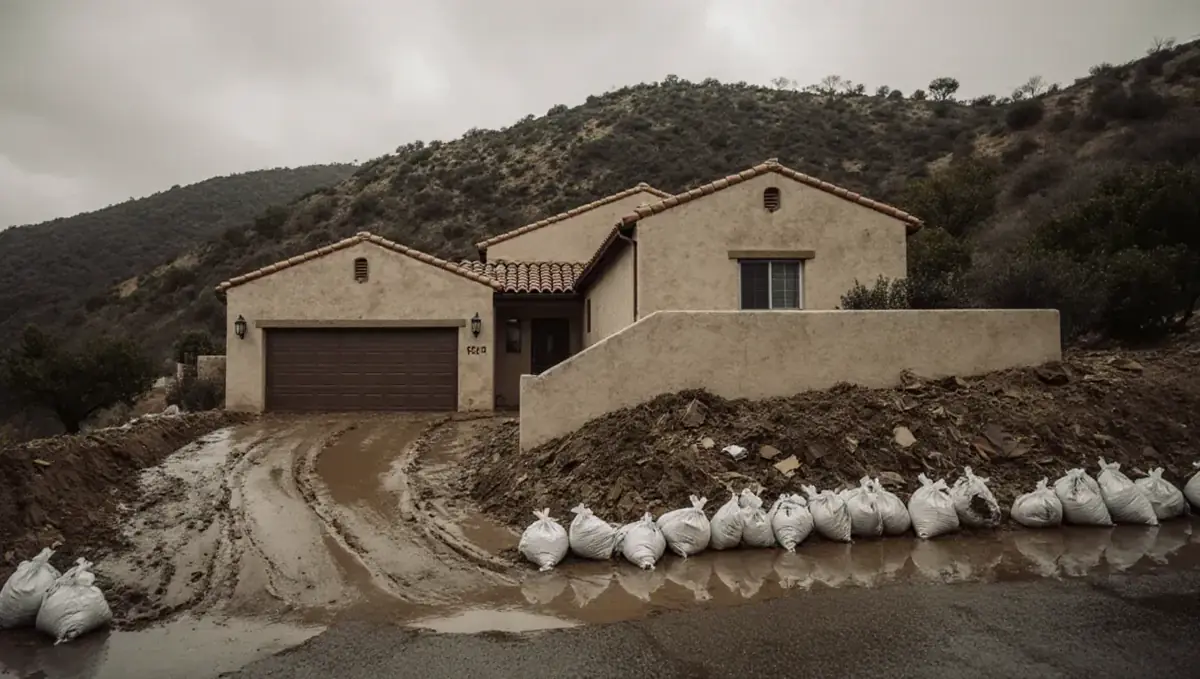
Two Anaheims: Basin Neighborhoods and Canyon Slopes
Anaheim runs roughly 20 miles from the Cypress border in the west to the Riverside County line in the east. The western two-thirds is mostly flat basin land around Downtown Anaheim, the Anaheim Resort, the Platinum Triangle and Anaheim Canyon. The eastern third is Anaheim Hills, a landscape of ridges and canyons that climbs toward Gypsum Canyon and the edge of the Cleveland National Forest.
That split matters when you are dealing with water damage in Anaheim. On the flats, problems usually start with plumbing, roof leaks or storm drains that back up during a heavy burst of rain. In the hills, water can arrive as runoff, mud or a slope that starts to move. The city takes its name from the Santa Ana River, and that river has shaped local flood history more than anything else.
Rain here is concentrated into a short season. The city averages about 14 inches a year, and January and February are the wettest months, with roughly 3.3 to 3.5 inches each. Summers are nearly dry, so a single winter storm can be the first real test a roof or drain has faced in months.
What the 1938 Flood Taught Orange County
In early 1938 the Santa Ana River broke out and flooded Anaheim and neighboring Orange under as much as 4 feet of water, stripping topsoil and wiping out many of the citrus groves that defined the area. Across the region, almost 60 people died and about 68,400 acres flooded.
The response reshaped the river. Prado Dam was completed upstream in 1941, Seven Oaks Dam followed in 1999, and the Santa Ana River Mainstem Project, which began construction in 1989, lined the lower 30.4 miles of the river in concrete. Those projects lowered the risk of a repeat of 1938, but they do not stop rain from pooling on streets, flooding low driveways or pouring through a damaged roof.
ReadyOC, the preparedness program run jointly by the County of Orange, the City of Anaheim and the City of Santa Ana, lists flooding as one of the county's most likely disasters. It points to heavy rain, hillside runoff and blocked storm drains as the usual causes. For flood cleanup after a storm, call (888) 817-5061 and we will connect you with a local company.
Anaheim Hills: Slopes, Fire Scars and Mud
Anaheim Hills has a long record of both fire and ground movement. A January 1993 landslide destroyed more than 30 homes and affected over 200 others. In 2005, heavy rain set off a slide on Ramsgate Drive that took out three homes and a private street.
Wildfire adds another layer. Major fires burned through or near the community in 1982 and 2006, the 2008 Freeway Complex Fire destroyed 14 houses and 86 apartments in Anaheim Hills, and the 2017 Canyon Fire 2 destroyed 25 homes in Anaheim Hills and Orange. When slopes lose their vegetation, a strong storm can send water, soil and debris downhill toward homes below.
- Keep yard drains, V-ditches and gutters clear before the rainy season.
- Watch for new cracks in walls, sticking doors or tilting fences, which can signal slope movement.
- Have sandbags on hand if your lot sits below a burned or bare hillside.
- If mud reaches your home, stay out of it until the area is safe, then photograph everything.
Mud is heavy, gritty and often contaminated, so storm damage cleanup after a debris flow usually starts with shoveling and hauling before any drying can begin.
Your First Hour After a Leak or Storm
- Shut off the source. Close the main water valve, or the valve under the fixture if the problem is a single toilet, sink or appliance.
- Keep clear of electricity. Never step into standing water near outlets or appliances. Only turn off a breaker if you can reach the panel while standing somewhere dry.
- Identify the water type. A burst supply line is usually clean water (Category 1). Storm runoff, mud and sewage backups are treated as Category 3 and should not be handled without protection.
- Record the damage. Take photos and video of rooms, the source, and damaged belongings before anything is moved or thrown out.
- Protect what you can. Move electronics, documents and rugs to a dry room and set furniture legs on blocks or foil.
- Call for help. Dial (888) 817-5061, and we will connect you with a restoration professional near you who can start emergency water extraction.
Inside a Typical Anaheim Restoration Job
Most water damage restoration in Anaheim follows the same broad path, adjusted to the building and the type of water involved.
Removing the water
Crews use pumps and extractors to pull standing water out of carpet, pad and hard floors. If mud is involved, it is cleared first so equipment can reach the structure.
Finding hidden moisture
Moisture meters and thermal cameras show where water has wicked into drywall, under cabinets or along slab floors. Those readings set the plan for drying and help support an insurance claim.
Drying the structure
Air movers and dehumidifiers run for several days while technicians track readings. Wet drywall or insulation is often cut out so wall cavities can dry. Learn more about structural drying.
Putting it back together
Once materials test dry, the work shifts to water damage repair, such as new drywall, flooring, trim and cabinets.
Mold Cleanup and Choosing a Licensed Contractor
The EPA advises that mold may take hold on soaked drywall, carpet or wood in as little as 24 to 48 hours. Anaheim's dry air helps in summer, but winter storms bring cooler, damper conditions, and water trapped inside walls or under flooring dries slowly no matter the season.
An industry roundup of state rules reports that California issues no dedicated license for mold assessment or mold remediation. The state's Toxic Mold Protection Act of 2001 directed the health department to study and develop mold standards, but no statewide mold licensing program was found. When mold removal involves construction, such as tearing out and replacing drywall, contractor licensing rules from the Contractors State License Board (CSLB) still apply.
Starting January 1, 2025, any Anaheim job that needs a permit, or that totals $1,000 or more for labor and materials combined, calls for a CSLB-licensed contractor. You can look up any company on the CSLB Check a License tool. It is also fair to ask about insurance and training, such as IICRC certification. See our mold removal page for how containment works.
Insurance, Resort Properties and Apartment Buildings
The California Department of Insurance notes that standard homeowners policies do not cover flood, mudslide or debris flow. An NFIP policy can pay for mudflow damage, yet it excludes landslides, and coverage usually begins only after a 30-day wait. For Anaheim Hills owners, that distinction between mudflow and landslide is worth reviewing with an agent before winter.
- Report a loss to your insurer promptly and keep every receipt.
- Ask the restoration company for its moisture logs and photos.
- Do not throw out damaged items until the adjuster has seen them or approved disposal.
Anaheim also has a large commercial footprint, from hotels and attractions in the Anaheim Resort to offices and new housing in the Platinum Triangle and industrial space in Anaheim Canyon. Property managers and owners can call (888) 817-5061 to be connected with a provider equipped for multi-unit or commercial drying. WaterQ is a free referral service and cannot promise how any claim will be handled.
Anaheim Districts and Neighboring Cities
Our free 24/7 line connects callers across Anaheim and nearby north and central Orange County communities with independent local restoration companies.
Neighborhoods
- Downtown Anaheim
- Anaheim Resort
- Platinum Triangle
- Anaheim Canyon
- Anaheim Hills
- Peralta Hills
- Mohler Loop
- Santa Ana Canyon
- Gypsum Canyon
Nearby communities
Anaheim Water Damage FAQ
Does flood insurance cover a landslide in Anaheim Hills?
Generally not. The California Department of Insurance says NFIP flood insurance covers mudflow but not landslides, and standard homeowners policies do not cover flood, mudslide or debris flow. Ask your agent which risks your policies actually include.
Is the Santa Ana River still a flood threat to Anaheim?
The river is now controlled by Prado Dam, Seven Oaks Dam and a concrete-lined lower channel built after the 1938 flood. Those projects reduce river flooding risk, but heavy rain can still overwhelm local storm drains and low spots.
Do I need a licensed contractor for mold cleanup in California?
California has no state license specifically for mold remediation, but when the work involves construction and totals $1,000 or more, or needs a permit, the contractor must hold a CSLB license. You can verify a license online through CSLB.
How do I get emergency alerts in Anaheim?
AlertOC, promoted through ReadyOC, sends emergency notifications to Orange County residents. ReadyOC is run jointly by the County of Orange, the City of Anaheim and the City of Santa Ana.
Will WaterQ send someone to my Anaheim property?
WaterQ does not do the work itself. It is a free referral service that connects you with an independent, local restoration company, and the line is available 24/7.
Local emergency and flood resources
Official sources for alerts, flood maps and preparedness in and around Anaheim: