A City Where the Fault Line Runs Downtown
Few places show the Hayward Fault as plainly as the city that shares its name. The fault passes directly under the site of the former city hall, and a downtown curb that crossed it drifted 8 inches out of line before it was removed in 2016. Geologists used that curb as a marker for more than forty years.
Slow creep like that rarely causes a flood by itself, but it does stress anything rigid that crosses the fault zone, from sidewalks to buried pipes. A sudden rupture is a bigger concern. The UCERF3 forecast gives the Hayward Fault about a 14.3 percent chance of a magnitude 6.7 or larger quake in the 30 years after 2014. Shaking that strong can break water heaters, supply lines and fire sprinklers all at once.
For water damage in Hayward of any size, call (888) 817-5061. WaterQ is a free referral service that connects you with an independent restoration company nearby.
San Lorenzo Creek, Sulphur Creek and the Bayfront
Hayward runs from the Hayward Hills down to the bay, and more than a quarter of its 64 square miles is water. San Lorenzo Creek, a 10.7-mile year-round stream fed by the Cull Canyon and Don Castro reservoirs, flows through the city and on through Cherryland, Ashland and San Lorenzo before reaching the bay at the Hayward Regional Shoreline.
In the 1960s Sulphur Creek was diverted into San Lorenzo Creek to reduce flood risk in downtown Hayward. During large flows, some water still follows the old course toward the bay. That is a useful reminder that engineered channels lower risk without removing it.
Along the shoreline, the Eden Landing Ecological Reserve holds about 600 acres of salt ponds. The flat land behind it, home to much of Hayward's industry, drains slowly when heavy rain meets high bay water.
Postwar Tract Homes and Plumbing That Has Aged
Hayward grew fast after World War II, and tract builders such as Oliver Rousseau and David D. Bohannon put up much of the area's postwar housing. Homes from that era are now decades old, so any plumbing that has never been updated deserves a closer look.
Common trouble spots in older Hayward houses include:
- Water heaters in garages or closets that leak slowly at the base.
- Corroded shutoff valves that won't close when you need them.
- Cast iron or clay drain lines that back up during heavy rain.
- Flat or low-slope roof sections over additions that collect water.
Hillside homes near Cal State East Bay face a different set of problems: runoff from the slope above, retaining walls and drainage that needs regular clearing. If a slope sends mud or water toward the house, plan for storm damage cleanup.
December Through February: Hayward's Storm Window
Hayward averages about 16 inches of rain a year. December is usually the wettest month at roughly 3.2 inches, with January close behind, and summers are almost dry. Most of the year's water arrives in a few strong winter storms.
Atmospheric rivers are the ones that cause the most trouble. The series of nine that struck California from late December 2022 into mid-January 2023 hit the Bay Area hard with creek flooding, landslides and high water along the coast. When storms come in waves like that, the ground stays soaked and drains stay full.
The City of Hayward suggests subscribing to its email alerts and following official city accounts for timely updates during winter storms. You can report clogged drains or other street problems through Access Hayward.
Your Checklist When You Find Water Inside
- Shut off the source. Close the valve at the fixture or the main shutoff. If the main is stuck, your water utility can shut the meter off.
- Make the area safe. Never wade through water that might be touching outlets or cords. Cut power at the panel only if you can reach it while standing on dry ground.
- Sort clean from dirty. A broken supply line is generally clean water (Category 1). Sewage backups and outdoor floodwater are Category 3 and need protective gear and professional cleanup.
- Record the damage. Take wide shots and close-ups of each room, the source and damaged contents before anything is thrown out.
- Protect what you can. Move rugs, papers and electronics to a dry area and set furniture on blocks.
- Call for help. Phone (888) 817-5061 to be matched with a Hayward-area company that handles water extraction.
From Extraction to Finished Walls
A Hayward restoration job usually moves through four stages. First comes bulk water removal, using extractors on carpet, hard floors and in crawlspaces. Next, the crew takes moisture readings through walls, subfloors and cabinets to map how far water spread.
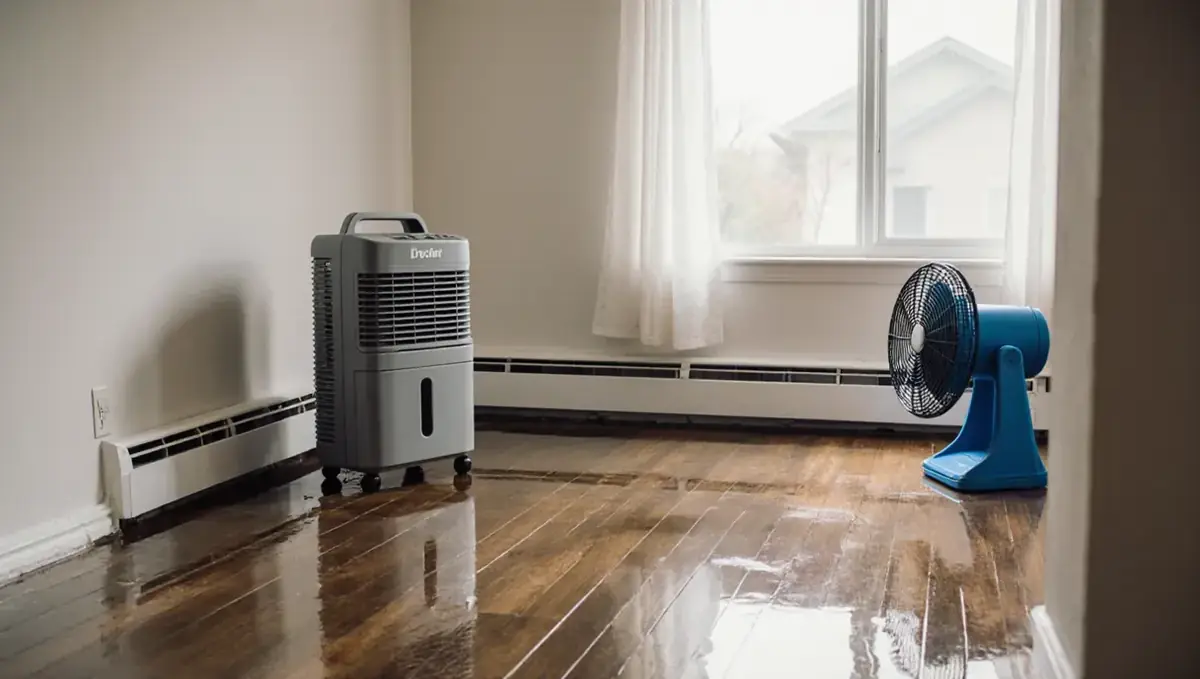
The third stage is structural drying: air movers and dehumidifiers run while readings are logged each day until materials reach target levels. Wet drywall and insulation may be cut out so the framing can dry. Finally, water damage repair puts back drywall, paint, flooring and trim.
California's Contractors State License Board requires a license for any job of $1,000 or more in labor and materials, or any job that needs a permit. Look up a company on the CSLB license check, and ask about insurance and training such as IICRC certification.
Mold Rules, Insurance Limits and West-Side Businesses
Following EPA guidance, mold can start to grow on damp materials in 24 to 48 hours. An industry survey of state requirements found no California license specific to mold assessors or remediators, and the 2001 Toxic Mold Protection Act led to a state study of mold standards rather than a licensing program. Any mold removal that involves construction work still falls under CSLB rules.
Insurance gaps are worth knowing in advance. Homeowners policies in California do not cover flood, mudslide or debris flow, and they exclude earthquake damage other than fire. NFIP flood policies cover mudflow but not landslides and usually start 30 days after purchase.
Hayward's west side is home to warehouses, manufacturing and the area near Hayward Executive Airport. A roof leak or sprinkler break there can halt operations, and managers can call (888) 817-5061 to reach a local company for commercial drying and flood cleanup. Residents just south can also use the Fremont page.
Hayward Areas and Surrounding Communities Served
Our free 24/7 referral line connects people throughout Hayward and the unincorporated communities around it with independent local restoration companies.
Neighborhoods
- Downtown Hayward
- South Hayward
- Hayward Hills
- Mt. Eden
- Eden Landing
- West Hayward industrial area
Nearby communities
- San Leandro
- Union City
- Fremont
- Pleasanton
- Castro Valley
- San Lorenzo
- Cherryland
- Ashland
- Fairview
- Sunol
Hayward Water Damage FAQ
Can fault creep in Hayward cause water leaks?
Creep along the Hayward Fault is strong enough to offset curbs and sidewalks, and one downtown curb shifted 8 inches over the years. Rigid lines that cross the fault zone can be stressed over time. A large earthquake is the bigger risk, since shaking can break water heaters and supply lines.
Which months bring the most rain to Hayward?
December through February. Hayward averages about 16 inches of rain a year, and December is usually the wettest month at a little over 3 inches.
Who maintains the creeks and flood channels in Hayward?
The Alameda County Flood Control and Water Conservation District, based in Hayward, maintains western Alameda County's creeks, channels, levees, pump stations and reservoirs. Its website includes a family flood plan and watershed maps.
Will my homeowners policy pay for floodwater or earthquake damage?
Usually not. California homeowners policies exclude flood, mudslide and debris flow, and they exclude earthquake damage except for resulting fire. Separate flood and earthquake policies are available.
Does WaterQ do the restoration work in Hayward?
No. WaterQ is a free referral line that is available 24/7. We connect you with an independent local restoration company, and that company inspects the property and handles the job.
Local emergency and flood resources
Official sources for alerts, flood maps and preparedness in and around Hayward: