Foothill Creeks Running Through a Valley City
Roseville sits at roughly 164 feet above sea level, right where the Sacramento Valley floor starts to rise toward the Sierra Nevada foothills. That position matters, because several streams carry foothill runoff straight through town: Dry Creek, Linda Creek, Secret Ravine and Cirby Creek among them.
Dry Creek is the main channel. It runs about 15 miles from the foothills southwest through Roseville and on into Sacramento County, collecting water from Antelope Creek, Miners Ravine, Secret Ravine, Cirby Creek and Clover Valley Creek along the way. It is known for its capacity to cause local flooding, so properties near any of these creeks deserve a closer look at their flood exposure.
If you are unsure where your home stands, look up your address on the FEMA Flood Map Service Center. A flood zone map will not predict every storm, but it is a useful starting point for coverage decisions.
Three Wet Months and a Long, Hot Summer
Roseville averages about 20.45 inches of precipitation a year, and nearly all of it arrives between October and April. December, January and February are the wettest stretch, averaging 3.33, 3.98 and 3.46 inches. From June into October the city is typically bone dry, with July highs averaging around 94°F.
That pattern creates two distinct seasons for water damage in Roseville:
- Rainy season. Clogged gutters, worn roof flashing, poor lot grading and saturated soil next to slab foundations let water in during back-to-back winter storms.
- Dry season. Indoor sources take over: burst washing machine hoses, failed water heaters, leaking dishwasher lines, ice maker connections and air conditioner condensate lines working hard through the heat.
California's winters can also deliver atmospheric rivers in waves. Between December 26, 2022 and January 17, 2023, nine of them struck the state, so it is wise to clear drains and fix roof problems before November rather than mid-storm.
A Fast-Growing City and the Homes It Built
Few California cities have grown like Roseville. It had 28,988 residents in 1985, 74,234 by 2000 and 147,773 at the 2020 census. East Roseville took shape after Interstate 80 opened in 1956, while much newer growth has been organized into planned areas such as West Roseville, North Roseville, Highland Reserve North and Del Webb Sierra Vista.
For homeowners, that means a large share of local housing is relatively modern tract construction. Newer homes are not immune to leaks, though. Plastic supply lines, compression fittings, upstairs laundry rooms and second-floor bathrooms are common sources of ceiling and wall damage in two-story houses.
The oldest buildings are in Downtown and Old Town, the historic core that grew up around the railroad after Southern Pacific moved its facilities to Roseville in 1906. Older structures there can have aging pipes and materials that need a gentler drying approach.
Roseville Leak Checklist: The First Hour
- Shut off the source. Close the fixture valve or the main water shutoff. Many Roseville homes have the main valve near the front of the house or in the garage.
- Keep electricity in mind. Stay out of standing water near outlets, cords or appliances, and only switch off a breaker if you can reach the panel without stepping through water.
- Judge the water. Clean supply-line water is Category 1. Creek overflow and storm runoff should be treated as Category 3, which can carry sewage and bacteria, so keep kids and pets away.
- Record the damage. Photograph and film each affected room, the source of the leak and damaged belongings before cleanup begins.
- Protect what you can. Move rugs, electronics, photos and paperwork to a dry room and set furniture legs on blocks or foil.
- Call for help. Dial (888) 817-5061 and we will connect you with a local restoration company for emergency water removal.
How Roseville Restoration Pros Get a House Dry
The restoration company you are connected with will usually start by finding every place the water went. Moisture meters and thermal cameras reveal wet drywall, damp subfloor and soaked insulation hiding behind baseboards and cabinets.
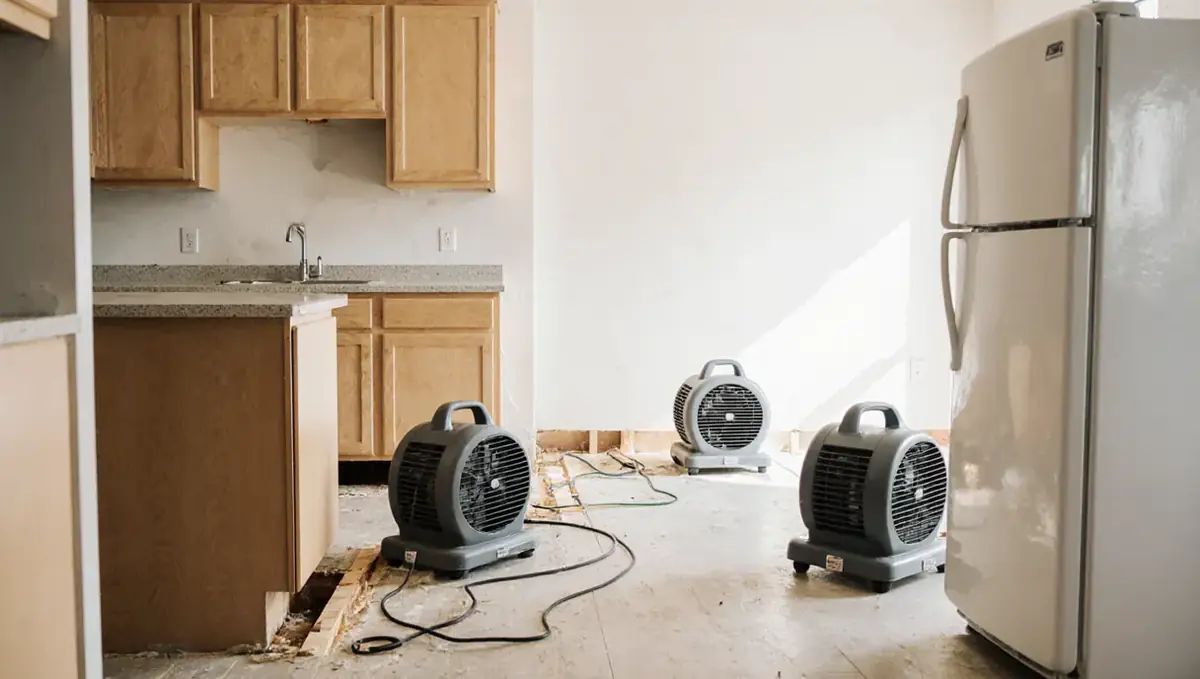
Next comes extraction, which removes standing water from carpet, pad and hard floors as quickly as possible. Then the structural drying phase begins, with air movers and dehumidifiers placed to pull moisture out of walls and framing. Crews take readings over several days until materials reach dry standards.
Only after the structure is confirmed dry does the water damage repair work start, such as replacing drywall, baseboards, flooring and cabinets. Ask each Roseville company you talk to about its licensing, insurance and training (IICRC certification is one example) before you sign anything. California's CSLB requires a license for jobs of $1,000 or more in labor and materials, or any job that needs a permit, and you can verify one with the CSLB license lookup.
Storm Cleanup After Wind, Rain and the Occasional Twister
Storm damage cleanup in Roseville is not only about rain. On March 26, 2014, an EF0 tornado touched down in the city and damaged homes, a reminder that wind can open roofs and break windows here too. Once a roof or window is breached, rain does the rest.
After a storm, a restoration crew typically tarps or boards openings, removes debris and wet materials, cleans and sanitizes surfaces touched by runoff, and then dries the building. If water came in from a creek or the street, plan on more material removal than with a clean pipe leak. Learn more about flood cleanup and storm damage cleanup, or call (888) 817-5061 to get started.
Mold, Coverage and Commercial Spaces in Placer County
According to EPA guidance, mold can start growing on wet materials within 24 to 48 hours. Roseville's dry summers help, but a wall cavity behind a slow leak stays damp no matter the weather, so prompt mold removal and cleanup still matter.
California does not appear to have a state license specifically for mold assessors or remediators, based on an industry roundup of state requirements, and we found no statewide mold licensing program. Remediation that involves construction work still falls under CSLB contractor licensing rules. See how mold removal and containment work.
- Flood is excluded. Per the California Department of Insurance, a typical homeowners policy leaves out flood, mudslide and debris flow damage. NFIP coverage is separate, and a new policy generally takes effect 30 days after purchase.
- Keep a paper trail. Save photos, moisture logs, invoices and drying reports for your adjuster.
- Businesses and landlords. Retail centers, offices and rental properties can call the same 24/7 line for commercial water damage restoration in Roseville.
For a wider view of the region, visit our Sacramento page or the full California service area.
Roseville Areas and Placer County Neighbors We Serve
WaterQ's free referral line connects callers across Roseville's older core and newer planned communities, plus nearby Placer and Sacramento County towns, with independent local restoration providers.
Neighborhoods
- Downtown
- Old Town
- East Roseville
- West Roseville
- North Roseville
- Northwest Roseville
- Northeast Roseville
- North Central Roseville
- Southeast Roseville
- Del Webb Sierra Vista
- Highland Reserve North
- Stoneridge
- Riverside Gateway
- Atlantic
- Douglas-Sunrise
- North Industrial
Nearby communities
- Rocklin
- Lincoln
- Granite Bay
- Loomis
- Auburn
- Citrus Heights
- Antelope
- Sacramento
Roseville Water Damage FAQ
Which Roseville creeks can flood?
Dry Creek is the main local flood concern. It flows southwest through Roseville and collects water from tributaries including Secret Ravine, Cirby Creek, Miners Ravine, Antelope Creek and Clover Valley Creek. Linda Creek also runs through the city. Check the FEMA Flood Map Service Center to see the flood zone for your address.
When is the rainy season in Roseville?
Most precipitation falls from October through April, and December through February is the wettest period. The city averages about 20.45 inches a year, while June to October is usually dry.
My Roseville home is fairly new. Why did it leak?
Newer homes still rely on supply lines, fittings, water heaters and appliance hoses that can fail. In two-story houses, an upstairs bathroom or laundry room leak often shows up as a stained or sagging ceiling below.
Does California require a license for mold remediation?
California does not appear to have a state license specifically for mold remediators, based on an industry roundup of state rules. Work that involves construction, such as removing and replacing drywall, still falls under CSLB licensing rules for jobs of $1,000 or more or any job that needs a permit.
Is WaterQ a Roseville restoration company?
No. WaterQ is a free referral service. The line is open 24/7, and we connect you with an independent local restoration company that inspects your property and does the work.
Local emergency and flood resources
Official sources for alerts, flood maps and preparedness in and around Roseville: