A Planned City Built Around Flood Channels
Irvine was laid out on purpose. William Pereira and Raymond Watson of the Irvine Company began designing the city's plan in the late 1950s, and its residential villages, from Woodbridge and University Park to Portola Springs and Quail Hill, have been built since the 1960s and 1970s. Most of the city sits in a broad, flat valley between Loma Ridge to the north and the San Joaquin Hills to the south, at roughly 56 feet above sea level.
Storm water is handled by a network of engineered channels. San Diego Creek, the city's main drainage, runs northwest in a nearly straight line toward Upper Newport Bay, and most of it is now a concrete flood-control channel. Peters Canyon Wash, its largest tributary, joins it with an even wider channel. Before reaching the bay, the creek passes through the San Joaquin Marsh, a constructed wetland of about 500 acres that helps clean runoff.
Those channels move a remarkable amount of water. In the dry season San Diego Creek carries only 8 to 15 cubic feet per second, but wet-season runoff can reach 800 to 9,000, and the record peak of 43,500 cubic feet per second came on December 6, 1997.
Where Irvine Water Problems Usually Start
Because the channels carry so much storm water away, a lot of water damage in Irvine starts indoors or on the roof rather than from an overflowing creek. Common sources include:
- Failed supply lines under sinks, behind refrigerators and at washing machines.
- Water heaters that leak slowly in a garage or closet.
- Toilet and shower overflows that spread under flooring or through a ceiling below.
- Roof and window leaks during the December to March rainy season, when about 13 inches of rain falls in a typical year.
- Storm drains or patio drains that clog with leaves and debris during a heavy downpour.
A leak that has been running quietly for days can be harder to dry than a sudden burst, because water has time to wick into framing and subflooring. That is where professional structural drying and moisture mapping pay off.
Townhomes, Condos and HOA Coordination
Many Irvine residents live in attached homes governed by a homeowners association. When water crosses a shared wall or ceiling, responsibility can be split among unit owners, the association and their insurers.
- Notify the HOA or management company as soon as you find the leak, and ask them to check neighboring units.
- Read your CC&Rs to see which parts of the building the association maintains and insures.
- Confirm with your own insurer what your policy covers inside your unit.
- Ask the restoration company to document readings in every affected unit so each party has the same record.
Renters in apartment communities should alert the property manager in writing and photograph their own belongings. Managers of offices or multi-family buildings can also call (888) 817-5061 to be connected with a provider set up for larger water extraction and drying jobs.
After the Silverado Fire: Foothill Storm Risk
In October 2020 the Silverado Fire burned 13,390 acres and moved south from Loma Ridge toward Orchard Hills, Northwood and Portola Springs. About 90,000 residents were ordered to evacuate. Fire on the slopes above a neighborhood matters for water damage too, because bare, burned ground sheds rain quickly and can send mud and debris downhill when a strong storm arrives.
If your home backs onto the foothills, keep yard drains and gutters clear before winter, know your evacuation route, and sign up for AlertOC notifications through ReadyOC. The City of Irvine's Office of Emergency Management also publishes preparedness information and an evacuation zone map.
When mud or runoff does get in, storm damage cleanup generally starts with removing debris and contaminated materials before drying begins.
Immediate Actions When You Find Water
- Close the valve. Shut off the main or the nearest fixture valve. In attached homes, the shutoff may be in a garage, closet or utility area.
- Protect yourself from shock. Keep away from outlets and cords in wet areas, and only shut off breakers from a dry spot.
- Know what kind of water it is. Clean supply water (Category 1) is the least hazardous. Runoff from outside or a sewer backup (Category 3) needs protective handling.
- Document before cleanup. Photos and video of each room, the source and damaged items will help with any claim.
- Move valuables. Lift rugs, electronics, books and files off wet floors.
- Get a pro involved. Calling (888) 817-5061 puts you in touch with a local restoration company, available 24/7.
How Drying and Repairs Are Handled
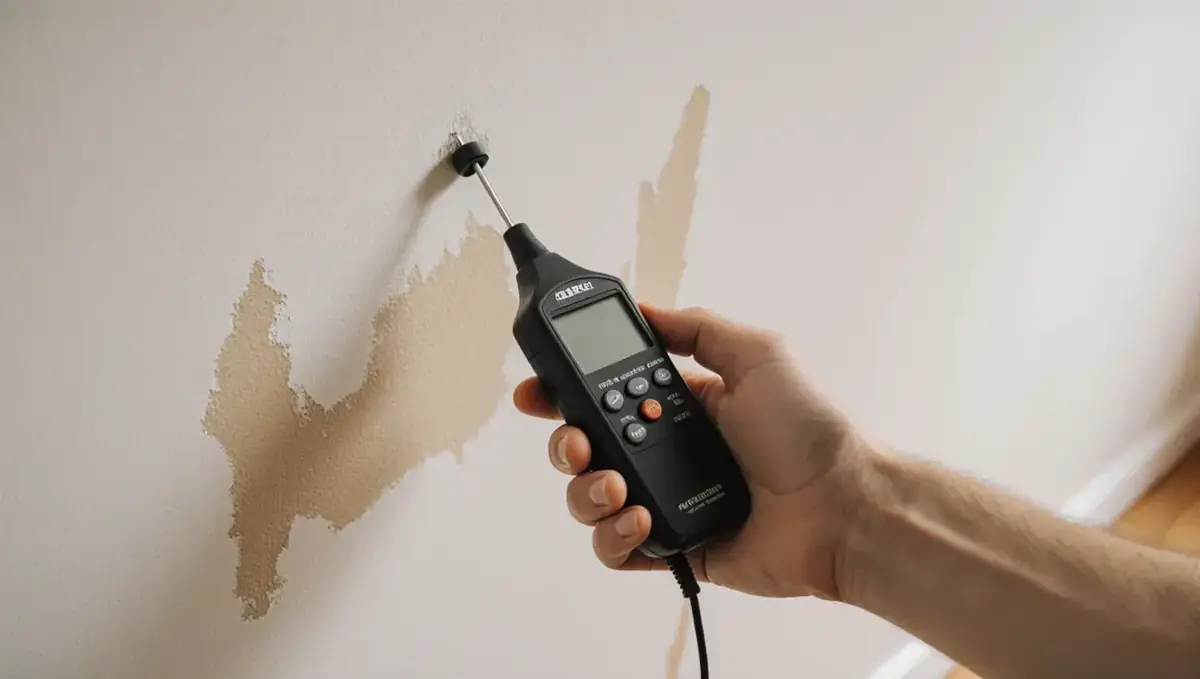
A restoration crew typically starts by extracting standing water, then uses meters and infrared imaging to trace how far moisture has traveled behind baseboards, under laminate or into the unit below. That map becomes the drying plan.
Dehumidifiers and air movers usually run for several days, with readings taken along the way to confirm progress. Wet insulation and drywall that cannot be saved are removed so the cavity behind them can dry. Once the structure is dry, water damage repair covers drywall, paint, flooring and cabinetry. For a full overview of the process, see water damage restoration.
Mold Rules, Licensing and Coverage in California
EPA guidance notes that mold can appear on materials that stay wet for 24 to 48 hours, which is why a slow leak inside a wall is worth investigating quickly. Proper mold removal isolates the area so spores are not carried into air ducts or other rooms.
An industry roundup of state requirements found that California has no license specifically for mold assessors or remediators. The Toxic Mold Protection Act of 2001 directed the state health department to study and develop mold standards, but a statewide mold licensing program was not identified. Remediation that involves construction is still covered by Contractors State License Board rules. Since January 1, 2025, a CSLB license is needed for work of $1,000 or more in combined labor and materials, or for any job requiring a permit, and you can confirm a license through CSLB Check a License.
For insurance, the California Department of Insurance points out that standard homeowners policies do not include flood, mudslide or debris flow. Separate flood coverage typically has a 30-day waiting period, so it should be in place well before the rainy season. WaterQ has no say in how a claim is decided, but detailed photos and drying logs make it easier to support.
Irvine Villages and Neighboring Communities
WaterQ's free 24/7 line connects homeowners, HOA boards, renters and businesses throughout Irvine's villages and nearby south and central Orange County cities with independent local restoration companies.
Neighborhoods
- Woodbridge
- Northwood
- University Park
- Turtle Rock
- Walnut
- El Camino Real
- Westpark
- Portola Springs
- Quail Hill
- Orchard Hills
Nearby communities
- Tustin
- Santa Ana
- Costa Mesa
- Newport Beach
- Lake Forest
- Laguna Hills
- Laguna Woods
- Orange
- Foothill Ranch
- Laguna Beach
Irvine Water Damage FAQ
Who is responsible when water leaks between Irvine condo units?
It depends on where the leak started and what your HOA's CC&Rs say the association maintains and insures. Notify the HOA promptly, check your own policy, and keep the restoration company's moisture records for every affected unit.
Can San Diego Creek flood my Irvine neighborhood?
San Diego Creek is mostly a concrete flood-control channel designed to carry very large storm flows, which reached a record 43,500 cubic feet per second in December 1997. Local flooding is more often caused by clogged storm or yard drains during heavy rain.
Does a burn scar near Irvine raise my flood risk?
It can. After fires such as the 2020 Silverado Fire, burned slopes absorb less rain and can send mud and debris downhill during strong storms. Keep drains clear and consider whether flood coverage makes sense for your home.
Is mold remediation licensed in California?
California has no license specific to mold remediation, according to an industry roundup. A CSLB contractor license is required for construction work of $1,000 or more or any permitted job, and you can check one online.
Is WaterQ a restoration company?
No. WaterQ is a free referral service available 24/7 that connects callers with independent, local restoration companies, which perform the inspection and work.
Local emergency and flood resources
Official sources for alerts, flood maps and preparedness in and around Irvine: