Between the Rio Hondo and the San Gabriel River
Downey covers about 12.6 square miles of flat land in southeast Los Angeles County, roughly 13 miles from Downtown Los Angeles. Two major waterways border the city: the Rio Hondo and the San Gabriel River. Today both are engineered for flood control, and most of the Rio Hondo runs in a concrete-lined channel.
It was not always that way. A flood in 1867 pushed the San Gabriel River into a new course. Its old channel, which locals in Downey called the Old River, became the Rio Hondo. Regional floods in 1938 destroyed thousands of homes and businesses across the Los Angeles area and helped drive the channel system residents see today.
Upstream, the Whittier Narrows Dam is the central element of the Los Angeles County Drainage Area flood control system, managing both the San Gabriel River and the Rio Hondo. In 2017, Army Corps of Engineers officials warned that the dam no longer met the agency's tolerable-risk guidelines for rare, extreme storms. That is a good reason to look up your property's flood zone through LA County Public Works or FEMA and consider whether flood coverage makes sense.
The Leaks Downey Homeowners See Most
Downey already had more than 82,000 residents by 1960, so a large share of its homes and apartment buildings have been standing for decades. In 2020, housing was split almost evenly between owners and renters. Older homes bring older plumbing, and that is where most water damage in Downey begins:
- Water heaters that leak or fail at the tank bottom, often in a garage or closet
- Supply lines and valves under sinks, toilets and behind washing machines
- Drain and sewer lines that crack or clog and back up into bathrooms
- Slab leaks that show up as warm floors, damp carpet or an unexplained jump in the water bill
- Roof and window leaks that only appear when a winter storm arrives after a long dry spell
Small leaks matter. A slow drip inside a cabinet can rot the base and feed mold long before it is visible. When you see warping, staining or a musty smell, consider water damage repair before it spreads.
Protecting Your Home in the First Minutes
- Turn off the water. Use the fixture shutoff or the main valve. For a leaking water heater, close the cold-water inlet and turn off its gas or power.
- Keep electricity in mind. Stay out of standing water near outlets and appliances, and only flip breakers from a dry location.
- Know what kind of water it is. Category 1 is clean supply water. Sewer backups and stormwater are Category 2 or 3, which can carry bacteria, so limit contact and keep kids and pets away.
- Take photos and video. Record the source and every affected room before you start moving things.
- Save what you can. Move rugs, electronics, photos and documents to a dry area.
- Call for professional help. At (888) 817-5061, we connect you with a local company that handles water extraction and drying.
What Professional Drying Involves
Water damage restoration in Downey usually follows four stages.
1. Remove the water
Extractors and pumps pull water from carpet, pad, tile and hardwood. The sooner bulk water is out, the less soaks into walls.
2. Measure the moisture
Moisture meters and thermal imaging show how far water traveled under floors and behind baseboards. These readings shape the drying plan and support your claim.
3. Dry the structure
Dehumidifiers and air movers run, with readings checked regularly, until materials reach dry standards. Soaked drywall or insulation is often removed so wall cavities can dry. See how structural drying works.
4. Restore
When everything is dry, repairs replace drywall, flooring, baseboards and cabinets. Before you sign anything, it is fair to ask the company about its CSLB license, insurance and staff training, for example IICRC certification.
Storm Season on Flat Ground
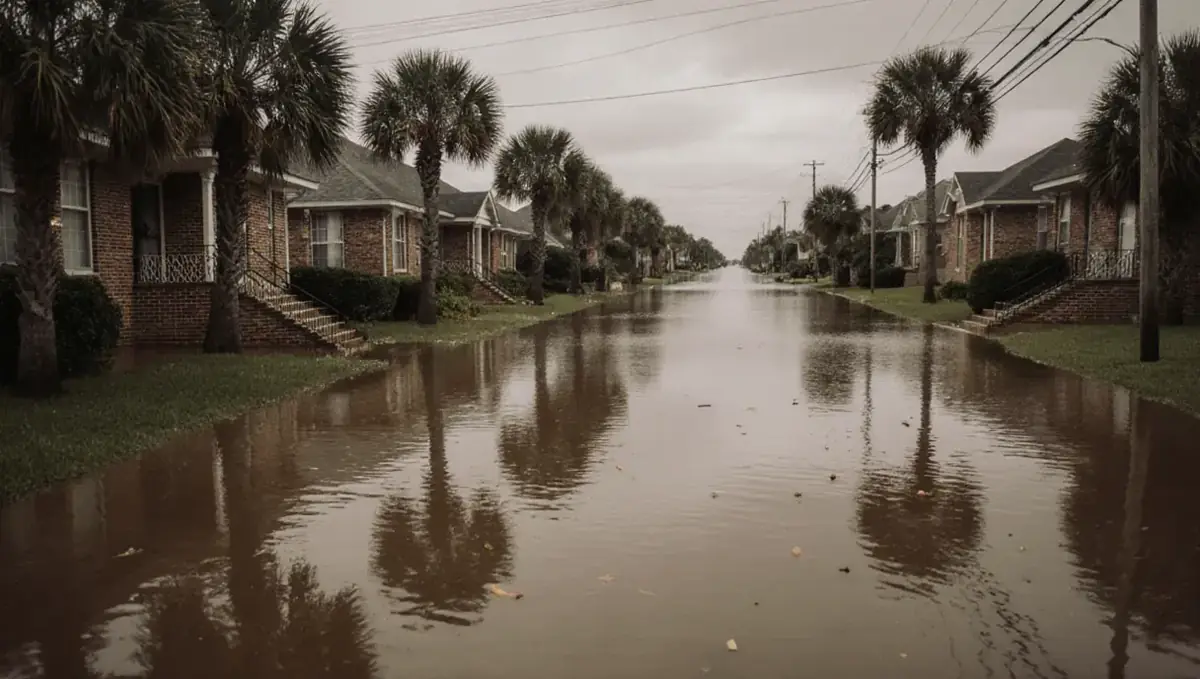
Like the rest of the Los Angeles Basin, Downey gets most of its rain in winter, and the biggest storms come from atmospheric rivers. In February 2024, downtown Los Angeles recorded 7.03 inches of rain in two days. On flat ground, intense rain can overwhelm street drains and send water toward low doorways, attached garages and sunken patios.
Flood cleanup in Downey after outdoor water gets inside should be treated as contaminated work. Porous items like carpet pad and drywall touched by stormwater are usually removed, and surfaces are cleaned and sanitized before drying. Wind-driven rain can also open up roof leaks, which calls for tarping and storm damage cleanup.
Before the rainy season, clear gutters and downspouts, keep yard drains open, and find sandbag locations on Ready LA County.
Mold Prevention and California Contractor Rules
Mold can start to grow on wet materials within 24 to 48 hours, based on EPA guidance, so drying quickly is the best prevention. Mold removal in Downey should start with fixing the moisture source; otherwise, it tends to return.
An industry roundup of state requirements reports that California has no state license specifically for mold assessors or remediators. When remediation includes construction, like replacing drywall or cabinets, Contractors State License Board rules apply. Since January 1, 2025, a CSLB license has been required for jobs of $1,000 or more in labor and materials, or any job that needs a permit. More on mold removal.
Claims and Commercial Losses in Downey
- Flood is excluded from homeowners policies. The California Department of Insurance notes that flood, mudslide and debris flow are not covered by a standard homeowners policy. NFIP policies generally start 30 days after purchase, so buy before storms are forecast.
- Earthquakes are excluded too. Homeowners coverage does not include earthquake damage, apart from resulting fire. The 1994 Northridge earthquake damaged Downey's historic 1953 McDonald's, a reminder that shaking reaches this far.
- Document the loss. Keep photos, moisture readings, invoices and drying reports together.
Shops and offices along Firestone Boulevard, Lakewood Boulevard and around Downey Landing can face the same leaks and roof problems as homes. Business owners and property managers can call (888) 817-5061 to be connected with a local restoration company. WaterQ cannot predict claim outcomes, but clear records help.
Parts of Downey and Nearby Cities We Serve
Our free referral line connects callers across Downey and neighboring southeast Los Angeles County cities with independent local restoration providers.
Neighborhoods
- Rancho Los Amigos
- Downey Landing
- Firestone Boulevard
- Lakewood Boulevard
- Florence Avenue
- Paramount Boulevard
Nearby communities
- South Gate
- Bell Gardens
- Pico Rivera
- Santa Fe Springs
- Norwalk
- Paramount
- Bellflower
Downey Water Damage FAQ
Is my Downey home at flood risk from the Rio Hondo or San Gabriel River?
Both rivers are engineered flood control channels that usually carry storm flows, but risk depends on your exact location. Look up your address with LA County Public Works or the FEMA Flood Map Service Center, and remember standard homeowners policies exclude flood.
What should I do if my water heater is leaking?
Close the cold-water inlet valve, turn off the gas or electricity to the heater, and keep away from wet electrical items. Then photograph the area and have a professional dry out any wet flooring or walls.
Does a contractor need a license for water damage or mold repairs in California?
California has no state license specific to mold remediation, according to an industry roundup. Construction work falls under CSLB rules, and a license is required for jobs of $1,000 or more or any job needing a permit.
Does WaterQ do the restoration work in Downey?
No. WaterQ is a free referral service available 24/7. We connect you with an independent local restoration company, which handles the inspection, drying and repairs.
Local emergency and flood resources
Official sources for alerts, flood maps and preparedness in and around Downey: