Living on an Alluvial Plain Below Cucamonga Peak
Rancho Cucamonga spreads across an alluvial plain at roughly 1,207 feet, just south of the San Gabriel Mountain foothills. Alluvial plains are built by water: over thousands of years, storms have carried sand and rock out of the canyons and spread it across the slope where neighborhoods now stand.
The city averages about 17.68 inches of precipitation a year, a little wetter than much of the Inland Empire, and February is typically the wettest month at more than 5 inches. Most of that falls in a few winter storms, so when it rains, runoff from the mountains can move quickly down streets and into yards on the north side of town.
The northern edge of the city is also a wildland-urban interface, where native hillsides meet backyards. That matters for water, too, because burned or bare slopes shed rain and sediment much faster than vegetated ones.
Alta Loma, Cucamonga and Etiwanda: Different Risks Across Town
The city formed in 1977 when three unincorporated communities, Alta Loma, Cucamonga and Etiwanda, voted to incorporate. Their positions on the slope still shape water problems today.
- Foothill homes. Properties closest to the mountains in Alta Loma and Etiwanda are most exposed to fast runoff, mud and debris during intense storms.
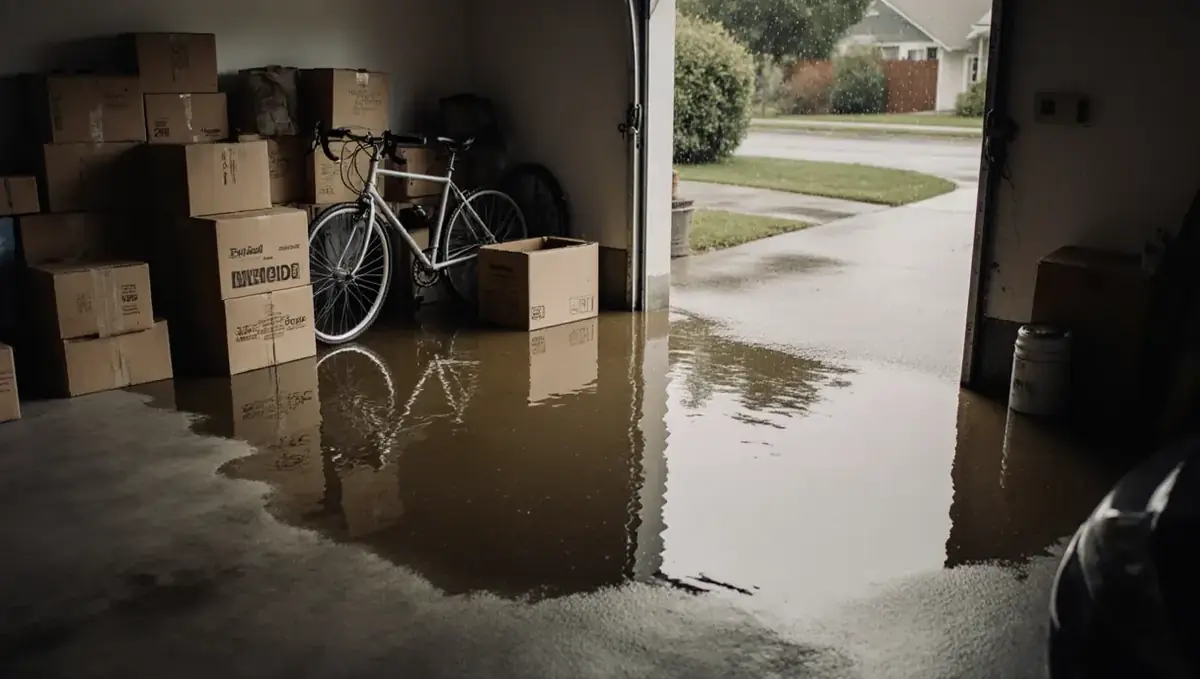
- Mid-slope subdivisions. Around Terra Vista and Central Park, the bigger issue is often overwhelmed curbs, low driveways and water entering garages.
- Southern districts. Near Victoria Gardens and the industrial areas, flat ground and large paved surfaces can collect storm water quickly.
Everywhere in the city, indoor leaks from water heaters, supply lines, dishwashers and AC condensate lines cause steady year-round damage. For a sudden leak, start with emergency water removal before it spreads under flooring.
Lessons From Past Foothill Storms
San Bernardino County's flood control records show how hard storms can hit this stretch of foothills. A 1978 general storm caused $11.4 million in county property damage, including critical erosion of the Cucamonga Channel levees. On December 25-26, 2003, a Pacific storm brought flash flooding and debris flows to the foothills, filling 33 of 34 debris basins with material.
The channels and basins built after those storms do a lot of work, but they are designed for runoff, not people. Stay out of washes and channels when it is raining. The City's ReadyRC program lists fire, flood, windstorm and earthquake as the disasters to prepare for, and Rancho Cucamonga Fire District stations offer sandbag materials, listed on the fire station map.
If muddy water does get in, flood cleanup comes first, followed by sanitizing and drying. Wind-driven rain can also tear at roofs and siding, so see storm damage cleanup for that side of the job.
A Quick Checklist When Water Gets Inside
- Cut off the water. Use the main shutoff or the valve at the fixture or appliance.
- Mind the electricity. Stay out of water near outlets and appliances, and switch off breakers only from dry ground.
- Sort the water type. Supply-line water is usually clean, while garage or yard runoff should be treated as contaminated.
- Document before cleanup. Photos and video of the source, water lines and damaged items help with insurance.
- Bring in help. Call (888) 817-5061 and we will connect you with a local company that can handle extraction and drying.
How Drying and Rebuilding Usually Go
Most water damage restoration in Rancho Cucamonga follows the same core steps. A technician inspects the damage, classifies the water and maps moisture with meters and thermal imaging. Standing water is extracted, and saturated carpet pad, baseboards or lower drywall may be removed.
Next, air movers and dehumidifiers run for several days while readings are recorded. Inland air is often dry, but wet framing, cabinets and subfloor still need measured structural drying before anything is closed up. Once the numbers confirm the structure is dry, water damage repair covers drywall, texture, paint, flooring and trim.
Mold Prevention and Choosing a Licensed Contractor
Mold can begin growing on damp materials within 24 to 48 hours, which EPA guidance cites as the window to get things dry. A leak inside a wall or under a vinyl plank floor can stay wet much longer than it appears from the surface.
We found no California license aimed specifically at mold remediation or mold assessment. Mold cleanup that includes construction, however, falls under the Contractors State License Board. As of January 1, 2025, CSLB requires a license for jobs of $1,000 or more in combined labor and materials, or any job that needs a permit. Check a company's license, bond and workers' comp online with CSLB, and ask about its training, for example IICRC certification. More on mold removal.
Warehouses, Retail Centers and Insurance Details
Rancho Cucamonga has become a major Southern California logistics hub, with distribution centers covering about seven square miles. Water losses in large commercial buildings often come from roof drains, sprinkler lines or storm water at loading docks, and they need fast extraction, drying and documentation to limit downtime. Business owners and property managers can call (888) 817-5061 as well.
For homeowners, the California Department of Insurance points out that flood, mudslide and debris flow are excluded from standard homeowners coverage. An NFIP policy can cover mudflow, though not landslides, and new policies usually wait 30 days before taking effect. Keep photos, receipts and drying logs together and report damage promptly. WaterQ also connects callers in nearby Ontario and San Bernardino.
Rancho Cucamonga Areas and Neighboring Cities
WaterQ's free referral line connects callers across Rancho Cucamonga and the surrounding foothill and valley communities with independent local restoration companies.
Neighborhoods
- Alta Loma
- Cucamonga
- Etiwanda
- Victoria Gardens
- Terra Vista
- Central Park
Nearby communities
- Upland
- Ontario
- Fontana
- Montclair
- Claremont
- Rialto
- Chino
- Lytle Creek
- Mount Baldy
Rancho Cucamonga Water Damage FAQ
Where can I get sandbags in Rancho Cucamonga?
Rancho Cucamonga Fire District stations list sandbag materials. The City's fire station map shows station addresses and services, and the ReadyRC emergency management page has more preparedness information.
Why do foothill neighborhoods get more storm runoff?
Homes in the northern parts of Alta Loma and Etiwanda sit closest to the San Gabriel Mountain foothills on an alluvial plain. Heavy rain on the slopes above can send fast runoff, sediment and debris downhill, especially after fires.
Does homeowners insurance cover flooding from a storm?
Generally not. The California Department of Insurance says standard homeowners policies exclude flood, mudslide and debris flow. NFIP flood policies can cover mudflow but not landslides, with a waiting period of about 30 days.
How do I sign up for emergency alerts in Rancho Cucamonga?
The City keeps a list of emergency alert notification platforms on its Sign Up for Emergency Alerts page, linked from ReadyRC.
Can WaterQ help a warehouse or business?
Yes. The line is available 24/7 for homes and businesses. WaterQ is a free referral service, so you are connected with an independent local restoration company that handles the commercial job.
Local emergency and flood resources
Official sources for alerts, flood maps and preparedness in and around Rancho Cucamonga: