Santiago Creek, the Santa Ana River and the City in Between
Orange sits at about 190 feet in northern Orange County, a few miles north of Santa Ana. Santiago Creek runs out of Santiago Canyon, past Santiago Dam at Irvine Lake and the Villa Park Dam, and then through a concrete flood control channel for its final 7 miles to the Santa Ana River. For most of the year the lower creek is dry. During heavy winter storms it can carry a lot of water quickly.
That setting has shaped the city's flood history, and it still affects how water reaches homes today: runoff from the foothills, overwhelmed street drains during intense rain, and, more often, everyday leaks from plumbing and roofs. If you are dealing with water damage in Orange, call (888) 817-5061 and WaterQ will connect you with a trusted, local restoration company.
Floods That Shaped Orange: 1938 and 1969
In 1938 the Santa Ana River burst its banks and flooded Anaheim and Orange under as much as 4 feet of water, wiping out many citrus groves. Almost 60 people died across the region. In 1969, the river flooded again, and Santiago Creek eroded its banks badly enough to sweep away portions of residential neighborhoods in Tustin and Orange. Prado Dam, built near Corona in 1941, probably kept that year's flood from being far worse.
Dams and channels have greatly reduced the river threat since then. Still, homeowners near creek channels and low streets should know their flood zone and have a plan. If outside water does reach your home, flood damage restoration starts with treating that water as contaminated, removing soaked materials and sanitizing before drying begins.
Foothill Homes After a Fire Season
Canyon Fire 2 burned 9,217 acres in October 2017 and prompted the evacuation of about 16,570 residents of Anaheim Hills, Orange and Tustin. It destroyed 25 structures and damaged 55 more. Homes in the eastern foothills, such as around Orange Park Acres, sit close to that kind of terrain.
Across California, the risk does not end when the fire is out. Burned slopes lose the vegetation that holds soil, so heavy rain can send water, mud and debris downhill in the seasons that follow. If you live below a recent burn area:
- Keep drainage paths, culverts and yard drains clear before the rainy season.
- Consider flood coverage, since homeowners policies generally exclude mudflow and debris flow.
- After a storm, look for silt lines on walls and wet drywall, and call for storm damage cleanup if mud gets inside.
Caring for Old Towne's Historic Houses
Orange incorporated in 1888, and the Old Towne Orange Historic District covers about a square mile around the original plaza. It holds many homes built before 1920 and is the largest National Register district in California. Older houses bring older plumbing, aged roofs and original finishes that need a careful touch when they get wet.
Ask the restoration company about drying in place whenever possible, to keep as much original material as you can. Moisture readings help show what truly needs to be removed. Neighborhoods like El Modena, Olive and newer subdivisions have their own mix of slab homes, apartments and commercial space, and the company you are connected with can handle each type.
For a business, apartment complex or office near the Plaza, call (888) 817-5061. Neighboring Santa Ana and Anaheim are covered as well.
What to Do in the First Hour
- Shut off the source. Close the fixture valve or the main water valve. For a roof leak, put buckets down and move belongings away from the drip.
- Stay safe around electricity. Avoid standing water near outlets and appliances, and only flip breakers from a dry place.
- Know what kind of water it is. Water from a clean supply line (Category 1) is far less hazardous than sewage or storm runoff (Category 3).
- Photograph everything. Capture the source, water depth and damaged items before cleanup starts.
- Move valuables. Get photos, documents, rugs and electronics to a dry room.
- Call for help. Reach a local provider for emergency water removal by calling (888) 817-5061.
Inside a Typical Restoration Job in Orange
Water damage restoration in Orange generally follows a measured sequence, though details depend on the building.
- Assessment. Technicians use moisture meters and thermal cameras to map how far water spread under floors and behind walls.
- Extraction. Pumps and extractors remove standing water from carpet, pad and hard surfaces.
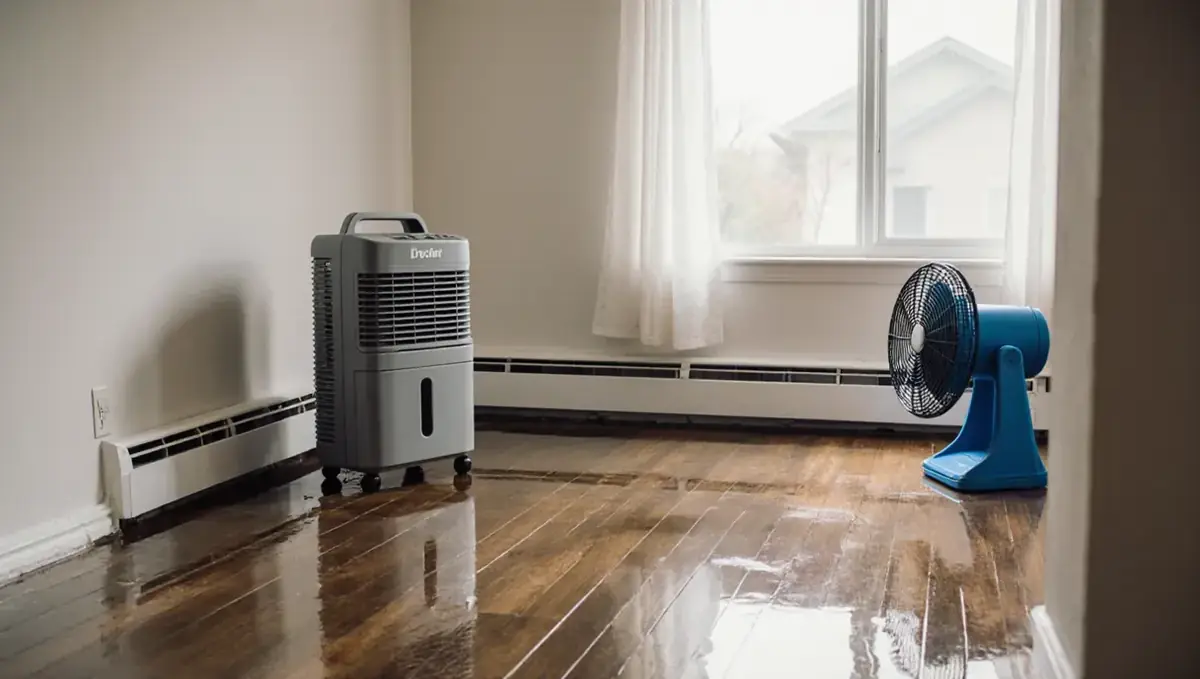
- Controlled drying. Air movers and dehumidifiers run with daily readings until materials reach drying goals. See how structural drying works.
- Repair. After drying is confirmed, water damage repair restores drywall, flooring, trim and cabinets.
Before agreeing to work, ask any company about its licensing, insurance and training, for example IICRC certification.
Mold, CSLB Licensing and Your Insurance File
Per EPA guidance, mold growth can start within a day or two on materials that stay damp. Drywall, wood framing, carpet pad and cabinet backs are all vulnerable. A proper mold removal job sets up containment so spores are not spread into clean rooms.
California does not appear to license mold assessors or remediators specifically, according to an industry roundup of state rules. A 2001 state law, the Toxic Mold Protection Act, asked the health department to study mold standards; no statewide licensing program came out of it that could be found. Remediation that involves construction is still subject to Contractors State License Board rules: since January 1, 2025, jobs totaling $1,000 or more in labor and materials, or any job needing a permit, require a CSLB license.
For insurance, remember that standard homeowners policies generally exclude flood, mudslide and debris flow, and NFIP flood policies usually take effect 30 days after purchase. Save photos, moisture logs and receipts in one place.
Communities Served In and Around Orange
Our free 24/7 line connects people throughout the City of Orange and surrounding communities with independent local restoration providers.
Neighborhoods
- Old Towne Orange
- Orange Park Acres
- El Modena
- North El Modena
- Olive
Nearby communities
Orange Water Damage FAQ
Has Orange ever flooded badly?
Yes. The 1938 Santa Ana River flood put parts of Anaheim and Orange under up to 4 feet of water, and in 1969 Santiago Creek eroded its banks and swept away portions of residential areas in Tustin and Orange. Dams and channels have since reduced the risk.
Can original materials be saved in an older Old Towne home?
Often some of it can be dried in place, depending on how long it was wet and what kind of water was involved. Ask the restoration company to take moisture readings and explain what must be removed and why.
Does homeowners insurance cover mud that washes in after a wildfire?
Generally no. Standard homeowners policies exclude flood, mudslide and debris flow. NFIP flood insurance covers mudflow but not landslides, and a new policy usually starts 30 days after purchase.
Does California require a mold license?
California does not appear to have a mold-specific license, but remediation involving construction falls under CSLB rules, including the requirement for a license on jobs of $1,000 or more.
Is WaterQ a local restoration company in Orange?
No. WaterQ is a free referral service. Calling the 24/7 line connects you with an independent local restoration company that inspects and performs the work.
Local emergency and flood resources
Official sources for alerts, flood maps and preparedness in and around Orange: