A Valley Floor Between the Gabilans and the Santa Lucias
Salinas lies low in the Salinas Valley, at about 52 feet, roughly eight miles inland from the Pacific. The Gabilan Range rises to the east and the Santa Lucia Range to the west, and the Salinas River runs the length of the valley on its way to Monterey Bay.
The climate is cool and mild, with about 12.58 inches of rain in an average year, much less than the North Bay. Dry years can make it easy to forget about water, but a soaked season can more than double that total. From July 1997 to June 1998 the city recorded 29.04 inches, including 9.96 inches in February 1998 alone.
When a pipe, appliance or storm puts water where it doesn't belong, call (888) 817-5061. WaterQ is a free referral line that connects you with a trusted, local company for water damage in Salinas.
The Salinas River's Flood Record
At 175 miles, the Salinas River is the longest river on California's Central Coast. For much of the year it carries little water to the ocean, and its mouth near Castroville is usually sealed by sand. Winter high flows change that quickly.
Notable floods struck in 1964 and 1995, and 1998 brought the last comparable event. Over the 20th century, flood conditions along the river generally showed up every 3 to 10 years. Upstream, the Nacimiento and San Antonio reservoirs release controlled flows, which helps, but very large storms can still push the river out of its banks.
Inside the city, Natividad Creek and Upper Carr Lake are reminders that water still moves through the valley floor. Properties near creeks and low spots should keep drains clear and plan for professional flood damage restoration if water comes inside.
Atmospheric Rivers on the Central Coast
The storms that do the most damage in Monterey County are usually atmospheric rivers, long plumes of moisture that can stall over the coast for days. Between December 26, 2022 and January 17, 2023, nine of them hit California in succession, bringing flooding, levee breaks and debris flows to many parts of the state.
In Salinas, back-to-back storms tend to cause water damage in predictable ways:
- Roofs and skylights that leak after hours of wind-driven rain.
- Garages and ground-floor rooms where street runoff seeps under doors.
- Sewer lines that back up when the ground is saturated.
- Fences, trees and debris that damage roofs and siding.
After a storm, storm damage cleanup usually starts with tarping openings and removing contaminated material before drying.
Renters, Landlords and Homes Built 1950 to 2000
Most Salinas residents live in detached single-family homes built between 1950 and 2000, and in 2010 about 55 percent of homes were renter-occupied. That combination shapes how water damage gets handled.
If you rent, tell your landlord or property manager in writing as soon as you find a leak, and take photos. The owner's policy usually covers the building, while a renters policy covers your belongings. If you own rentals, keep tenants informed about where shutoff valves are, and respond to reports quickly so a small drip doesn't become a moldy wall.
Homes from the second half of the 20th century often have plumbing, water heaters and roofs that have been patched over the years. Supply hoses on washers and toilets, and water heaters past their service life, are worth replacing before they fail.
The First Thirty Minutes After a Leak
- Stop the flow. Shut the nearest valve or the main water supply.
- Avoid shocks. Keep out of water near outlets, cords and appliances, and only switch off a breaker from dry footing.
- Identify the water. Supply-line water is Category 1. River runoff, street water and sewage backups are Category 3 and should be handled by professionals in protective gear.
- Photograph everything. Capture the source, the water line on walls and damaged belongings.
- Get things off the floor. Move electronics, documents and rugs somewhere dry.
- Bring in a pro. Call (888) 817-5061 to be connected with a Salinas-area provider for water extraction.
EPA guidance notes that mold can begin to grow within 24 to 48 hours on wet materials, so drying should begin as soon as possible.
Extraction, Drying and Rebuilding
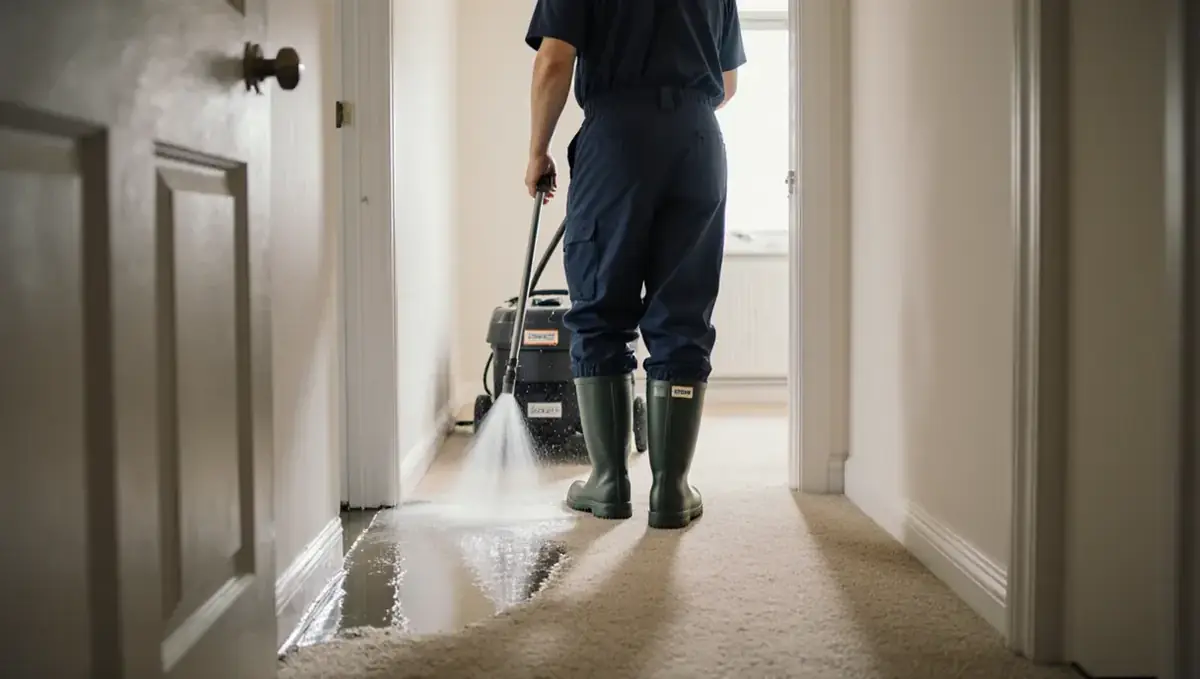
Once on site, a restoration company typically confirms the source is stopped and removes standing water and saturated carpet pad. Moisture meters and thermal cameras then show where water traveled behind baseboards, under vinyl and laminate, and into cabinets.
The structural drying phase uses air movers and dehumidifiers, with readings logged daily. In Salinas's cool, mild climate, dehumidifiers usually do much of the work. Drywall and insulation that wicked up water may be cut back so cavities can dry.
After everything tests dry, water damage repair restores drywall, flooring, paint and trim. California requires a CSLB license for any job of $1,000 or more in labor and materials or any job needing a permit. Confirm a license on the CSLB website and ask about IICRC training.
Mold, Insurance Gaps and Local Businesses
According to an industry roundup of state requirements, California has no license specific to mold assessment or remediation work. The state's Toxic Mold Protection Act of 2001 called for the health department to study mold standards, but no statewide licensing program has emerged. Mold removal that includes construction work is still subject to CSLB rules.
Flood coverage is the other big gap. California homeowners policies exclude flood, mudslide and debris flow. NFIP policies cover mudflow but not landslides, and new policies usually take 30 days to begin, so buying early matters in a valley with a long river flood history.
Offices, shops and other businesses in Salinas can call (888) 817-5061 too. Report flooded streets or blocked drains through the city's 311 request page. Owners with property farther north can also see our San Jose page.
Salinas Neighborhoods and Monterey County Communities Served
Our free referral line, available 24/7, connects people across Salinas and nearby Monterey County towns with independent local restoration companies.
Neighborhoods
- Old Town
- Alisal
- Harden Ranch
- Santa Rita
- Northridge
- Santa Lucia Village
- Sherwood Gardens
- Creekbridge
- Sunset
- Monte Bella
- Williams Ranch
- Maple Park
- Laurelwood
- Westridge
Nearby communities
- Spreckels
- Castroville
- Marina
- Monterey
- Seaside
- Prunedale
- Chualar
- Gonzales
- Watsonville
Salinas Water Damage FAQ
How often has the Salinas River flooded?
Notable floods occurred in 1964 and 1995, and 1998 was the last similar event. During the 20th century, flood conditions along the river generally occurred about once every 3 to 10 years.
Salinas only gets about 12 inches of rain. Do I need flood insurance?
Average rainfall is low, but wet years can be extreme; the city recorded 29.04 inches in 1997-98. Homeowners policies exclude flood, and NFIP policies usually take 30 days to start, so it is worth reviewing your risk before the rainy season.
I rent in Salinas and water is coming into my unit. What should I do?
Stop the water if you can, keep away from electrical hazards, take photos and notify your landlord or property manager in writing right away. The building owner's insurance usually covers the structure, and a renters policy covers your belongings.
How do I report a flooded street or clogged storm drain in Salinas?
Use the City of Salinas 311 online request system to report the problem, or call the city at (831) 758-7381. For any life-threatening emergency, call 911.
Does WaterQ send its own workers to Salinas?
No. WaterQ is a free 24/7 referral line. We connect you with an independent local restoration company, and that company handles the inspection and the work.
Local emergency and flood resources
Official sources for alerts, flood maps and preparedness in and around Salinas: