Burbank's Setting: Valley Floor Below the Verdugos
Burbank occupies the southeastern corner of the San Fernando Valley. The Verdugo Mountains rise along its northern edge, Griffith Park lies to the south and Glendale sits to the east. The land climbs from about 500 feet on the valley floor to around 800 feet near the foothills, so rain that falls on the mountains has a clear path downhill through hillside streets toward the flats.
The city averages just over 17 inches of precipitation a year, most of it in January and February, but a single year can look very different. The 2013-14 season brought only 5.37 inches, while 1940-41 delivered 41.29. That range means gutters, roof valleys and slope drains might go several winters without a real test, then fail in one storm.
The Los Angeles River runs along the city's southern side. Upstream, the Sepulveda Dam was built to keep the river from flooding the lower Valley, Burbank and Glendale.
Hillside Homes and the La Tuna Fire Burn Area
In September 2017, the La Tuna Fire burned 7,194 acres in the Verdugo Mountains. Mandatory evacuations covered at least 730 homes, including 300 in Burbank. Burned slopes take years to recover, and they shed water and soil much faster than vegetated ones.
The Burbank Fire Department's storm guidance asks anyone who lives near a hillside, canyon, steep slope or recent burn area to assess their risk, since steep or recently disturbed slopes are especially vulnerable to runoff. It also reminds residents that 6 inches of fast-moving water can knock an adult off their feet, so never walk or drive through floodwater.
- Clear leaves, sediment and debris from gutters and downspouts before the rainy season.
- Have dead or unstable trees checked before winter winds and rain.
- Sign up for ALERT Burbank to get emergency instructions by text, email or phone.
Studios, Offices and Commercial Water Losses
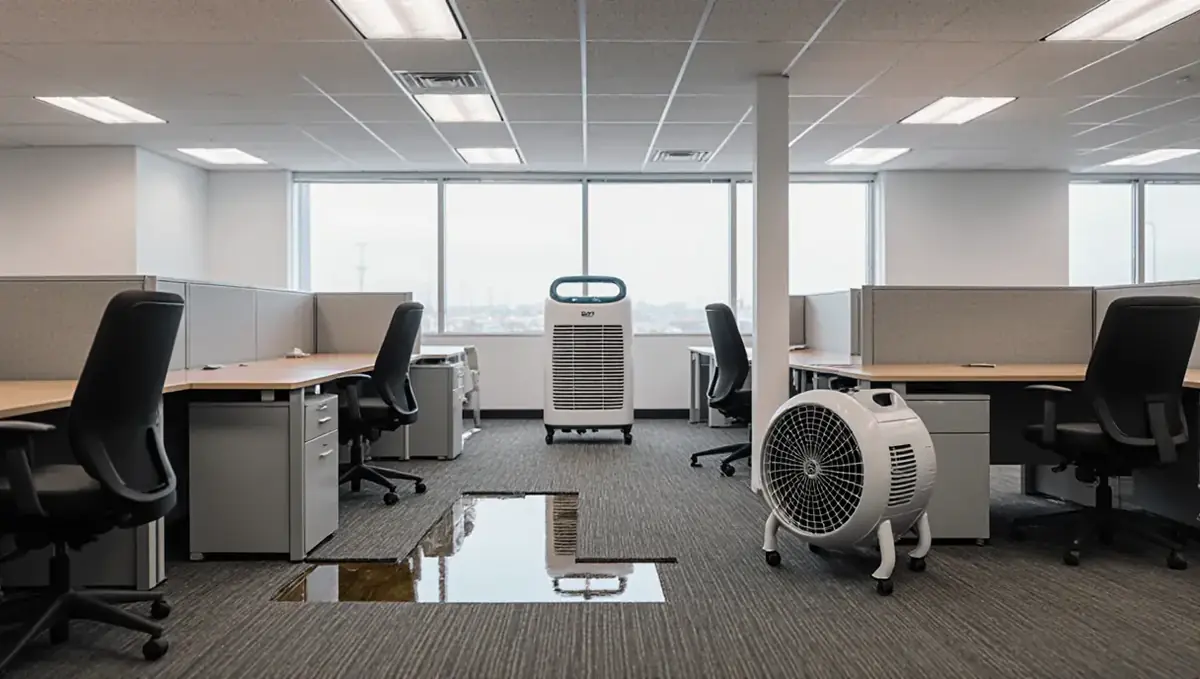
Burbank's Media District is home to major studio and production facilities, along with the offices, retail and service businesses that support them. A failed sprinkler line, a roof drain that backs up or a burst pipe over a weekend can soak carpet tiles, ceiling panels and equipment across several suites.
Commercial drying usually has to be phased around tenants, schedules and sensitive equipment. A local restoration company can extract water, set containment and run drying equipment in sections so part of the space stays usable. Property managers can call (888) 817-5061 and be connected with a provider that handles commercial water damage restoration in Burbank as well as homes and apartments.
Quick Checklist for a Leak or Indoor Flooding
- Find and close the shutoff. Use the fixture valve or the main. Businesses should know where the building's main and fire sprinkler shutoffs are, and who is allowed to use them.
- Put safety first. Avoid standing water near outlets, power strips and equipment.
- Consider the source. A clean water line leak is Category 1. Hillside runoff, mud or a sewer backup should be treated as Category 3.
- Document the damage. Take photos and video before moving anything.
- Lift and relocate. Get electronics, files, rugs and furniture out of the wet area.
Mold can start growing within 24 to 48 hours on wet materials, so arrange water extraction as quickly as you can.
Renters should notify the landlord or building manager right away, both so the source can be stopped and so neighboring units can be checked. Homeowners in two-story houses should look at the ceiling below any upstairs bathroom or laundry area, since water often shows up there first as a soft spot or a spreading ring. If the ceiling is sagging, keep people and pets out of the room until a professional can open it safely.
How Drying and Water Damage Repair Proceed
Inspection and water removal
A technician confirms the source and water category, then removes standing water with portable or truck-mounted extractors.
Drying with measurements
Moisture meters and thermal imaging track hidden moisture in walls, floors and ceilings. Dehumidifiers and air movers stay in place until readings reach dry goals. See how structural drying works.
Repair
Then comes water damage repair: drywall, flooring, trim, cabinets and ceilings. California's CSLB requires a contractor license for work of $1,000 or more in labor and materials, or any job needing a permit. Check a license, plus its bond and workers' comp status, on the CSLB site.
Storm Damage Cleanup and Mud in Burbank
When heavy rain sends mud and runoff off the foothills, cleanup is different from a clean-water leak. Mud, sediment and debris have to be removed, porous materials that absorbed contaminated water are usually discarded, and surfaces are cleaned and sanitized before drying. Local pros handle storm damage cleanup and flood cleanup for homes and businesses. If it happens to you, call (888) 817-5061.
Mold Removal and Licensing Facts
Hidden leaks in walls and ceilings, roof leaks that drip into insulation and damp spots left after a storm can all lead to mold. Musty smells and stained drywall are early clues.
Based on an industry roundup of state requirements, California has no state license specifically for mold assessors or remediators, and we found no statewide mold licensing program. However, remediation that involves construction still falls under CSLB contractor licensing. If you need mold removal in Burbank, read about containment and safe cleanup on the mold removal page.
What Insurance Does and Doesn't Cover
- Flood, mudslide and debris flow are not covered by standard California homeowners policies. NFIP policies cover mudflow but not landslides and usually begin 30 days after purchase.
- Earthquakes are excluded from homeowners policies apart from resulting fire. Burbank has at least eight major faults mapped within 13.5 miles of downtown, and the 1994 Northridge earthquake caused $61.8 million in damage here.
- Commercial policies vary widely. Review your business coverage for water, flood and business interruption.
- Records matter. Photos, moisture logs and receipts make claims easier to support.
Burbank Neighborhoods and Neighboring Communities
Our free referral line connects homeowners, renters and businesses throughout Burbank and the surrounding east Valley with independent local restoration companies.
Neighborhoods
- Downtown Burbank
- Magnolia Park
- Rancho Equestrian District
- Media District
- Burbank Hills
- Golden State
Nearby communities
- Glendale
- North Hollywood
- Toluca Lake
- Sun Valley
- Sunland-Tujunga
- Studio City
- La Crescenta-Montrose
- Atwater Village
Burbank Water Damage FAQ
Is my Burbank home at risk of mud after a fire?
If you live near a hillside, canyon, steep slope or recent burn area, the Burbank Fire Department recommends assessing your risk. Slopes in the Verdugo Mountains burned in the 2017 La Tuna Fire, and steep or recently disturbed slopes are especially vulnerable to runoff.
How do I get emergency alerts in Burbank?
Sign up for ALERT Burbank on the city website to receive emergency information and instructions by text, email or phone.
Can a restoration company work around my business hours?
Many local providers can phase extraction and drying so parts of an office or studio stay open. Ask the company you are connected with how it plans the job around tenants and equipment.
What should I check before hiring a contractor for repairs?
In California, jobs of $1,000 or more, or any job needing a permit, require a CSLB license. Use the CSLB Check a License tool to confirm status, bonding and workers' comp coverage.
Does WaterQ have its own crews in Burbank?
No. WaterQ is a free referral service, available 24/7. We connect you with an independent local restoration company that does the inspection and the work.
Local emergency and flood resources
Official sources for alerts, flood maps and preparedness in and around Burbank: