A Valley City Shaped by Murrieta Creek
Murrieta sits at roughly 1,096 feet in the Murrieta Valley of southwestern Riverside County. Murrieta Creek runs southeast through the valley and the city, and Warm Springs Creek, which starts in the Domenigoni Valley, crosses Murrieta before feeding into it. Farther downstream, beyond Temecula, the creek joins Temecula Creek to become the Santa Margarita River.
The creek system is bigger than it looks on a dry summer afternoon. Murrieta Creek runs about 13 miles through Wildomar, Murrieta and Temecula and drains more than 220 square miles, collecting water from Santa Gertrudis Creek, Cole Creek, Miller Canyon Creek and other tributaries. When a winter storm settles over that watershed, runoff from a wide area funnels toward the valley floor.
That is why water damage in Murrieta is not only about plumbing. Low spots near creek channels, yards that slope toward a house, and older properties near the historic downtown along old U.S. Route 395 can all take on water during a heavy rain.
Dry Most of the Year, Then Rain All at Once
Murrieta averages about 15.56 inches of precipitation a year, spread over only around 35 days with measurable rain. February is usually the wettest month at about 4.16 inches. In other words, most of the year's water can arrive in a handful of storms.
Hard, sun-baked ground and long dry stretches mean gutters, roof valleys and yard drains often go untested for months. The first big storm of the season is when a cracked roof flashing, a clogged downspout or a negative grade next to the slab finally shows itself as a stain on the ceiling or water along a baseboard.
Statewide, California's wet season runs roughly October through April, and atmospheric rivers drive most major floods. Tropical Storm Hilary in August 2023 was a reminder that a rare summer system can also bring flash flooding to inland Southern California. When storm water gets inside, storm damage cleanup and flood cleanup start with removing the water and anything it has contaminated.
Plumbing Problems in a Suburb Built Since the 1980s
Murrieta's population jumped from about 2,200 in 1980 to more than 110,000 by 2020. Interstate 15 opened the valley to commuters in the early 1980s, suburban neighborhoods were going up by the late 1980s, and the city incorporated in 1991. Most homes here are tract and planned-community construction from that boom.
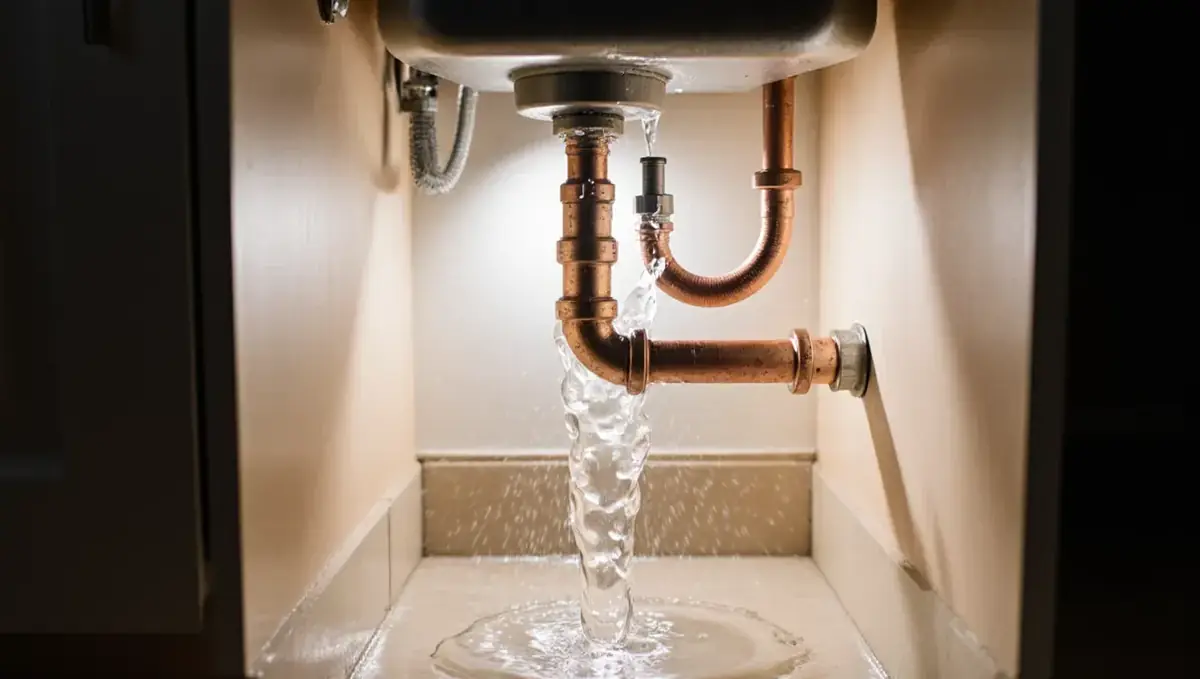
That housing age matters. Many early houses are now well into their second or third decade, and original water heaters, washing machine hoses, toilet supply lines and under-sink connections wear out over time. A pinhole leak or a failed fitting can soak a slab-on-grade floor, drywall and cabinets quietly for days before anyone notices.
For any sudden indoor leak, the response is the same: shut off water, protect yourself from electrical hazards, and get the water out quickly. Call (888) 817-5061 to be connected with a local company for emergency water extraction in Murrieta.
Your First Hour With Wet Floors
- Close the main or fixture valve. In many houses the main shutoff is outdoors or in the garage, so find yours before you need it.
- Keep electricity away from water. Stay out of standing water near outlets, power strips and appliances, and only switch off a breaker if you can reach the panel while standing somewhere dry.
- Identify the water type. A burst supply line is usually clean (Category 1). An overflowing toilet is Category 2, and creek runoff or sewage backup is Category 3 and should be treated as contaminated.
- Photograph before you move things. Capture the source, the water line on walls and every damaged item for your insurer.
- Lift and remove. Pull area rugs, electronics and paperwork out of the wet zone and put furniture legs on blocks or foil.
- Bring in drying equipment early. Wet drywall and carpet pad can start growing mold within 24 to 48 hours.
From Extraction to Rebuild: What Local Pros Typically Do
The restoration company you are connected with will assess the damage first, then follow a fairly standard process.
Water removal
Portable or truck-mounted extractors pull standing water out of carpet, pad and hard floors. Getting bulk water out quickly limits how far it wicks into walls.
Moisture mapping and drying
Moisture meters and thermal cameras show where water traveled under tile, behind baseboards and into neighboring rooms. Air movers and dehumidifiers then run until readings reach dry standards. Murrieta's dry air can help, but sealed wall cavities and slab floors still need structural drying to finish properly.
Repairs
Once materials test dry, water damage repair covers drywall, flooring, baseboards, cabinets and paint. In California, the Contractors State License Board requires a license for jobs of $1,000 or more in labor and materials or any job that needs a permit, so look up the contractor with CSLB's Check a License tool before you sign.
Mold After a Leak in Murrieta
Even in a semi-dry inland climate, mold grows wherever building materials stay wet. Closets that share a wall with a leaking shower, carpet pad that was never fully dried, and attic insulation under a roof leak are common trouble spots.
According to an industry roundup of state rules, California has no license aimed specifically at mold assessors or mold remediators. A 2001 law, the Toxic Mold Protection Act, told state health officials to study mold and develop standards, yet no statewide licensing program for mold work turned up. If remediation involves construction, CSLB contractor licensing rules still apply.
Professional mold removal in Murrieta usually means containment to keep spores from spreading, removal of affected porous materials, cleaning and drying. Ask any company about its insurance and training, such as IICRC certification.
Coverage Questions for Riverside County Homeowners
- Flood and mud are separate. Per the California Department of Insurance, a typical homeowners policy leaves out flood, mudslide and debris flow. An NFIP policy does include mudflow (landslides are excluded), and coverage usually starts 30 days after you buy it.
- Sudden leaks are different. Many policies treat a sudden pipe burst differently from long-term seepage, so read your policy and report quickly.
- Check your flood risk. Riverside County Flood Control's Am I in a Floodplain? map lets you look up your property.
- Keep the paper trail. Hold on to your photos, the daily moisture readings, every invoice and the final drying report.
Property managers and business owners can use the same line. Call (888) 817-5061 and we will connect you with a local provider who handles commercial water damage restoration in Murrieta.
Murrieta Areas and Neighboring Communities
WaterQ's free referral line connects callers throughout Murrieta and the surrounding southwestern Riverside County communities with independent local restoration companies.
Neighborhoods
- Historic Downtown Murrieta
- Murrieta Hot Springs
- Murrieta Valley
Nearby communities
- Temecula
- Wildomar
- Menifee
- French Valley
- Lake Elsinore
- Santa Rosa Plateau
- Hemet
- Fallbrook
Murrieta Water Damage FAQ
Which creeks run through Murrieta?
Murrieta Creek runs southeast through the Murrieta Valley and the city, and Warm Springs Creek, a tributary that starts in the Domenigoni Valley, also passes through Murrieta. Together with other tributaries, the Murrieta Creek watershed covers more than 220 square miles.
When does Murrieta get most of its rain?
Mostly in winter. The city averages about 15.56 inches of precipitation a year, and February is usually the wettest month at around 4.16 inches. Clean gutters and check drainage before the season starts.
Do I need a licensed contractor to repair water damage in Murrieta?
In California, a CSLB license is required for jobs totaling $1,000 or more in labor and materials, or any job that needs a permit. You can verify a license, bonding and workers' comp with CSLB's online Check a License tool.
Will my homeowners policy cover storm runoff that flows into my house?
Often not. The California Department of Insurance says standard homeowners policies do not cover flood, mudslide or debris flow. That coverage comes from a separate flood policy, which generally has a 30-day waiting period.
Is WaterQ a restoration company?
No. WaterQ is a free referral service available 24/7. When you call, we connect you with an independent, local restoration company that inspects the damage and does the work.
Local emergency and flood resources
Official sources for alerts, flood maps and preparedness in and around Murrieta: