Living Between the Ocean, the Harbour and the Wetlands
Huntington Beach stretches along 9.5 miles of sandy Pacific shoreline, and close to 5 percent of the city's area is water. Its average elevation is only about 39 feet. To the west are the Bolsa Chica wetlands, an ecological reserve of more than 1,200 acres restored in a $110 million project finished in 2006. To the southeast, the Santa Ana River reaches the ocean in a small tidal lagoon between Huntington State Beach and Newport Beach, and the Talbert, Brookhurst and Magnolia marshes nearby were restored by 2010.
Much of the city's character, and some of its water risk, comes from that low, wet landscape. Rain here averages about 14 inches a year and falls almost entirely in winter, with January through March the wettest stretch. When a strong Pacific storm stalls over the coast, water has to drain across flat ground toward channels and the ocean, and backed-up storm drains or high surf can slow that down.
Huntington Harbour Homes on Former Estuary Land
Huntington Harbour was built beginning in 1963 on what had been the Sunset Bay Estuary, created by dredging and filling the old wetlands. The development covers about 680 acres and includes five man-made islands, Admiralty, Davenport, Gilbert, Humboldt and Trinidad, with roughly 752 home sites between them and channels 15 to 20 feet deep. Most of the homes went up between the 1960s and the late 1970s.
Waterfront living brings a few things to keep an eye on:
- Aging plumbing. Homes from the 1960s and 1970s may still have original supply lines, water heaters or drain pipes that are past their prime.
- Salt air. Constant coastal moisture is hard on metal fittings, door thresholds and window frames, which can let wind-driven rain inside.
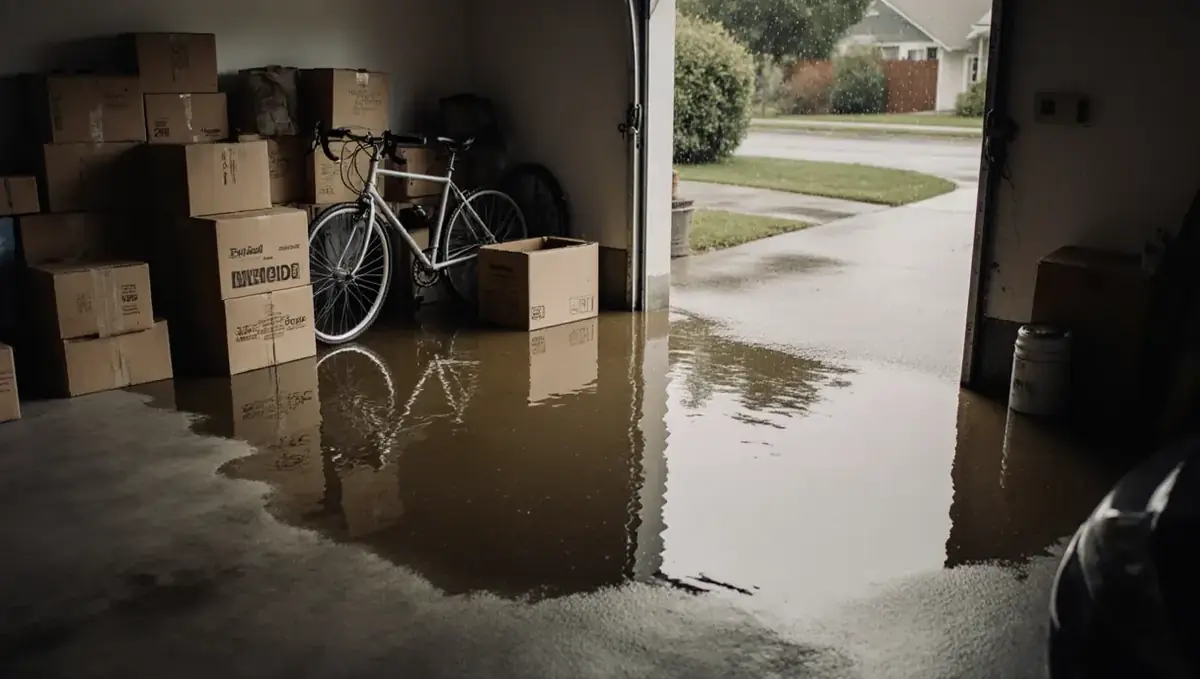
- Ground-level spaces. Garages and lower rooms are usually the first places water collects after a heavy storm.
If you find water in a harbour home, call (888) 817-5061 and we will put you in touch with a nearby restoration company for emergency water removal.
Pacific Storms and the Pier's Long Record
The Huntington Beach Pier is a good measure of what the ocean can do. A severe storm in 1910 sent a large section into the Pacific. The 1939 California tropical storm damaged it again. Then Pacific storms in 1983 and on January 7, 1988 destroyed the pier and the End Cafe, and the city rebuilt a new 1,856-foot pier that was rededicated in July 1992.
Homes and businesses are not the pier, but the same storms bring high surf, heavy rain and wind that can tear at roofs, flood patios and push water under doors. Looking ahead, statewide projections call for 1 to 4 feet of sea level rise by 2100, which matters most for the lowest coastal neighborhoods.
After a storm, storm damage cleanup may involve tarping, debris removal and drying. Water that came in from outside should be treated as contaminated, and flood damage restoration normally includes cleaning and sanitizing surfaces before the rebuild.
Getting Sandbags and Storm Alerts From the City
The City of Huntington Beach offers self-fill sandbags for residents. According to the city's Public Works page, the main distribution point is the Corporate Yard on Gothard Street, while other sites open seasonally. A few rules to know:
- Bring your own shovel and do not overload your vehicle.
- The limit is 20 bags per household, and proof of residency may be required.
- Businesses are not eligible.
Check the city sandbag page for current hours before you go. For emergency notifications, sign up for AlertOC through ReadyOC, and use HB Connect to report clogged drains or street flooding to the city.
What to Do When Water Gets Inside
- Make it safe. If water is near outlets, cords or appliances, stay out of it. Flip breakers only from a dry spot.
- Stop the flow. Shut the main water valve for a plumbing leak. For storm water, sandbags or towels at doorways can slow it down.
- Sort out the water type. Supply-line water is usually Category 1. Storm runoff and sewer backups are Category 3 and may carry bacteria.
- Capture evidence. Photograph and film the water, its source and every damaged item.
- Rescue belongings. Move electronics, papers and soft goods out of the garage or lower rooms.
- Bring in professionals. Call (888) 817-5061, available 24/7, to be connected with a local water damage company.
How a Local Crew Restores a Coastal Home
Water damage restoration in Huntington Beach follows a familiar pattern, with extra attention to salt, sand and moisture in the air.
Extraction and cleanup
Pumps and extractors remove standing water, and any mud, sand or debris tracked in by a storm is cleared out.
Moisture mapping
Meters and thermal cameras show where water moved inside walls, under flooring and into cabinets.
Drying
Dehumidifiers matter in a coastal climate where outdoor air is often humid. Equipment runs for several days with regular readings. See structural drying for more detail.
Repair
After materials test dry, water damage repair replaces drywall, flooring, baseboards and other finishes.
Mold, Licensing and Insurance Notes
Mold may begin to form on wet building materials in 24 to 48 hours, per EPA guidance, and steady coastal humidity gives it little reason to stop. Professional mold removal uses containment and air filtration to keep spores from spreading.
California has no state license that is specific to mold assessors or remediators, according to an industry roundup of state requirements. The Toxic Mold Protection Act of 2001 asked the state health department to study and develop mold standards, but no statewide mold licensing program was found. Any remediation involving construction still falls under Contractors State License Board rules, which since January 1, 2025 require a license for jobs at or above $1,000 in labor and materials or needing a permit. A quick search on CSLB's Check a License shows a contractor's status.
The California Department of Insurance notes that standard homeowners policies exclude flood, mudslide and debris flow. Coastal and harbour-side homeowners may want to look into flood coverage, keeping in mind the usual 30-day waiting period on a new policy. Save photos, drying logs and receipts for any claim.
Huntington Beach Areas and Neighboring Coastal Cities
Our free referral line, open around the clock, connects callers across Huntington Beach and nearby west Orange County communities with independent local restoration providers.
Neighborhoods
- Downtown Huntington Beach
- Huntington Harbour
- Bolsa Chica
- Admiralty Island
- Davenport Island
- Gilbert Island
- Humboldt Island
- Trinidad Island
Nearby communities
- Seal Beach
- Westminster
- Fountain Valley
- Costa Mesa
- Newport Beach
- Sunset Beach
- Garden Grove
- Santa Ana
- Long Beach
Huntington Beach Water Damage FAQ
Where can I get sandbags in Huntington Beach?
The city's Public Works department offers self-fill sandbags for residents at the Corporate Yard on Gothard Street, with other sites opening seasonally. Bring a shovel, expect a limit of 20 bags per household, and check the city's sandbag page for current hours.
Does homeowners insurance cover storm flooding at the coast?
Usually not for floodwater. The California Department of Insurance says standard homeowners policies exclude flood, mudslide and debris flow, so coverage comes from a separate flood policy that typically has a 30-day waiting period.
Are Huntington Harbour homes more prone to water problems?
Harbour homes were built mostly in the 1960s to late 1970s on dredged and filled former wetlands next to the water. Older plumbing and constant salt air are worth watching, so regular inspections of supply lines, water heaters and door and window seals make sense.
Do mold removal companies need a California license?
There is no California license specific to mold remediation, based on an industry roundup. Construction-related work of $1,000 or more, or any job needing a permit, requires a CSLB contractor license.
Does WaterQ do the restoration work itself?
No. WaterQ is a free referral service that connects you with an independent, local restoration company. You can call any time, day or night.
Local emergency and flood resources
Official sources for alerts, flood maps and preparedness in and around Huntington Beach: