A City That Is More Than Half Water
Newport Beach covers about 53 square miles, and more than 55 percent of that is water. Newport Harbor, home to roughly 9,000 boats, is one of the largest recreational boat harbors on the West Coast. The Lower Bay is sheltered by the Balboa Peninsula, a strip built up from ocean-carried sand, while Upper Newport Bay, the Back Bay, is an estuary carved by an ancient flow of the Santa Ana River. Today the Santa Ana River marks the city's western edge with Huntington Beach.
Several artificial islands in the harbor, including Balboa Island, Lido Isle, Linda Isle and Harbor Island, are covered with private homes. The city's official elevation is about 25 feet, but bayfront lots sit much closer to the waterline than that figure suggests.
Rainfall is modest, averaging about 9.4 inches a year, with December through February the wettest months. That is a reason many owners underestimate water risk. Damage here is as likely to come from the tide, a winter storm hitting all at once, or a plumbing failure in an empty vacation home as from steady rain.
Balboa Island and the History of High-Tide Flooding
Balboa Island did not exist until 1908 and 1909, when Collins, the island's developer, dredged a channel along a mud flat called Snipe Island and piled up the sand and silt. The first bulkhead on its south side was only 14 inches high. For years, residents dealt with poor roads, sewers that drained straight into the bay, and a wall so inadequate that homes were regularly flooded by high tides.
Improvements came in stages. The seawall was rebuilt in 1922, the Grand Canal bulkhead was redone in concrete in 1929, and the present Bay Front bulkhead and walks were finished in 1938. Today about 3,000 people live on just 0.2 square miles, and the island fills with summer renters.
That history is a reminder that harbor homes depend on seawalls and bulkheads to stay dry. With statewide projections of 1 to 4 feet of sea level rise by 2100, it is worth knowing your property's flood zone. The city's FEMA flood map page offers an address lookup, and the current Flood Insurance Rate Map took effect March 21, 2019.
Second Homes, Vacation Rentals and Slow Leaks
Balboa Island alone grows to close to 10,000 people in summer, and many homes across the peninsula and islands are seasonal or rented out. A supply line that fails in an empty house can run for days before anyone notices. By then water may have spread under hardwood, into the floor below, or along the slab.
- Shut off the main water valve when a property will sit empty for a while.
- Ask a neighbor, property manager or cleaner to check in regularly.
- Consider leak sensors near water heaters, washers, dishwashers and sinks.
- Inspect hoses and connections between rental seasons.
Owners and managers who discover damage can call (888) 817-5061 to be matched with a local company for water extraction and drying, even when they are out of town and coordinating by phone.
Harbor Storms and Hillside Runoff
Not all of Newport Beach is at sea level. Newport Coast, Eastbluff and the San Joaquin Hills sit on higher, sloped ground, where winter storms can send runoff and mud across driveways and patios. Down in the harbor neighborhoods and West Newport, the concern is more often standing water, wind-driven rain and the combination of storms with high tides.
ReadyOC, Orange County's preparedness program, names flooding as one of the county's most likely disasters, usually from concentrated heavy rain, hillside runoff and blocked storm drains. When a storm brings water inside, flood cleanup starts with removing water and anything it contaminated, and storm damage cleanup may include roof tarping and debris removal. Report clogged drains or other problems to the city through NB Connect.
First Moves After You Discover Water
- Close off the supply. Use the main shutoff or the valve at the fixture. Know where your main is before the next leak.
- Watch for electrical risk. Keep out of standing water near outlets or appliances, and use the breaker panel only if you can stand somewhere dry.
- Classify the water. A clean line break is Category 1. Bay water, storm runoff and sewage backups should be treated as Category 3.
- Photograph it all. Capture the source, the water level and every damaged item before anything is removed.
- Move what matters. Pull rugs, art, documents and electronics into a dry space.
- Call in help. Dial (888) 817-5061, 24/7, to reach a restoration company serving Newport Beach.
Drying Out a Coastal Home the Right Way
Water damage repair in Newport Beach starts with getting the structure truly dry. A restoration crew extracts standing water first, then uses moisture meters and infrared cameras to see where it went behind walls, under flooring and into cabinetry.
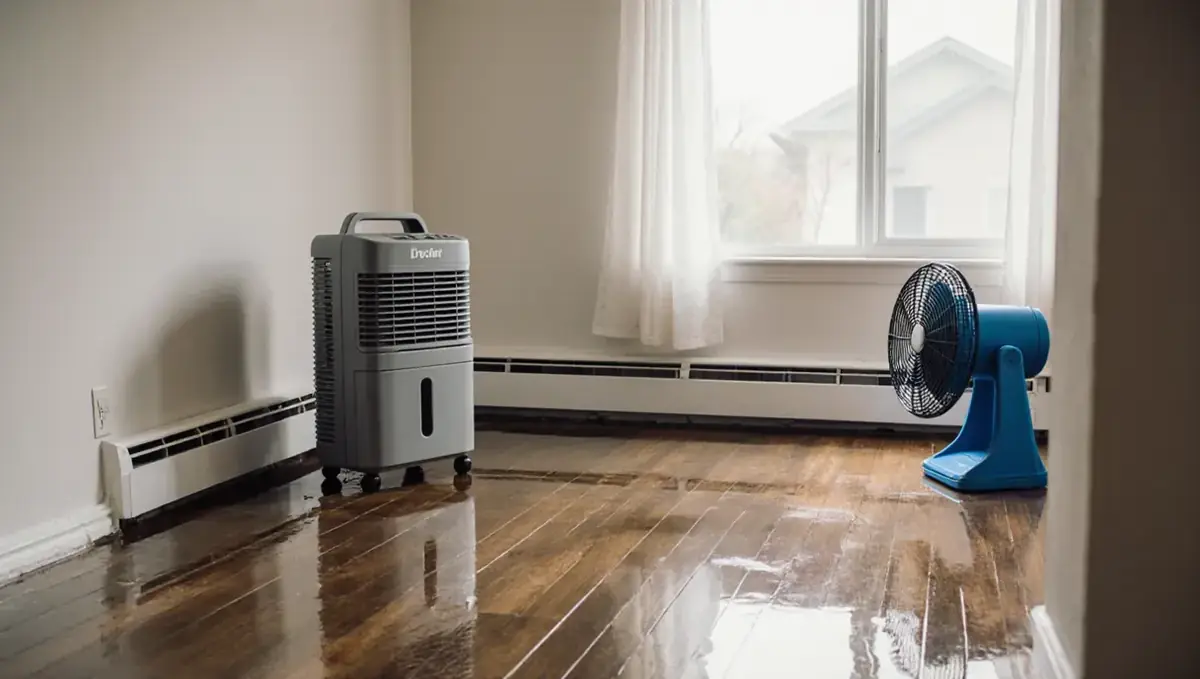
Coastal air is often humid, so dehumidifiers do much of the work alongside air movers. Readings are taken over several days until materials reach normal levels. Wet drywall and insulation are often removed so wall cavities can dry, and high-end finishes such as hardwood, stone or custom millwork may need careful handling. Learn more about structural drying and repairs after water damage.
Mold Cleanup, License Checks and Flood Coverage
Based on EPA guidance, mold growth can start within 24 to 48 hours on materials that remain damp. Salt air and closed-up vacation homes can make that worse. Professional mold remediation sets up containment so spores stay out of the rest of the house.
As an industry roundup of state requirements reports, California has no license specifically for mold assessors or remediators. The Toxic Mold Protection Act of 2001 had the state health department study and develop mold standards, but no statewide mold licensing program was identified. Work that includes construction remains under Contractors State License Board rules, and since January 1, 2025, those rules require a CSLB license on jobs of $1,000 or more in labor and materials or any job that needs a permit. Look up any contractor through CSLB's online license check.
Flood, mudslide and debris flow fall outside a standard homeowners policy, according to the California Department of Insurance. Bayfront and peninsula owners should review flood coverage, and remember that a new flood policy typically has a 30-day waiting period. Keep photos, drying reports and receipts together for your insurer.
Newport Beach Neighborhoods, Islands and Nearby Cities
WaterQ's free line connects callers 24/7 across Newport Beach's islands, peninsula and hillside neighborhoods, plus nearby coastal Orange County cities, with independent local restoration companies.
Neighborhoods
- Corona del Mar
- Balboa Peninsula
- Balboa Island
- Little Balboa Island
- Collins Isle
- Lido Isle
- Lido Peninsula
- Linda Isle
- Harbor Island
- Bay Island
- Newport Island
- Newport Coast
- West Newport
- Eastbluff
- San Joaquin Hills
- Santa Ana Heights
Nearby communities
- Costa Mesa
- Huntington Beach
- Irvine
- Laguna Beach
- Santa Ana
- Tustin
- Fountain Valley
- Crystal Cove
Newport Beach Water Damage FAQ
How do I find out if my Newport Beach home is in a flood zone?
The City of Newport Beach offers an address lookup on its FEMA flood map page. The current Flood Insurance Rate Map for the city became effective March 21, 2019.
Why did Balboa Island homes flood in the past?
Balboa Island was dredged from a mud flat in 1908 and 1909, and its first bulkhead was only 14 inches high. Homes were regularly flooded by high tides until the seawall was rebuilt in 1922 and the Bay Front bulkhead was completed in 1938.
How can I protect a vacation rental from water damage?
Shut off the main water valve when the home is empty, have someone check on it regularly, add leak sensors near appliances, and inspect hoses between rental seasons. Slow leaks in empty homes are often the most damaging.
Do I need a licensed contractor for mold work in California?
California has no license specific to mold remediation, according to an industry roundup, but construction-related work of $1,000 or more, or any permitted job, requires a CSLB license that you can check online.
Is WaterQ a local restoration company?
No. WaterQ is a free referral service, available 24/7, that connects you with an independent, local restoration company that performs the inspection and work.
Local emergency and flood resources
Official sources for alerts, flood maps and preparedness in and around Newport Beach: