Flat Ground, a Channeled River and a Creek
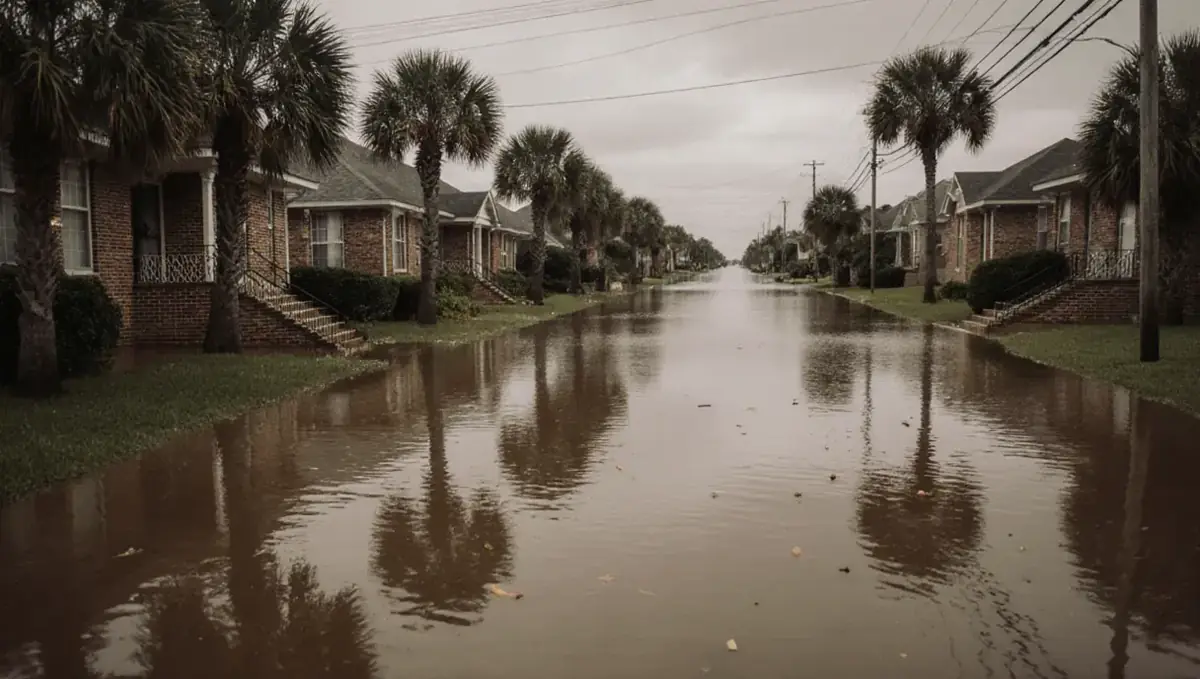
Santa Ana sits on flat, low-lying plains at about 115 feet above sea level, with very little change in elevation from one side of the city to the other. That makes for easy walking and driving, but it also means heavy rain has nowhere to run quickly. When storm drains fill up, water spreads across streets, parking lots and the lowest yards first.
Two waterways frame the city. The Santa Ana River runs through the west end in a mostly concrete channel, and it is largely seasonal today because of Prado Dam and Seven Oaks Dam far upstream. Santiago Creek flows southwest between Orange and Santa Ana, past Hart Memorial Park and Santiago Creek Park, and joins the river inside the Riverview Golf Course, roughly 10 miles from the ocean.
Average rainfall is about 12.5 inches a year, mostly between late fall and early spring, with January and February the wettest months. Yet a single month can bring far more. In February 1998 the city recorded 13.99 inches, more than a normal year's total.
Santa Ana's Flood History in Brief
The Santa Ana River caused several severe floods during the 20th century. The worst modern event came in 1938, when the river flooded neighboring Anaheim and Orange in up to 4 feet of water and about 68,400 acres flooded across the region. In 1969, Santiago Creek tore at its banks and swept away parts of residential neighborhoods in Tustin and Orange.
Since then, flood control has changed the picture. Santiago Dam at Irvine Lake (completed in 1931) and Villa Park Dam (1963) regulate the creek, and the lower 30.4 miles of the river were lined in concrete starting in 1989. Even so, the river is still considered a continued threat despite those dams, and ReadyOC, a program of the County of Orange together with the cities of Anaheim and Santa Ana, ranks flooding among the county's most likely disasters.
For most households, the more common problem is local: rain backing up at a clogged drain, water entering a ground-floor unit, or a roof that finally gives way in a long storm. If water is already inside, flood cleanup should start as soon as it is safe.
Historic Homes Need a Careful Hand
French Park and the Downtown Santa Ana Historic Districts include homes dating from the late 1800s. Older houses can hide original plumbing, plaster walls, wood floors and raised foundations that behave differently when wet than modern drywall on a slab.
Plaster and old-growth hardwood can sometimes be dried in place rather than torn out, but only with careful monitoring. Ask the restoration company how it plans to protect original materials, and check with the city about any historic-district rules before replacing exterior features. Good water damage repair in an older home often means matching trim, flooring and finishes, not simply swapping them for new stock.
Steps to Take Before Help Arrives
- Turn off the water. Use the main valve or the fixture valve. In an apartment, ask the manager where the unit shutoff is.
- Stay away from wiring. Do not touch electrical devices or walk through water near outlets. Cut power at the breaker only if the panel is dry and safe to reach.
- Judge the water. Clean supply-line water is Category 1. Street runoff and sewage backup are Category 3 and can carry bacteria, so avoid contact.
- Take pictures first. Photograph and video every wet room, the source and damaged property.
- Lift and move. Get rugs, papers and electronics out of the wet area and raise furniture on blocks.
- Reach out. Phone (888) 817-5061, day or night, to be put in touch with a Santa Ana-area restoration company.
From Wet Floors to Dry Walls: The Process
Water damage restoration in Santa Ana generally moves through four stages, though the order and length depend on the building.
Extraction
Pumps and wet vacuums remove standing water from carpet, tile and wood floors. Category 3 water also calls for removing porous materials it touched.
Inspection
Technicians map moisture with meters and infrared cameras to see how far water spread under baseboards and into adjoining rooms.
Drying
Dehumidifiers and air movers run for several days with daily readings. Structural drying aims to bring framing and subfloors back to normal moisture levels before anything is closed up.
Rebuild
Damaged drywall, flooring and cabinets are replaced once readings confirm the structure is dry.
Mold, Contractor Licenses and Insurance in Santa Ana
Mold growth can begin within 24 to 48 hours on materials that stay wet, according to EPA guidance, and enclosed spaces like wall cavities and under-sink cabinets are where it tends to start. Professional mold cleanup uses containment so spores do not spread through a home or building.
According to an industry roundup of state requirements, California has no state license that is specific to mold assessors or remediators. The Toxic Mold Protection Act of 2001 asked the state health department to study and develop mold standards, though a statewide licensing program was not found. Mold work that includes construction is still subject to Contractors State License Board rules, and since January 1, 2025, CSLB licensing applies to jobs of $1,000 or more in labor and materials or any permitted job. Verify a company with CSLB's license lookup.
On the insurance side, the California Department of Insurance says standard homeowners policies leave out flood, mudslide and debris flow, so floodwater from outside typically needs a separate flood policy, which usually has a 30-day waiting period. Keep moisture logs, photos and receipts together. WaterQ cannot predict a claim outcome, but organized records help.
Where We Connect Callers In and Around Santa Ana
The WaterQ line is free and open 24/7 for residents, landlords and businesses across Santa Ana and the surrounding central Orange County cities.
Neighborhoods
- Downtown Santa Ana
- Midtown
- Metro East
- South Coast Metro
- Greenville
- Artists Village
- French Park
- Fourth Street (La Cuatro)
Nearby communities
- Anaheim
- Irvine
- Tustin
- Costa Mesa
- Orange
- Garden Grove
- Fountain Valley
- Villa Park
- Westminster
- Newport Beach
Santa Ana Water Damage FAQ
Who pays for water damage in a Santa Ana apartment?
It depends on the cause and your lease. The building owner's insurance usually covers the structure, while a renters policy typically covers a tenant's belongings. Report the leak to your landlord in writing and document everything.
Can the Santa Ana River still flood the city?
The river is controlled by upstream dams and a concrete channel, but it is still considered a continued threat. Local street flooding from overwhelmed storm drains is far more common during heavy rain.
Can older plaster walls be saved after a leak?
Sometimes. Plaster and solid wood can often be dried in place with careful monitoring, depending on how long they were wet and what kind of water was involved. Ask the restoration company to explain its plan before anything is removed.
Does California license mold remediation companies?
There is no state license specific to mold remediation in California, based on an industry roundup of state rules. Contractors doing construction work of $1,000 or more, or any permitted job, need a CSLB license, which you can verify online.
What does WaterQ actually do?
WaterQ is a free referral line. When you call, it connects you with an independent, local restoration company that inspects the damage and does the work. The line is available 24/7.
Local emergency and flood resources
Official sources for alerts, flood maps and preparedness in and around Santa Ana: