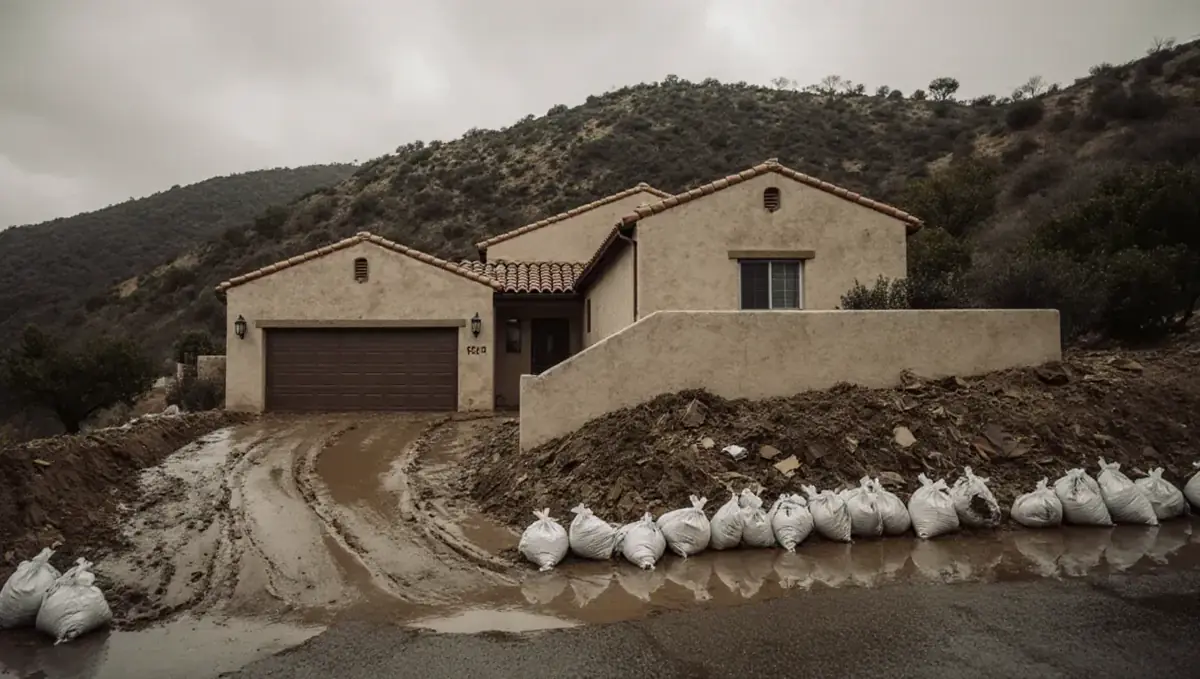
A City at the Mouth of the Mountains
San Bernardino sits at about 1,053 feet, pressed up against the San Bernardino Mountains with the Cajon Pass on its northwest edge. Arrowhead Springs, its northernmost neighborhood, actually lies inside the San Bernardino National Forest. Rain that falls on those steep slopes has a short, fast trip downhill.
That water is carried by a set of creeks, among them City Creek, Lytle Creek, San Timoteo Creek, Twin Creek and Warm Creek, most of them now running through flood control channels toward the Santa Ana River. The city averages about 16 inches of precipitation a year, with February usually the wettest month at just over 4 inches.
So the risk here is less about steady rain and more about intensity. A strong winter storm over the mountains can send runoff, mud and rock toward foothill streets in Verdemont Hills, Shandin Hills and Arrowhead Springs while flatland neighborhoods deal with overwhelmed storm drains.
Floods That Shaped the San Bernardino Valley
San Bernardino County's flood control history goes back a long way. During the flood of 1862, the area from Loma Linda to the hill at Third Street and Arrowhead Avenue was under water. The March 2-3, 1938 flood killed 14 county residents, isolated nearly every community and left hundreds homeless. Two more floods in January and February 1969 each caused tens of millions of dollars in county losses.
Those events are why the valley is lined with dams, basins, channels and storm drains today. The County Flood Control District warns that people can be swept away by surges of water, mudflow or debris flow in those channels, so stay out of them during and after storms, even when they look nearly empty.
Fire Season, Then Mud Season
Seasonal Santa Ana winds can approach 60 mph here, and wind-driven fires change what the next winter looks like. The Old Fire, which burned from October 25 to November 2, 2003, covered 91,281 acres across San Bernardino, Highland and the mountain communities above. When a Pacific storm arrived on December 25-26 that year, flash floods and debris flows followed. One flow destroyed two bridges and spread out to fill the basins just north of the city, and 33 of 34 foothill debris basins filled with material. A mudslide through a camp in Waterman Canyon that season has been linked to fourteen deaths.
If you live below a recent burn area:
- Keep drainage paths, swales and yard drains clear before the rainy season.
- Use sandbags to steer runoff away from doors and garage openings.
- Follow evacuation orders right away; belongings can be replaced.
- Treat any mud that enters the home as contaminated.
Cleaning up after a mudflow usually means removing sediment, cutting out soaked drywall and insulation, sanitizing, and then drying the structure. Our flood damage restoration and storm damage cleanup pages go into more detail.
Pipe Bursts and Appliance Leaks All Year
Storms make headlines, but plenty of water damage in San Bernardino comes from inside the house. Summer heat has reached 118 degrees here, and long stretches of hot weather keep water heaters, ice makers, washing machines and air conditioner condensate lines working hard.
A failed supply line under a sink can soak a cabinet base and subfloor in a few hours. A slow drip behind a toilet can rot flooring for months before anyone notices. When you find a leak, close the nearest shutoff or the main valve, then call (888) 817-5061 so we can connect you with a local company for water removal and drying.
Steps to Take Before the Crew Arrives
- Shut off the water at the main or the fixture if it is a plumbing leak.
- Keep away from wet outlets and cords. Only flip breakers if you can reach the panel without standing in water.
- Separate clean from dirty water. A broken supply line is usually Category 1. Runoff or mud from outside should be handled as Category 3.
- Photograph everything, including the source, water lines on walls and damaged furniture.
- Lift and move rugs, papers, electronics and small furniture to a dry area.
A restoration crew will then take moisture readings, extract water and set up air movers and dehumidifiers. Once materials test dry, the job shifts to water damage repair, from drywall and paint to flooring and cabinets.
Mold After Wet Winters
Per EPA guidance, wet building materials can begin to grow mold in roughly a day or two. After mud or flood water, mold often shows up in wall cavities, behind baseboards and under flooring that looked dry on the surface.
As far as we can find, the state issues no mold-specific license for assessment or remediation work. When remediation involves construction, though, Contractors State License Board rules apply: since January 1, 2025, any job totaling $1,000 or more in labor and materials, or any job needing a permit, requires a CSLB license. Look up any company on CSLB's Check a License tool, and ask about training such as IICRC certification. Read more on mold removal.
Flood Coverage, Claims and Commercial Property
California's Department of Insurance notes that a standard homeowners policy leaves out flood, mudslide and debris flow. Mudflow can be covered under an NFIP flood policy, but landslides are not, and new NFIP coverage normally starts after a 30-day wait. Foothill homeowners below burn areas should look at flood coverage long before the first storm.
For any claim, report the loss quickly, keep photos and moisture logs, and save invoices for emergency work. Landlords, apartment managers and owners of warehouses and offices along the freeway corridors deal with the same issues plus tenant safety and downtime. One call to (888) 817-5061 connects homeowners and businesses alike with a local restoration provider. Nearby, WaterQ also has pages for Rancho Cucamonga and Riverside.
San Bernardino Neighborhoods and Valley Communities
Our free referral line connects callers from the foothills to the valley floor with independent restoration companies serving San Bernardino and nearby cities.
Neighborhoods
- Downtown San Bernardino
- Arrowhead Springs
- University District
- Muscupiabe
- Shandin Hills
- Seccombe Park
- Medical Center
- Westside
- East Side
- Verdemont Hills
- North Loma Linda
Nearby communities
- Highland
- Loma Linda
- Redlands
- Colton
- Rialto
- Fontana
- Yucaipa
- Riverside
- Rancho Cucamonga
- Ontario
- Devore
- Crestline
San Bernardino Water Damage FAQ
Why do debris flows hit San Bernardino after wildfires?
Fires strip the vegetation that holds soil on the mountain slopes above the city. When heavy rain follows, water, mud and rock can rush down canyons toward foothill neighborhoods, as happened after the 2003 Old Fire when Christmas storms filled nearly every foothill debris basin.
Is it safe to walk in the flood control channels when they look dry?
No. San Bernardino County Flood Control warns that people can be swept away by a sudden surge of water, runoff, mudflow or debris flow in flood control areas. Stay out of channels and basins during and after storms.
Will my homeowners policy cover mud that came into my house?
Usually not. The California Department of Insurance says standard homeowners policies exclude flood, mudslide and debris flow. NFIP flood insurance can cover mudflow but not landslides, and new policies generally take effect after 30 days.
How do I check that a restoration contractor is licensed in California?
Use the Contractors State License Board's online Check a License tool. A CSLB license is required for jobs of $1,000 or more in labor and materials, or any job that needs a permit, and the tool shows bonding and workers' comp status.
Does WaterQ send its own workers?
No. WaterQ is a free referral service. When you call (888) 817-5061, available 24/7, you are connected with an independent local restoration company that handles the inspection, estimate and work.
Local emergency and flood resources
Official sources for alerts, flood maps and preparedness in and around San Bernardino: