Mountains on One Side, the Narrows on the Other
Glendale sits about 10 miles north of downtown Los Angeles, tucked mostly into the Verdugo Mountains region with a slice reaching into the San Fernando Valley. The Los Angeles River runs past the city through the Glendale Narrows, and Verdugo Wash drains the Crescenta Valley, curving along the Verdugo Mountains and through the gap by the San Rafael Hills before joining the river near Griffith Park.
Both waterways are tightly engineered. Verdugo Wash was channelized in the 1930s and today runs almost entirely in concrete, apart from the stretch inside its debris basin. Upstream, the Sepulveda Dam was built partly to keep the Los Angeles River from flooding Glendale, Burbank and the lower Valley.
Those systems handle a lot, but water still reaches homes. Hillside streets funnel runoff downhill in hard rain, and leaks from pipes, water heaters and appliances happen in every season.
Why Glendale's Rainfall Swings So Much
Glendale averages just over 21 inches of precipitation a year, mostly between November and April, which is more than downtown Los Angeles. The yearly total varies a great deal. Warm El Niño winters can push it past 30 inches, while La Niña years sometimes bring less than 10.
That swing catches people off guard. After a dry stretch, roof flashing, gutters and slope drains may not have been tested in a long time, and the first heavy storm of a wet year finds every weak spot. A good habit is to clear gutters and downspouts each fall and look for cracked roof tiles or loose flashing before November.
- Check that yard drains and swales move water away from the foundation.
- Keep debris out of curb inlets on your street.
- Look at your attic after the first big rain for damp sheathing or stains.
Foothill Floods and Debris: Lessons From 1934
The foothills just north of Glendale have a sobering flood history. In the 1934 New Year's flood, more than 400 homes were destroyed in La Cañada, La Crescenta, Montrose and Tujunga, and scores of people died. Four years later, during the 1938 flood, a dam keeper credited Big Tujunga Dam with stopping a debris flow that might otherwise have reached Sunland, Tujunga and the northern end of Glendale.
Flood control has changed a lot since then, but the basic risk remains: steep slopes plus intense rain, especially after a wildfire, can send mud and debris downhill. LA County Public Works singles out burn areas under two years old as the highest risk. Glendale residents in canyon neighborhoods can follow the county's debris and mudflow forecast during storms and find sandbag locations on Ready LA County.
If runoff or mud gets inside, local providers can start flood cleanup and storm damage cleanup in Glendale once it is safe to return.
The First Things to Do When Water Gets Inside
- Turn off the water. Shut the fixture valve or the home's main shutoff. In a condo or apartment, ask the manager where the unit valve is.
- Keep safe around power. Stay out of standing water near outlets and appliances. Shut off a breaker only from a dry place.
- Identify what kind of water it is. Clean supply water is Category 1. Hillside mud, street runoff and sewage backups should be handled as Category 3.
- Photograph everything. Capture the source, water lines on walls and damaged belongings.
- Move what you can. Raise furniture, roll up rugs and relocate electronics and papers.
- Call (888) 817-5061. We connect you with a local company that can begin water extraction.
Mold can begin growing on damp materials within 24 to 48 hours, so drying should start as soon as possible.
Inside a Typical Restoration Job
Most water damage restoration projects follow the same basic arc, even though every house is different.
Pulling out the water
Extractors remove standing water from carpet, pad and hard surfaces. With Category 3 water, contaminated materials such as soaked carpet and pad are usually removed and discarded.
Measuring and drying
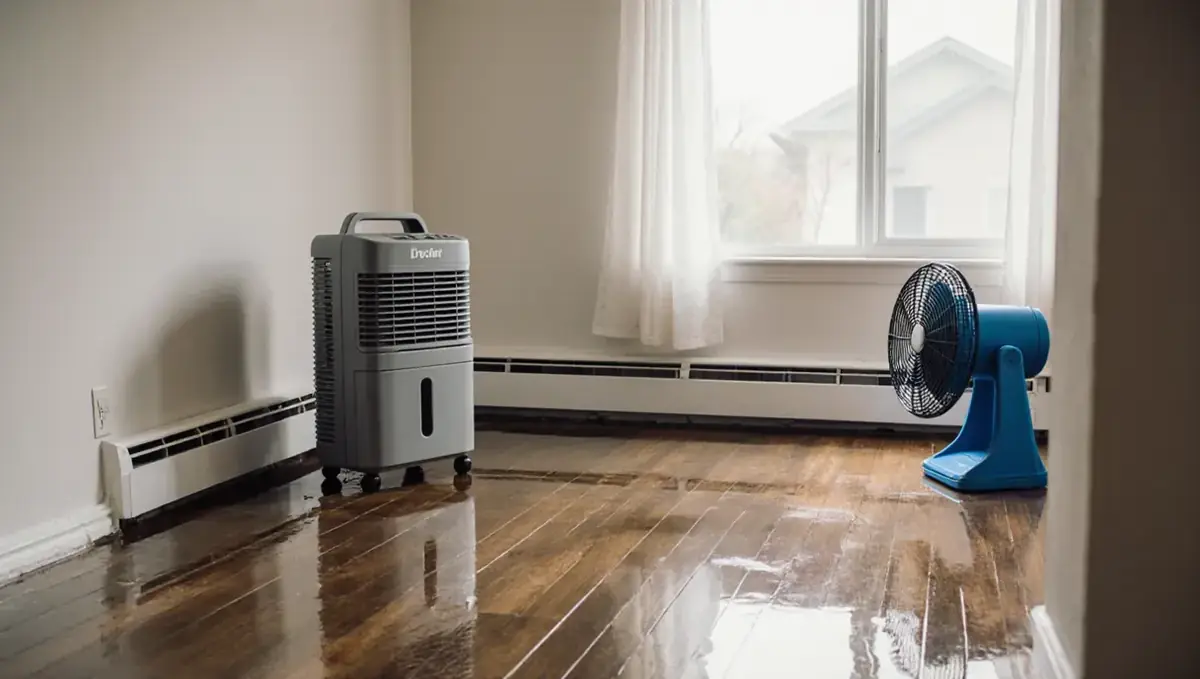
Moisture meters and thermal cameras show where water spread. Air movers and dehumidifiers then run, with daily readings, until materials reach dry standards. Learn more about structural drying.
Repairs
Water damage repair includes replacing drywall, baseboards, flooring and cabinets. California's CSLB requires a license for jobs of $1,000 or more, including labor and materials, or any job that needs a permit. Look up any contractor's license before work starts.
Glendale Mold Cleanup and California's Rules
Leaks behind walls, under sinks or around a slow-dripping water heater can feed mold quietly for weeks. A musty smell or soft, discolored drywall is a reason to have the area checked.
An industry roundup of state rules reports that California has no license aimed specifically at mold assessors or remediators, and we could not find a statewide mold licensing program either. Remediation work that involves construction still falls under CSLB contractor licensing. Ask about licensing, insurance and training such as IICRC certification, and read about containment on the mold removal page.
Claims, Coverage and Paperwork
- Flood and mudflow are excluded from standard California homeowners policies, which also leave out mudslide and debris flow. NFIP flood insurance covers mudflow, not landslide, and a new policy generally takes effect after 30 days.
- Earthquake is its own policy. Homeowners coverage excludes quake damage except for fire caused by an earthquake. California insurers must offer earthquake coverage in writing every other year.
- Act on burn-scar risk early. Flood and debris-flow risk stays higher for several rainy seasons after a fire.
- Build your file. Keep photos, receipts and the moisture logs and drying reports from the restoration company.
Apartment owners, HOAs and businesses can use the same free line. Call (888) 817-5061 to be connected with a local provider who works on residential and commercial properties.
Glendale Neighborhoods and Nearby Foothill Communities
WaterQ's free referral line connects callers throughout Glendale and its neighbors along the Verdugos and the Los Angeles River with independent local restoration companies.
Neighborhoods
- Downtown Glendale
- Adams Hill
- Rossmoyne
- Verdugo Woodlands
- Chevy Chase Canyon
- Glenoaks Canyon
- Kenneth Village
- Tropico
- Pelanconi
- Verdugo City
- Sparr Heights
Nearby communities
Glendale Water Damage FAQ
How much rain does Glendale get?
Glendale averages just over 21 inches of precipitation a year, mostly from November through April. El Niño years can bring more than 30 inches, while La Niña years sometimes bring under 10.
Is Verdugo Wash a flood risk to nearby homes?
Verdugo Wash is almost entirely enclosed in a concrete flood-control channel built in the 1930s. Even so, intense storms can still send hillside runoff and debris toward homes, so check your flood zone and keep drainage clear.
Where can I get sandbags in the Glendale area?
Ready LA County lists sandbag locations and storm preparation tips. LA County Public Works also publishes a debris and mudflow potential forecast for storm days.
Do mold remediation companies need a license in California?
There does not appear to be a California license specifically for mold remediation. If the job involves construction, the contractor generally needs a CSLB license, which you can verify online.
Who actually does the work when I call WaterQ?
An independent local restoration company. WaterQ is a free referral service available 24/7; it connects you with that provider, which handles the inspection, estimate and work.
Local emergency and flood resources
Official sources for alerts, flood maps and preparedness in and around Glendale: