Fifty Lakes at the Top of the Peace River
Winter Haven, a Polk County city since 1923, holds about 50 lakes within its limits. Many are solution lakes formed as limestone dissolved underground. Canals link them into two systems: a southern Chain of Lakes that includes Lake Howard, Lake Shipp, Lake Lulu, Lake Eloise and Lake Hartridge, and a northern chain that includes Lake Conine, Lake Haines and Lake Hamilton. Roughly 8.7 of the city's 41.5 square miles are water.
The city sits around 161 feet above sea level at the headwaters of the Peace River basin. That means no storm surge, but it also means water from heavy rain across central and eastern Polk has to drain south through the Peace Creek Drainage Canal toward the Peace River, and that system can fill up after a big storm.
If water is coming into your home or business, call (888) 817-5061. We connect you with a trusted, local restoration provider.
Why Wind Is Winter Haven's Biggest Water Problem
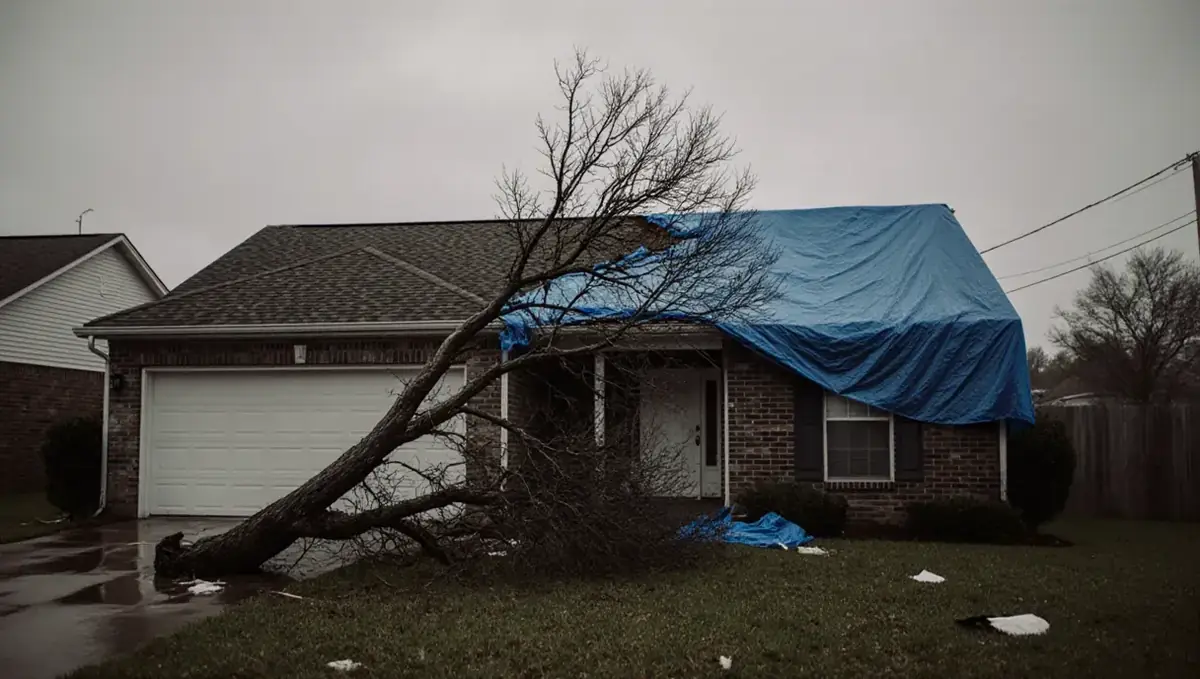
People expect hurricanes to weaken well before they reach the middle of the state. Winter Haven's record says otherwise. During Hurricane Milton in October 2024, Winter Haven Regional Airport logged sustained winds of 49 knots and a peak gust of 76 knots, about 87 mph, one of the strongest land readings in the NWS Tampa Bay area. Rainfall near the city was more modest, around 4 to 7 inches, so for many local homes the damage started at the roof.
In 2004, Charley, Frances and Jeanne all tracked over Polk County within about six weeks. Charley's center passed just west of Lake Wales, with gusts of 79 mph at Haines City and 75 mph at Lake Wales. In 2022, Hurricane Ian's wind and rain swept across central Florida from Arcadia toward Kissimmee and Orlando, and the City of Winter Haven later ran a recovery program to help homeowners with Ian damage.
Wind-driven rain gets in through lifted shingles, damaged flashing, soffits and window frames. Once the attic insulation is wet, water often shows up as a sagging, stained ceiling days later.
Storm Damage Cleanup, Roof to Ceiling
After a storm passes, work from the outside in, but only when it is safe.
- Look for hazards first: downed lines, leaning trees and limbs hung up on the roof.
- Photograph the exterior from the ground: missing shingles, torn screens, broken windows and debris.
- Check the attic if you can do so safely. Wet insulation and dark spots on the decking point to active leaks.
- Catch interior drips with buckets and move furniture out from under stained ceilings. A ceiling that bulges can hold water and may collapse.
A local provider can tarp openings and then handle storm damage cleanup inside, from pulling wet insulation to drying ceiling cavities and walls. Call (888) 817-5061 to get connected, 24/7.
Boom-Era Homes in Interlaken and Winter Haven Heights
A large share of Winter Haven's single-family homes went up during the 1920s Florida boom, many in the Colonial Revival style, and more than 50 are on the National Register of Historic Places. The city's historic districts include Interlaken, Pope Avenue, Winter Haven Heights and Downtown.
Houses approaching a century old bring their own leak risks: original or mixed-era plumbing, older roof framing that has been reroofed many times, and, in some older homes, plaster walls that behave differently from drywall when wet. Restoration on these homes often takes more care in deciding what can be dried in place versus removed.
Along the Chain of Lakes, waterfront homes have extra exposure during extreme storms, from wind off open water to high lake levels after prolonged rain. Keep an eye on lake levels and drainage around the house during wet years.
The First Things to Do After Water Gets In
- Make it safe. If water is near outlets or the electrical panel, stay out of that area.
- Stop what you can. For a burst pipe or appliance leak, close the main valve. For a roof leak, contain the drip and move belongings.
- Categorize the water. Rain through a roof usually starts as clean water but can pick up contaminants. Floodwater from outside and sewage are Category 3.
- Document the scene with photos and video before cleanup, including the roof or source.
- Dry what's movable. Get rugs, cushions, papers and electronics out of wet rooms.
Then reach a restoration company through (888) 817-5061 for water removal and drying.
What Water Damage Repair in Winter Haven Involves
Inspection and moisture mapping
Technicians use moisture meters and thermal imaging to follow water from the roof or pipe through ceilings, walls and floors.
Extraction and removal
Standing water is extracted, and materials that cannot be dried, such as soaked insulation, ceiling drywall and carpet pad, are removed.
Drying
Air movers and dehumidifiers run until readings show materials are dry. Our structural drying page covers how that is verified.
Rebuild
Water damage repair can include ceiling replacement, drywall or plaster patching, flooring and paint. Ask any company about its licensing, insurance and training, IICRC certification among them. Nearby Lakeland homeowners deal with many of the same lake-country issues.
Mold After a Roof Leak in Central Florida Heat
A slow roof leak is a classic mold starter because the water is hidden in the attic and ceiling. EPA guidance says mold can grow within 24 to 48 hours on materials that stay wet, and summer heat in Polk County speeds things up.
In this state, both the mold assessor and the mold remediator on a job need a license from the Department of Business and Professional Regulation (DBPR). Under the statute's definitions, its licensing applies to work assessing or remediating more than 10 square feet of mold. Look up companies on MyFloridaLicense.com before mold removal in Winter Haven begins. Our mold removal page explains containment.
Coverage, Rebuilding Rules and Claim Timelines
- Wind and flood are handled differently. Roof and wind damage typically fall under a homeowners or wind policy. Flood is excluded from standard homeowners coverage and needs an NFIP or private flood policy, which typically has a 30-day waiting period.
- The 50 percent rule. Polk County explains that a structure damaged or improved by 50 percent or more of its market value must meet current floodplain rules, which can mean elevating. Ask the City of Winter Haven about how this applies inside city limits.
- Report on time. Florida Statute 627.70132 requires notice of a new or reopened claim within 1 year of the date of loss and a supplemental claim within 18 months.
- Citizens. By January 1, 2027, Citizens personal residential policies with wind coverage are required to also have flood insurance.
Check flood zones through Polk County's flood zone page or the FEMA map center. Claim results are up to your insurer, but good photos and drying logs help. Call (888) 817-5061 for help any time.
Winter Haven Neighborhoods and Nearby Polk Towns
WaterQ connects callers throughout Winter Haven and nearby Polk County communities with independent local restoration providers.
Neighborhoods
- Downtown Winter Haven
- Interlaken
- Pope Avenue
- Winter Haven Heights
- Pughsville
- Florence Villa
- Lake Shipp
- Lake Howard
- Lake Eloise
Nearby communities
- Lakeland
- Auburndale
- Lake Alfred
- Haines City
- Eagle Lake
- Bartow
- Lake Wales
- Dundee
- Inwood
- Cypress Gardens
Winter Haven Water Damage FAQ
Can hurricanes still cause serious damage this far inland in Winter Haven?
Yes. During Hurricane Milton in 2024, Winter Haven Regional Airport recorded a peak gust of 76 knots, about 87 mph. In 2004, Charley, Frances and Jeanne all crossed Polk County within about six weeks.
Does Winter Haven get storm surge?
No. The city is inland at around 161 feet above sea level. Its main water risks are wind-driven rain, roof leaks, plumbing failures and heavy-rain flooding around lakes and low areas.
Is roof leak damage covered the same way as flood damage?
Usually not. Wind and roof damage is generally handled under a homeowners or wind policy, while flood is excluded from standard homeowners coverage and requires a separate flood policy. Review your own policy for details.
Does mold cleanup in Winter Haven need a licensed company?
If the job involves more than 10 square feet of mold, Florida law requires DBPR-licensed mold assessors and remediators. You can check licenses on MyFloridaLicense.com.
How does calling WaterQ work?
WaterQ is a free referral service. We connect you with an independent, local restoration company that serves Winter Haven, and that company inspects and repairs the damage. You can call 24/7.
Local emergency and flood resources
Official sources for alerts, flood maps and preparedness in and around Winter Haven: