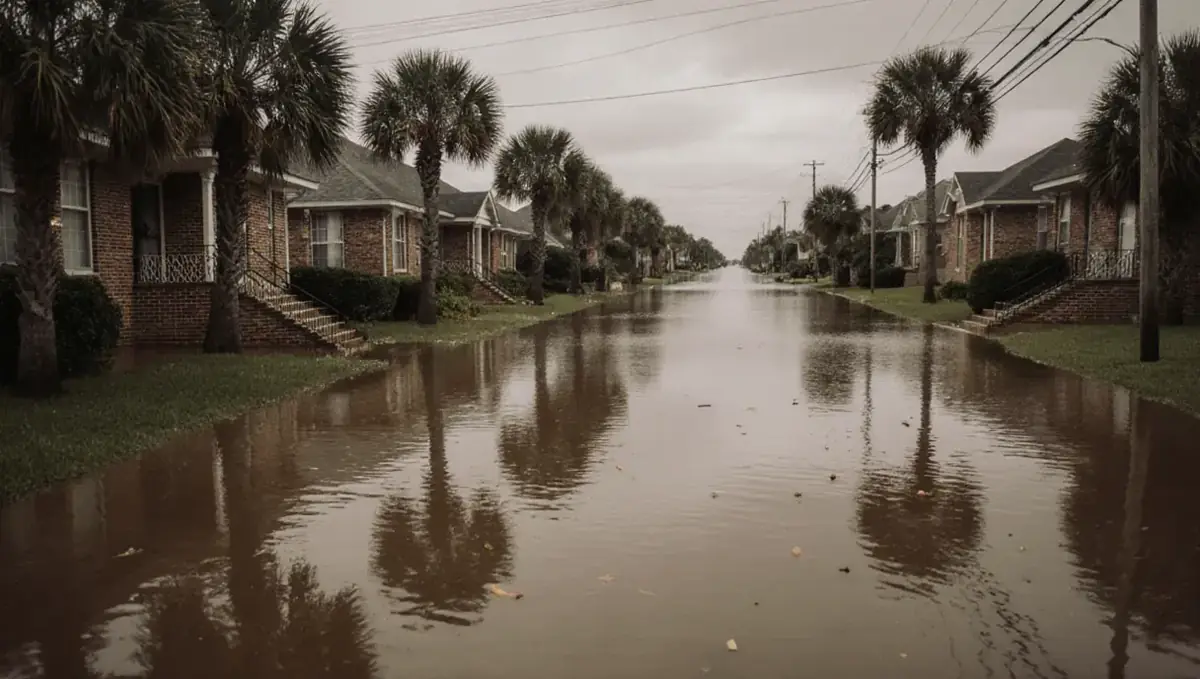
A Peninsula City That Is More Than Half Water
St. Petersburg covers about 135 square miles at the southern tip of the Pinellas peninsula, and more than half of that area is water. Tampa Bay wraps around the east and south, Boca Ciega Bay lies to the west, and the Gulf of Mexico is just beyond the barrier islands. Inland, Lake Maggiore and Booker Creek collect runoff from surrounding neighborhoods.
The City notes that local flooding depends on several things at once: how much rain falls, whether storm drains are blocked, how streets slope and what the tide is doing. A heavy summer storm at high tide can leave water standing in low streets that drain fine on other days.
The city averages roughly 52 inches of rain a year, most of it from June through September. That combination of bay exposure and wet-season downpours is why water damage in St. Petersburg can come from outside the house as easily as from a pipe.
Back-to-Back Lessons From Helene and Milton
The 2024 season tested the city twice. Hurricane Helene made landfall far to the north in the Big Bend, yet its surge set a record water level of 6.31 feet above MHHW at St. Petersburg, breaking the mark Hurricane Elena set in 1985. Bay water flooded Snell Isle, Shore Acres, Coquina Key and Venetian Isles, and rescue boats worked flooded streets.
Thirteen days later, Hurricane Milton brought the opposite problem. Offshore winds kept surge in Pinellas to about 1 to 2 feet, but 20.40 inches of rain fell on St. Petersburg. Milton's winds also tore the fabric roof off Tropicana Field.
One storm pushed saltwater in through doors and garages, and the next soaked roofs, ceilings and low-lying rooms with rain. Each calls for a different cleanup plan, which is something to discuss with the restoration company you work with.
Shore Acres, Snell Isle and Other Low Neighborhoods
Some areas flood repeatedly. Shore Acres has a bowl-like shape, so homes in the middle sit lower than those on the edges, and Helene was described as its fourth major flood in four years. Residents there point out that vehicles driving through flooded streets create wakes that push water into garages and front doors.
A few practical habits help in neighborhoods like these:
- Know your Pinellas County evacuation zone, and leave when your zone is ordered out. During Milton, zones A, B and C and all mobile homes were under mandatory evacuation.
- Keep curbside storm drains clear of leaves and debris.
- Do not charge an electric vehicle that has been sitting in floodwater. The City issued that warning during Helene.
- If the City warns that a wastewater plant may shut down, follow instructions to avoid toilets, showers and washers so sewage does not back up into homes.
For flood cleanup in St. Petersburg, saltwater surge and any sewage backup should be treated as Category 3 contaminated water. Our flood damage restoration page explains what that involves.
When You First Discover the Water
- Avoid wet electrical equipment. The City specifically warns residents not to touch it. Shut off power at the breaker only if you can reach it without standing in water.
- Stop or slow the source. Close the main valve for a plumbing leak. For storm water, wait until it is safe outside.
- Document first, then move things. Photograph waterlines, damaged items and the source.
- Pull out wet contents. The City advises removing wet belongings promptly to limit mold.
- Report street flooding. The City's floodplain line is (727) 893-7231.
Then call (888) 817-5061 to be connected with a local company for water extraction and drying, at any hour.
How Restoration Crews Work Through a Flooded House
Water damage restoration in St. Petersburg generally follows a predictable order.
Pumping and extraction
Standing water comes out first, using submersible pumps for deeper water and extractors for carpet and hard floors.
Removing what cannot be saved
After surge or contaminated water, wet drywall is usually cut out above the waterline, along with soaked insulation, carpet and pad. Surfaces are then cleaned and sanitized.
Drying to a measured standard
Dehumidifiers and air movers run while technicians take daily moisture readings. The job is not finished until framing and subfloors reach dry targets. See structural drying for details.
Putting it back together
Water damage repair follows: drywall, flooring, cabinets and trim. Ask any contractor about licensing, insurance and training, such as IICRC certification, before you hire.
Bungalows and Mold in the Older Neighborhoods
Historic Kenwood alone has more than 1,100 single-family homes, many from the 1920s, and Old Northeast, Roser Park and the Grand Central District also have deep histories. Older houses can hide water in plaster, old wood floors and original framing, and they deserve a careful drying plan rather than quick demolition.
Following EPA guidance, mold can begin growing within 24 to 48 hours on damp materials. For mold removal in St. Petersburg, keep Florida's rules in mind: DBPR separately licenses mold assessors and mold remediators, and under the statute's definitions those licenses cover assessment or remediation of more than 10 square feet of mold. You can confirm a license on MyFloridaLicense.com.
More on containment and cleanup is on our mold removal page.
Flood Policies, Claim Timelines and Records
- Separate flood coverage. Standard homeowners and condo policies generally exclude flood, which comes from NFIP or private flood insurance. NFIP policies typically take 30 days to start.
- Check your flood zone. The City links to FEMA flood maps and a local interactive map on its flooding page.
- Florida's notice deadlines. Statute 627.70132 sets 1 year from the date of loss for notice of an initial or reopened claim, and 18 months for a supplemental claim.
- Two storms, two files. If Helene and Milton both affected your home, keep dated photos and records that separate the damage from each.
- Citizens rule change. Citizens personal residential policies with wind coverage must include flood insurance by January 1, 2027.
WaterQ does not make promises about any insurer's decision. For storm damage cleanup and documented drying, call (888) 817-5061 and be connected with a local provider.
From Old Northeast to the Beaches: Areas Served
WaterQ's free referral line connects callers across St. Petersburg and nearby Pinellas County communities with independent local restoration companies.
Neighborhoods
- Downtown St. Petersburg
- Old Northeast
- Snell Isle
- Shore Acres
- Coquina Key
- Venetian Isles
- Historic Kenwood
- Roser Park
- Grand Central District
- Edge District
- Pasadena
- Tanglewood
- Lake Maggiore area
Nearby communities
- St. Pete Beach
- Gulfport
- South Pasadena
- Treasure Island
- Madeira Beach
- Pinellas Park
- Seminole
- Largo
- Clearwater
- Tampa
St. Petersburg Water Damage FAQ
Why did St. Petersburg flood so badly from Helene when it landed in the Big Bend?
Helene's winds pushed Gulf water into Tampa Bay, producing a record 6.31 foot water level above MHHW at St. Petersburg. Distance from the landfall point does not mean a bay city is safe from surge.
Is it safe to charge my electric car after it sat in floodwater?
The City of St. Petersburg warned residents not to charge electric vehicles that were exposed to floodwater during Helene. Have the vehicle inspected first.
How do I find my evacuation zone in Pinellas County?
Use the Pinellas County Know Your Zone tool at kyz.pinellas.gov. During Milton, zones A, B and C and all mobile homes were ordered to evacuate.
Can I remove mold myself in Florida?
Small areas can often be handled with care, but for jobs over 10 square feet Florida requires DBPR-licensed mold assessors and remediators. Verify licenses on MyFloridaLicense.com.
What does WaterQ do?
WaterQ is a free referral service available 24/7. It connects you with an independent local restoration company, which inspects the damage and performs the work.
Local emergency and flood resources
Official sources for alerts, flood maps and preparedness in and around St. Petersburg: