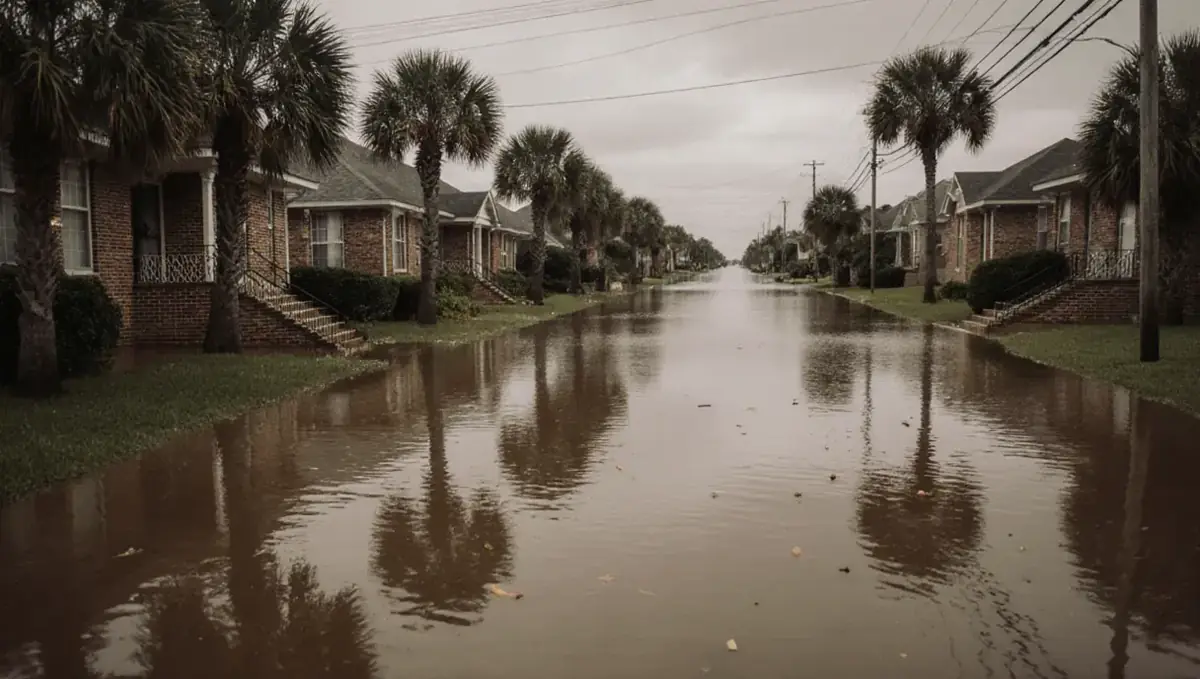
A River City That Sits Barely Above the Water
Since the city and Duval County governments merged in 1968, Jacksonville has covered roughly 874 square miles, and about 127 of them are water. The St. Johns River cuts through the middle, the Trout River lies entirely inside city limits, and countless creeks and tributaries feed the main channel. Average elevation is only about 3 feet.
The City of Jacksonville describes three kinds of flooding here: coastal, inland and river. The most common problems show up in low-lying areas during the June-to-November rainy season, when heavy rain has nowhere to go and tributary creeks back up. Add sandy and clay soils, a long Atlantic shoreline and roughly 52 inches of rain in a typical year, and water damage in Jacksonville is something many households deal with at least once.
Not every loss comes from the weather, of course. Water heaters, washing machine hoses, ice maker lines and slab or wall leaks cause plenty of soaked floors in Mandarin, Arlington and the Westside on perfectly sunny days.
Why the St. Johns Floods Even When Storms Miss
The St. Johns flows north toward the Atlantic, and strong easterly winds can push ocean water up the river and hold it there. Line that up with high tide and neighborhoods far from the beach can flood.
- Hurricane Irma, 2017. Irma's center tracked well west of the city, yet its winds drove water into the river basin at high tide on September 11. Downtown streets and San Marco flooded, and flooding spread along both banks into Clay and Putnam counties. Black Creek set a record crest of 30.52 feet.
- Hurricane Matthew, 2016. Matthew pushed the Mayport tide gauge to its second-highest level since the 1898 hurricane, flooded areas along the river and at the beaches, and dropped around 8 inches of rain in parts of Duval County. Gusts reached 82 mph at Fort Caroline.
- Hurricane Dora, 1964. Dora came ashore near St. Augustine and was the first hurricane on record to make landfall on North Florida's Atlantic coast at hurricane strength. Wind-driven river flooding reached Downtown and Ortega, and nearly 4,000 Duval County homes were damaged.
The lesson for riverfront owners in Riverside, Avondale, Ortega, San Marco and San Jose is simple: watch the wind direction and the tide, not just the forecast track.
Your First Hour With Water on the Floor
- Shut off the source. Close the main water valve, usually near the meter or where the line enters the house, or the valve behind the leaking fixture.
- Respect the electricity. If water could be reaching outlets, cords or appliances, keep out of it. Flip breakers only if the panel is in a dry spot.
- Sort clean water from dirty. A broken supply line is usually clean water (Category 1). River water, storm surge and sewer backups are Category 3 and should be treated as contaminated, so wear gloves and boots and keep kids and pets away.
- Record it. Shoot photos and video of every wet room, the source and damaged items before you move anything.
- Save what you can. Pull rugs, papers, electronics and keepsakes out of the wet area and set furniture legs on blocks or foil.
- Bring in help. Ring (888) 817-5061 to be put in touch with a nearby provider of emergency water extraction.
What a Jacksonville Restoration Job Looks Like
Water damage restoration in Jacksonville follows the same basic science as anywhere, but humidity here means drying rarely happens on its own. A typical job moves through these stages:
Inspection and moisture mapping
The crew traces where water traveled using moisture meters and, often, thermal cameras. Water moves under baseboards, into wall cavities and across slab floors farther than it looks.
Water removal
Pumps and extractors take out standing water and as much as possible from carpet and pad. Soaked drywall, insulation and flooring that cannot be saved are removed so the structure underneath can dry.
Drying and dehumidification
Air movers and commercial dehumidifiers run for several days while readings are logged. This structural drying record helps show that materials actually reached dry standards.
Rebuild
Once the structure is dry, water damage repair covers drywall, paint, trim, flooring and cabinets. Before signing anything, ask the company about its licensing, insurance and training, such as IICRC certification.
Hurricane Prep, Evacuation Zones and Storm Cleanup
Duval County uses evacuation zones A through F. Zone A is the most vulnerable and evacuates first, and manufactured and mobile homes are included in it. Zone F covers places likely to flood from rainfall. You can look up your address on the JaxReady evacuation zone page. Your evacuation zone is not the same thing as your FEMA flood zone, so it is worth checking both.
After a storm passes, flood cleanup in Jacksonville usually starts with getting contaminated water and mud out, then cutting out wet drywall and insulation, cleaning and disinfecting, and drying. Roof and window damage from wind needs to be tarped or boarded quickly so rain does not keep coming in. Learn more about flood cleanup and storm damage cleanup.
Spot debris clogging a ditch or stream near your home? The City asks residents to report it at 630-CITY (2489) or through the MyJax portal.
Historic Bungalows, Slab Homes and Commercial Space
Jacksonville's housing stock is varied. Riverside and Avondale were rebuilt after the Great Fire of 1901 and hold what is likely the largest collection of surviving bungalows in Florida, and much of Avondale dates to the 1920s. Springfield also grew quickly after the fire. Older homes like these deserve a careful moisture check under floors and in plaster walls after any leak.
Newer subdivisions in places like Mandarin, Baymeadows and the Southside face different issues, from slab leaks to failed supply lines in second-floor laundry rooms. Offices, retail spaces and apartment communities have their own needs: protecting tenants, keeping work areas open and documenting every affected unit. Property managers can call (888) 817-5061 too.
Mold, Florida Licensing and Your Insurance File
Per EPA guidance, mold can start growing within 24 to 48 hours on wet materials, and North Florida summers speed that up. Fast drying is the best defense, but once growth is visible, professional mold removal with containment keeps spores from spreading.
In Florida, mold assessors and mold remediators each need a license from the Department of Business and Professional Regulation (DBPR), and under the statute's definitions that requirement covers mold assessment or remediation of more than 10 square feet. You can check any assessor, remediator or contractor by name or license number at MyFloridaLicense.com.
- Standard homeowners policies generally exclude flood. Flood coverage comes from an NFIP or private flood policy, and NFIP policies typically carry a 30-day waiting period.
- Jacksonville is a Class 6 community in the NFIP Community Rating System, which brings a 20% flood insurance discount in special flood hazard areas and 10% outside them.
- Florida Statute 627.70132 requires notice of an initial or reopened property claim within 1 year of the loss and a supplemental claim within 18 months.
- Keep photos, receipts, moisture logs and drying reports in one place.
WaterQ cannot predict how an insurer will rule, but good records help.
Jacksonville Neighborhoods and First Coast Communities
Our free referral line connects callers across consolidated Jacksonville and nearby First Coast communities with independent local restoration providers.
Neighborhoods
- Downtown
- Southbank
- LaVilla
- Springfield
- Brooklyn
- Riverside
- Avondale
- Ortega
- Murray Hill
- Lake Shore
- Cedar Hills
- Argyle
- San Marco
- San Jose
- Mandarin
- Baymeadows
- Deerwood
- Arlington
- Fort Caroline
- Mayport
Nearby communities
- Jacksonville Beach
- Neptune Beach
- Atlantic Beach
- Ponte Vedra Beach
- Baldwin
- Orange Park
- Fleming Island
- Fernandina Beach
- Yulee
- St. Augustine
Jacksonville Water Damage FAQ
Can my Jacksonville home flood from the river if a hurricane passes far away?
Yes. During Hurricane Irma in 2017 the storm's center passed well west of the city, but easterly winds pushed water into the St. Johns River at high tide and caused record flooding in Downtown, San Marco and along both banks.
How do I find my Duval County evacuation zone?
Search your address on the JaxReady evacuation zone page. Zones run A through F, with Zone A the most vulnerable. Your evacuation zone is different from your FEMA flood zone, which you can check on the FEMA Flood Map Service Center.
Is flood insurance discounted in Jacksonville?
Jacksonville is a Class 6 community in the NFIP Community Rating System, which means a 20% discount for policies in special flood hazard areas and 10% outside them. Remember that standard homeowners policies generally do not cover flood.
Who checks a mold company's license in Florida?
The Florida Department of Business and Professional Regulation licenses mold assessors and mold remediators, and the license applies to jobs over 10 square feet. You can search a name or license number on MyFloridaLicense.com.
Is WaterQ a restoration company?
No. WaterQ is a free referral service. The line is open 24/7, and we connect you with an independent, local restoration company that inspects the damage and does the work.
Local emergency and flood resources
Official sources for alerts, flood maps and preparedness in and around Jacksonville: