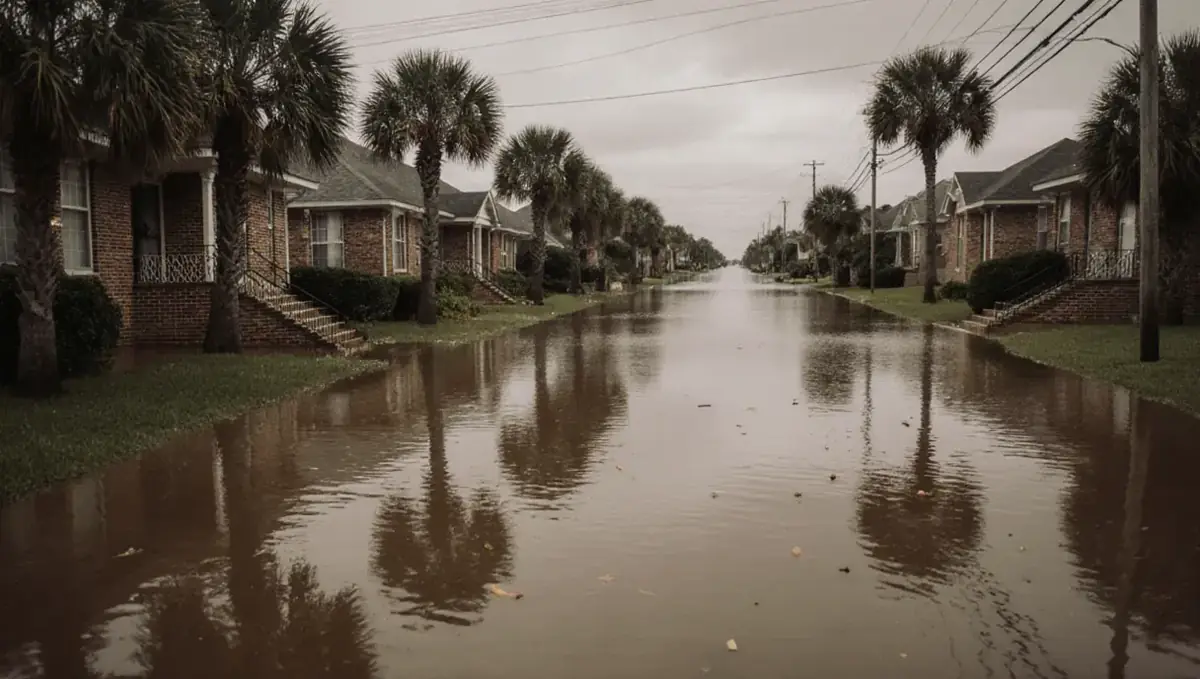
A Bay City on Flat Ground
Tampa sits roughly 10 feet above sea level between Old Tampa Bay and Hillsborough Bay, and about 35 percent of the city's 175 square miles is water. The Hillsborough River runs through Downtown into Hillsborough Bay. The City of Tampa itself notes that the lack of topographic relief makes drainage difficult, which is why water often stays put after a hard rain.
According to the City, the most common flooding in Tampa is localized: rainy-season thunderstorms and tropical storms dumping more water than flat streets and yards can shed. Rain at Tampa International Airport averages about 49.5 inches a year (NOAA 1991-2020 normal), and the late-May to early-October rainy season brings frequent afternoon storms.
That combination means a lot of Tampa water damage starts small, with water creeping under an exterior door or pooling against a wall, and gets worse when nobody notices for a day or two.
What Helene and Milton Showed About Tampa Bay Surge
The shape of Tampa Bay funnels storm surge toward the city. A storm does not have to hit Tampa directly to cause trouble. Hurricane Helene made landfall far to the north in the Big Bend in 2024, yet it pushed water to a record 6.86 feet above MHHW at Old Port Tampa and 7.2 feet at East Bay.
Just weeks later, Hurricane Milton made landfall at Siesta Key and dropped up to 20.40 inches of rain in St. Petersburg. Its rainfall produced record crests on the Hillsborough River and widespread river and urban flooding. Long before either storm, the 1921 Tampa Bay hurricane pushed surge into homes and businesses from Hyde Park to Downtown and the edges of Ybor City.
For property owners, the lesson is that surge, river flooding and heavy rain can each cause damage, and sometimes all three arrive from one storm. Our flood damage restoration page explains how pros handle contaminated floodwater, and storm damage cleanup covers roof and wind-driven rain damage.
Checking How Exposed Your Tampa Address Is
Flood risk in Tampa can change from one block to the next. Waterfront and low-lying areas face tidal and surge flooding, while inland streets are more likely to see rain that cannot drain fast enough. A few checks can tell you a lot about a specific property:
- FEMA flood zone. Look up the address on the FEMA Flood Map Service Center to see whether it sits in the Special Flood Hazard Area.
- Ask the City. The City Stormwater Division can tell you where a property sits relative to the Special Flood Hazard Area, and the City's flood information page covers building and flood protection topics.
- Evacuation zone. Your evacuation zone is based on surge risk and is separate from your flood insurance zone, so check both.
- Past water. If you are buying, ask the seller and neighbors whether water came in during Helene or Milton in 2024.
None of these checks prevents damage, but they help you decide whether flood coverage, sandbags or raised storage make sense before the next rainy season.
Before a Restoration Crew Arrives: Practical Steps
- Safety comes first. Stay out of rooms where water is near outlets, cords or appliances. Never drive or wade through flooded streets.
- Shut off the source. For a plumbing leak, close the main water valve. For floodwater, there is no valve, so focus on keeping people out of it.
- Know what kind of water it is. Clean supply-line water is Category 1. Water from a dishwasher or washing machine overflow may be Category 2. Bay surge, river water and sewage backups are Category 3 and need protective gear and professional cleaning.
- Record the damage. Photograph and video every wet area and damaged item before cleanup begins.
- Start airflow if it is safe. Open interior doors and run air conditioning to begin pulling humidity down.
Then call (888) 817-5061. WaterQ connects you with a trusted, local restoration company that can start water extraction and drying.
From Wet Floors to Dry Walls: The Restoration Sequence
- Inspection and water category. The crew identifies the source, the category of water and which materials can be saved.
- Water removal. Extractors pull standing water from floors, carpet and pad, which shortens the overall drying time.
- Moisture mapping. Moisture meters and thermal cameras show how far water has spread under flooring and inside wall cavities.
- Tear-out where needed. Saturated drywall, insulation and baseboards are often removed, especially after Category 3 water.
- Drying and dehumidification. Air movers and dehumidifiers run while readings are logged until materials reach dry standards. See structural drying for details.
- Rebuild. Drywall, flooring, trim and cabinets are replaced or repaired.
Before hiring, ask the restoration company about its licensing, insurance and training, such as IICRC certification, and ask for written moisture readings.
Historic Bungalows, Waterfront Homes and Rare Freezes
Tampa's housing is varied. Seminole Heights, founded in 1911 as the city's first suburb, is known for craftsman bungalows and historic districts. On the waterfront, the City's sea level rise vulnerability analysis lists Davis Islands, where the whole basin lies in the FEMA Special Flood Hazard Area, as highly vulnerable, along with low areas of the Interbay peninsula.
Cold is the risk most people forget. Hard freezes are rare here, roughly every five to twenty years, so many homes have exposed plumbing that was not built for freezing temperatures. When a hard freeze is in the forecast, protect outdoor pipes and irrigation backflow assemblies.
Businesses, rental owners and property managers can also call (888) 817-5061 to reach local providers who handle commercial drying and water damage repair.
Mold After a Tampa Leak or Flood
EPA guidance notes that mold can start growing within 24 to 48 hours on wet materials. In Tampa's humid summers, drying wet materials quickly is the most effective way to keep it from taking hold.
Florida licenses mold assessors and mold remediators through the Department of Business and Professional Regulation. The license applies to mold assessment or remediation of more than 10 square feet. You can verify both the assessor and the remediator on DBPR's license search. Read more on our mold removal page.
Flood Insurance, Claims and Your Evacuation Zone
Homeowners policies usually do not cover flood, which comes from an NFIP or private flood policy. NFIP policies typically have a 30-day waiting period. The City of Tampa participates in the NFIP's Community Rating System as a Class 5 community, which gives a 25 percent flood insurance discount in flood zones and 10 percent outside them.
Under Florida Statute 627.70132, you have 1 year from the date of loss to give notice of a new or reopened property claim and 18 months for a supplemental claim. If you are insured with Citizens, note that by January 1, 2027, Citizens personal residential policies that include wind coverage must also carry flood insurance.
Hillsborough County expanded its evacuation zones for the 2026 season using updated NOAA surge data, so recheck your zone (A through E) even if you have looked it up before. Manufactured and mobile homes are always treated as Zone A. You can also find your evacuation zone through the City.
Whatever the cause of your damage, call (888) 817-5061 and we will connect you with a local restoration professional, 24/7.
Serving Callers From Ybor City to New Tampa
WaterQ connects callers throughout Tampa and the surrounding Tampa Bay area with independent restoration companies that work locally.
Neighborhoods
- Downtown Tampa
- Ybor City
- Hyde Park
- Davis Islands
- Harbour Island
- Seminole Heights
- Tampa Heights
- Palma Ceia
- Ballast Point
- Forest Hills
- Sulphur Springs
- West Tampa
- East Tampa
- New Tampa
- Tampa Palms
- Channelside
- College Hill
- Westshore
Nearby communities
- St. Petersburg
- Clearwater
- Brandon
- Riverview
- Temple Terrace
- Wesley Chapel
- Plant City
- Largo
Tampa Water Damage FAQ
Can Tampa flood from a hurricane that makes landfall somewhere else?
Yes. Hurricane Helene made landfall in Florida's Big Bend in 2024 but still drove record water levels into Tampa Bay, including 6.86 feet above MHHW at Old Port Tampa. Bay geometry can funnel surge toward the city even without a direct hit.
Why does my Tampa street flood after ordinary thunderstorms?
The City of Tampa says its most common flooding is localized flooding from rainy-season thunderstorms and tropical storms. The city is very flat, so heavy rain drains slowly. You can report problems and learn more through the City's Stormwater Division.
Does flood insurance cost less in Tampa?
Tampa is a Class 5 community in the NFIP's Community Rating System. That provides a 25 percent flood insurance discount for properties in flood zones and 10 percent for properties outside them.
Do mold remediators need a license in Florida?
Yes. Florida's DBPR licenses mold assessors and mold remediators for jobs involving more than 10 square feet of mold. Check both licenses on MyFloridaLicense.com before work begins.
What happens when I call WaterQ?
WaterQ is a free referral service. When you call, we connect you with an independent, local restoration company in the Tampa area, and that company assesses the damage and does the work. The line is available 24/7.
Local emergency and flood resources
Official sources for alerts, flood maps and preparedness in and around Tampa: