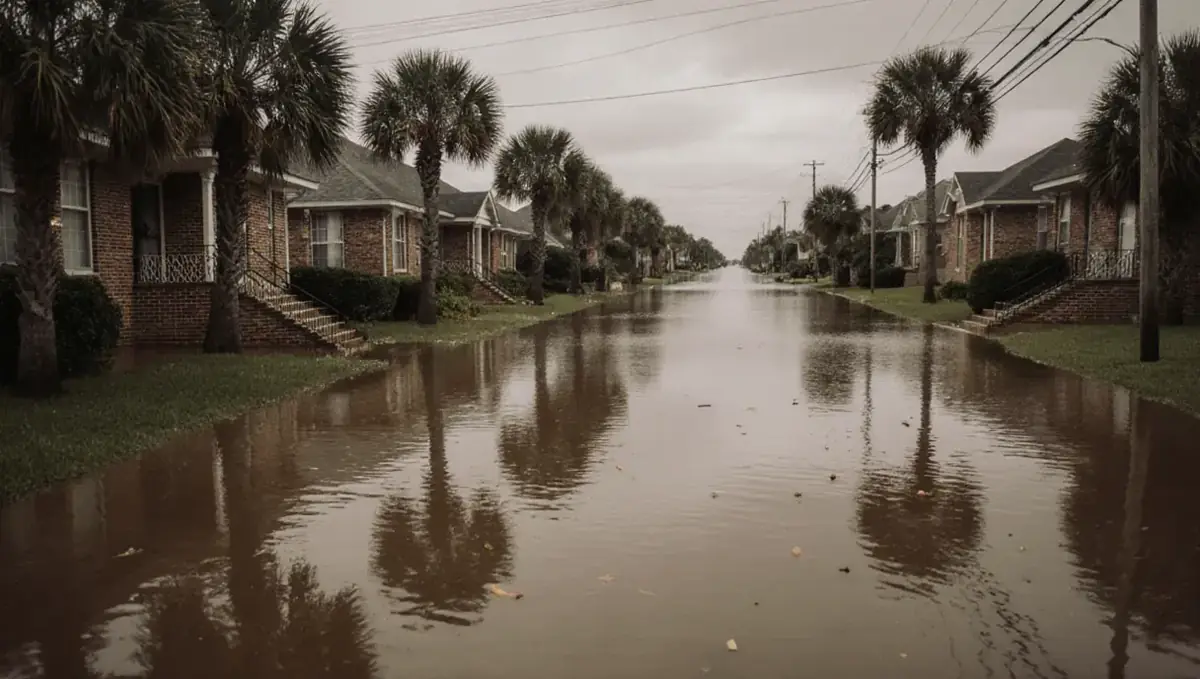
Canals, Lakes and a Shallow Water Table
Miami Gardens covers about 19 square miles of flat ground in northern Miami-Dade County, sitting around 10 feet above sea level between I-95 and the western edge near NW 47th and 57th Avenues. The city does not face open ocean, but it is laced with water: the C-8 and C-9 canals, smaller secondary canals and many neighborhood lakes.
The City of Miami Gardens describes three conditions that work together during the rainy season:
- Full canals. The C-8 and C-9 canals can overtop their banks or back up, flooding the blocks closest to them.
- Full lakes. Neighborhood lakes are often already high by late summer, so they absorb less runoff.
- High groundwater. The water table sits just below the ground surface, which means rain has very little room to soak in.
When all three line up, stormwater simply has nowhere to go and collects in streets, yards and sometimes garages and living rooms. That is why water damage in Miami Gardens often arrives from outside the house, not only from a broken pipe.
Storms That Left Miami Gardens Streets Underwater
The City points to Hurricane Irene in 1999 and the October 2000 "No-Name" storm as events that left many areas flooded for long periods, with business disruptions and power losses.
Tropical Storm Eta in November 2020 is a more recent example. Days after the storm passed, local news reported standing water around NW 22nd Avenue and NW 170th Street, and some residents described water coming into their homes up to the baseboards and ruining appliances. The South Florida Water Management District said its pumps were running at capacity but would need several days to clear the water.
In June 2024, heavy rain across South Florida led to state emergency declarations for Miami-Dade and Broward counties, and the National Weather Service in Miami issued Flash Flood Warnings that included Miami Gardens. Events like these are a reminder that slow-draining water, not only fast water, causes much of the damage here.
What to Do While the Water Is Still Standing
Floodwater that sits for a day or more raises different problems than a quick leak. Start with safety, then protect what you can:
- Stay out of moving or standing water outside. The City warns that floodwater can hide sinkholes and live electrical wires, and fallen power lines should be avoided entirely.
- Cut power and gas if it is safe. Do not smoke or use open flames until you are certain there are no gas leaks.
- Treat outside water as contaminated. Water that flows in from streets or canals is generally Category 3 under IICRC S500 terms and can carry sewage and chemicals. Keep kids and pets away from it.
- Photograph before you move anything. Capture the waterline on walls, furniture, appliances and the street outside.
- Lift and relocate. Raise furniture, take rugs and electronics to dry rooms, and pull important papers out of low cabinets.
- Line up help early. Call (888) 817-5061 and we will connect you with a local restoration professional who can plan water extraction as soon as conditions allow.
Watch your footing in damaged rooms, too. The City notes that slips and falls are a leading cause of injuries after a disaster.
Flood Cleanup Versus an Indoor Leak
The work a crew does depends heavily on where the water came from. For flood cleanup in Miami Gardens after canal or street water enters a home, providers typically remove soaked carpet and pad, cut wet drywall above the waterline, discard porous items that cannot be sanitized, and clean and disinfect surfaces before drying begins.
An indoor supply-line or water heater leak is usually cleaner water and may allow more materials to be saved if it is caught quickly. Even then, water can wick up walls and under flooring, so crews check carefully rather than relying on what looks dry.
The drying phase
After bulk water is removed, technicians map moisture with meters and thermal cameras, then set air movers and dehumidifiers. In a humid climate where the ground itself stays wet, dehumidification does most of the work. Readings are taken repeatedly until materials reach dry standards. You can read more about structural drying and what those readings mean.
Putting the house back together
Once the structure is verified dry, water damage repair covers drywall, baseboards, flooring, cabinets and paint. Ask any company about its licensing, insurance and training, such as IICRC certification, and get the scope in writing.
Hurricane Wind, Roof Leaks and Storm Damage
Atlantic hurricane season runs June 1 through November 30. In Miami Gardens, storms bring two kinds of trouble at once: wind that can lift shingles and break windows, and rain that overwhelms canals and drainage.
Storm damage cleanup usually begins with emergency tarping or board-up to stop more rain getting in, followed by removing wet insulation and ceiling material, then drying. A ceiling that sags or stains after a storm should be looked at quickly, since water above it can bring the drywall down. More detail is on our storm damage cleanup page.
Miami-Dade County publishes a hurricane readiness guide with evacuation and preparation information, and the City runs an alert center for local notices.
Mold Prevention and Florida License Checks
EPA guidance notes that mold can start growing on wet materials within 24 to 48 hours. When floodwater lingers for days, as residents saw after Eta, that window can close before cleanup even starts, so mold removal in Miami Gardens is often part of the same job as drying.
Florida licenses both mold assessors and mold remediators through the Department of Business and Professional Regulation (DBPR) under Chapter 468, Part XVI, Florida Statutes. The statute's definitions tie that license to jobs covering more than 10 square feet of mold. For a larger job, look up both the assessor and the remediator by name or license number on MyFloridaLicense.com.
Good mold cleanup uses containment and filtered air so spores are not spread into clean rooms while damaged materials are removed.
Flood Zones, Coverage and Claim Records
The City notes that FIRM zones beginning with A or V are higher-risk Special Flood Hazard Areas, but lower-risk zones can still flood. The City Floodplain Manager can provide an official determination, and the City's flood risk assessment page explains how to look up your zone.
- Flood is a separate policy. Standard homeowners insurance generally excludes flood. NFIP policies typically have a 30-day waiting period, so buy well before a storm.
- Florida claim deadlines. Florida Statute 627.70132 gives you 1 year from the date of loss to notify your insurer of a new or reopened claim, and 18 months for a supplemental one.
- Citizens policyholders. Flood coverage is being phased in for Citizens customers, and from January 1, 2027 every Citizens personal residential policy with wind coverage needs flood insurance as well.
- Save the paper trail. Keep photos, moisture logs, invoices and drying reports together.
Landlords, churches, schools and businesses near the stadium corridor can use the same line for commercial properties. Call (888) 817-5061 to be connected with a local restoration company.
From Carol City to Scott Lake and Beyond
WaterQ's free referral line connects callers throughout Miami Gardens' former unincorporated communities and nearby north Miami-Dade and south Broward towns with independent local restoration providers.
Neighborhoods
- Andover
- Bunche Park
- Carol City
- Lake Lucerne
- Norland
- Opa-locka North
- Scott Lake
Nearby communities
- Miami Lakes
- Opa-locka
- North Miami Beach
- Ojus
- Hialeah
- Miramar
- Pembroke Pines
- Hollywood
- North Miami
- Golden Glades
Miami Gardens Water Damage FAQ
Why does water sit in Miami Gardens streets for days after a big storm?
The City explains that during the rainy season its canals and lakes are often full and the groundwater table is just below the surface, so runoff has nowhere to drain. After Tropical Storm Eta in 2020, water management pumps needed several days to clear standing water.
Who do I call to report unusual flooding in Miami Gardens?
The City asks residents to report unusual flooding to 305-622-8000, extension 2648. That number also reaches the City Floodplain Manager for official flood zone questions.
Is water that came in from the street safe to clean up myself?
It is best treated as contaminated, since street and canal water can carry sewage and chemicals. Avoid contact, keep children and pets away, and let a restoration company remove and sanitize affected materials.
Do I need a licensed mold remediator in Florida?
For mold jobs over 10 square feet, Florida law requires a DBPR mold remediator license, and mold assessors are licensed separately. You can verify any license on MyFloridaLicense.com.
Does WaterQ do the restoration work in Miami Gardens?
No. WaterQ is a free referral service available 24/7. We connect you with an independent local restoration company, and that company handles the inspection, drying and repairs.
Local emergency and flood resources
Official sources for alerts, flood maps and preparedness in and around Miami Gardens: