Hills, Sinks and Drainage Ditches: How Tallahassee Floods
Most people do not picture hills when they think of Florida, but Florida's capital sits at the southern end of the Red Hills Region, with elevations running from near sea level to just over 200 feet. That terrain moves water fast. During heavy storms, the City says runoff can exceed the capacity of its four main channels, the West, Central, East and Northeast Drainage Ditches, and it names Springhill Road, Centerville Road, Stadium Drive and Orange Avenue among the problem areas.
The ground itself adds a twist. Tallahassee has karst geology with sinkholes, and Leon County describes closed basins: low spots where water has no outlet and leaves only by evaporation, soaking into the ground or draining through a sinkhole. In those areas, water can stand for a long time after the rain ends.
Rain is plentiful too. Leon County cites roughly 60 inches a year, with summer storms fed by warm, moist Gulf air. Lake Jackson, Lake Lafayette, Lake Munson and Munson Slough round out a landscape where flood cleanup in Tallahassee is often about fast-rising runoff rather than storm surge.
Hermine, the April 2024 Deluge and the May Tornadoes
Recent history shows the different ways water damage in Tallahassee starts.
- Hurricane Hermine, 2016. Hermine came ashore just east of St. Marks on September 2, 2016. Trees and power lines came down across the city, and about 80% of customers lost power, many for several days.
- April 11-12, 2024 flash flood. Overnight rain totaled 7.11 inches at Tallahassee International Airport and about 10.5 inches downtown. Homes in northwest Tallahassee near Godby High School took on waist-deep water, the school itself flooded, and Lake Ella spilled over in Midtown.
- May 10, 2024 tornadoes. Two EF-2 tornadoes with peak winds of 115 mph crossed the city, damaging FSU, FAMU, downtown and Railroad Square, and dropping trees on homes. The City's broken power pole count met or exceeded Hermine, Michael and Idalia combined.
- Hurricane Helene, 2024. Helene's Big Bend landfall brought a 67 mph gust at the airport.
The common thread is that interior water damage often follows wind: a broken roof lets rain in for hours or days before repairs are possible.
When a Tree Comes Through the Roof
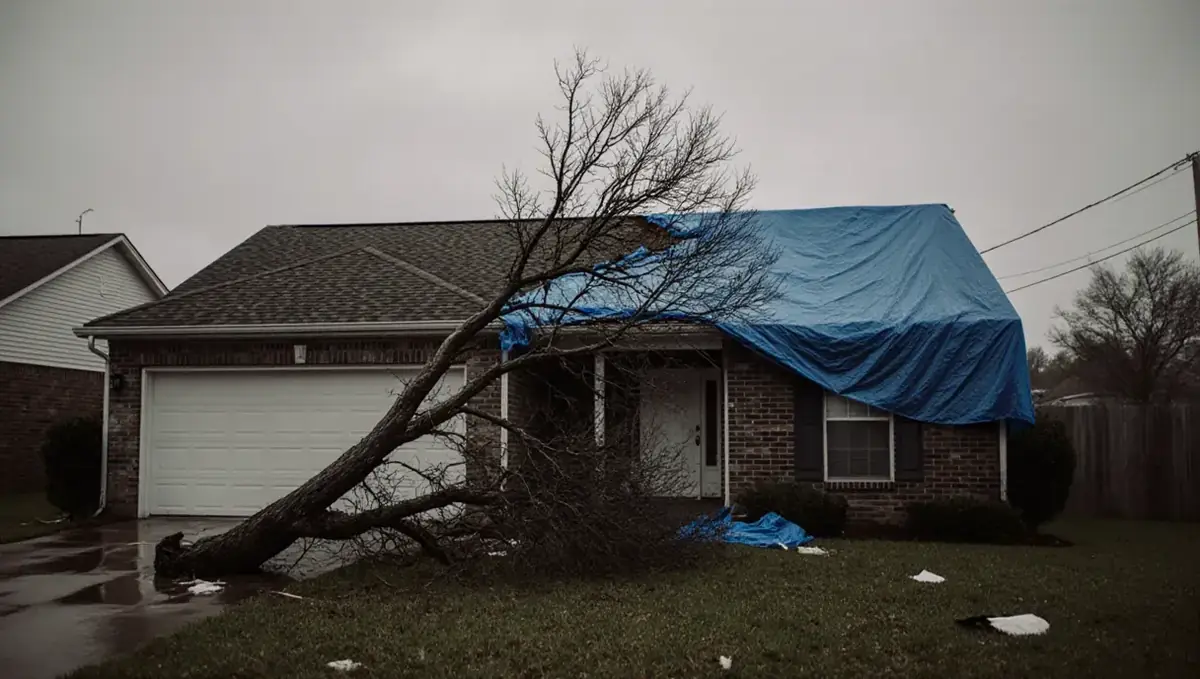
With nine designated canopy roads and deep oak cover, tree strikes are a leading cause of storm damage cleanup in Tallahassee. If one lands on your house:
- Get clear. Move everyone away from the impact area and any sagging ceilings. Treat every downed line as live.
- Kill power to wet rooms only if you can reach the breaker without standing in water.
- Document before cleanup. Photograph the tree, roof, attic and each wet room from several angles.
- Limit further rain. Once the tree is safely off, the opening needs to be tarped or boarded right away.
- Start drying. Soaked attic insulation and ceiling drywall hold water and can grow mold quickly, so they usually need removal.
Call (888) 817-5061 and we will put you in touch with a local company for storm damage cleanup and interior drying.
Sorting Out Runoff, Sewage and Clean-Water Leaks
Not all water is equal, and the type affects how a restoration crew works.
- Category 1, clean water: a burst supply line, a leaking ice maker or an overflowing sink with clean water. Quick drying often saves carpet, pad and drywall.
- Category 2, gray water: washing machine or dishwasher discharge. It carries some contamination, so cleaning is more involved.
- Category 3, black water: flash-flood runoff from a drainage ditch, a closed basin or a sewer backup. Porous materials it touches are generally removed, and surfaces are cleaned and disinfected.
Stay out of floodwater when you can, and wear boots and gloves if you must go in. Learn more about flood damage restoration and flood cleanup.
The Drying Process, Step by Step
Water damage restoration in Tallahassee usually follows a predictable path once the restoration company is on site:
Emergency extraction
Pumps and extraction tools remove standing water from floors and carpet. Fast water extraction limits how far water wicks into walls and cabinets.
Moisture tracing
Meters and thermal cameras show where moisture moved behind baseboards, under flooring and into the attic. Those readings set the plan and support your claim.
Controlled drying
Air movers and dehumidifiers run for several days with readings logged until materials are dry. North Florida's humidity means dehumidification is essential.
Repair and rebuild
After drying, water damage repair replaces drywall, insulation, flooring, trim and paint. Ask the company about its licensing, insurance and training, such as IICRC certification.
Campus Rentals, Historic Homes and Offices
Tallahassee's mix of properties shapes how a water loss is handled. Student rentals near FSU and FAMU often involve a tenant, a landlord and sometimes a property management company, so report a leak to the owner right away and photograph everything. Older neighborhoods such as Frenchtown, Myers Park and Los Robles may have older plumbing and building materials worth checking closely. Suburban areas like Killearn Estates and SouthWood see their share of supply-line failures, water heater leaks and roof damage from falling limbs.
State and private offices, retail space and multi-unit buildings need restoration work planned around occupants and operations. Owners and managers can reach local commercial providers through the same line at (888) 817-5061.
Mold Rules, Flood Coverage and Claim Deadlines
Following EPA guidance, mold can start to grow within 24 to 48 hours on materials that stay wet. A wet attic after a tree strike or drywall soaked by runoff should be dried or removed quickly, and visible growth calls for professional mold removal.
Florida's DBPR licenses mold assessors as well as mold remediators. By the statute's definitions, those licenses apply when assessment or remediation involves more than 10 square feet of mold. Verify anyone you hire on MyFloridaLicense.com.
- Standard homeowners policies generally exclude flood, so runoff damage usually needs an NFIP or private flood policy. NFIP policies typically take 30 days to start.
- The City does not issue flood maps; check FEMA maps or Leon County's flood zone maps.
- Under Florida Statute 627.70132, notice of an initial or reopened claim is due within 1 year of the loss, and a supplemental claim within 18 months.
WaterQ cannot say how an insurer will decide, but thorough photos and drying records help.
Tallahassee Neighborhoods and Big Bend Communities
Our free referral line connects callers across Tallahassee, Leon County and neighboring Big Bend communities with independent local restoration providers.
Neighborhoods
- Downtown
- Midtown
- All Saints
- Apalachee Ridge
- Betton Hills
- Frenchtown
- Killearn Estates
- Lafayette Park
- Los Robles
- Myers Park
- Smokey Hollow
- SouthWood
- Railroad Square
Nearby communities
- Fort Braden
- Woodville
- Bradfordville
- Crawfordville
- St. Marks
- Wakulla Springs
- Quincy
- Havana
- Midway
- Monticello
Tallahassee Water Damage FAQ
Why does Tallahassee flood when it is so far from the coast?
Heavy rain runs quickly off the hilly terrain into drainage ditches that can exceed capacity in big storms. Some areas are closed basins with no outlet, so water stands until it evaporates, soaks in or drains through a sinkhole.
Where can I check my Tallahassee flood zone?
The City of Tallahassee does not issue flood maps. Use Leon County's flood zone map page or the FEMA Flood Map Service Center to look up your address.
Is damage from a fallen tree handled differently from flood damage?
Often, yes. Rain entering through a roof opening made by a tree or wind is typically handled under a homeowners policy, while rising floodwater generally requires a separate flood policy. Check your own policy and talk with your insurer.
Do Florida mold remediators need a license?
Yes, for jobs over 10 square feet of mold. Florida's DBPR licenses both mold assessors and mold remediators, and you can verify a license on MyFloridaLicense.com.
Will WaterQ send someone to my Tallahassee home?
WaterQ does not have its own crews. It is a free referral service available 24/7 that connects you with an independent, local restoration company, which handles the inspection and work.
Local emergency and flood resources
Official sources for alerts, flood maps and preparedness in and around Tallahassee: