Lagoon, Creeks and Saturated Ground: Melbourne's Water Picture
Most of Melbourne sits on the mainland just west of the Indian River Lagoon, with a smaller slice reaching across to the barrier island. Roughly 5.8 of the city's 50 square miles are water, and Crane Creek, the Eau Gallie River and Turkey Creek all wind through town toward the lagoon. Lake Washington lies to the west.
Brevard County Emergency Management calls flooding the county's most frequent hazard. It points to flat terrain, high water tables, lagoons and rivers, coastal surge and intense rainfall. Farther west, land beyond I-95 is part of the St. Johns River Valley floodplain.
For a homeowner, that adds up to a few common ways water damage starts here:
- Heavy summer rain between late May and October, when the ground is already soaked and swales fill fast.
- Slow tropical systems that park over the county and dump rain for days.
- Wind-driven rain through damaged roofs, windows and soffits during hurricanes.
- Everyday plumbing failures such as water heaters, washing machine hoses, ice maker lines and slab leaks, which happen year-round.
Lessons From Fay, Frances, Jeanne and Irma
Melbourne has seen more than one storm that turned into a long cleanup. In September 2004, Hurricanes Frances and Jeanne hit Florida's east-central coast three weeks apart. The National Weather Service's preliminary Jeanne report counted 14,207 residences damaged and 892 destroyed in Brevard County alone.
Tropical Storm Fay in August 2008 is remembered for rain, not wind. It crept across southern Brevard and moved offshore east of Melbourne, and NWS Melbourne recorded 27.65 inches in north Melbourne. The St. Johns River near Cocoa reached its third-highest crest on record.
Hurricane Irma in 2017 added 11.84 inches at Melbourne International Airport. The pattern is consistent: in this part of the Space Coast, a storm does not have to be a direct hit to push water into homes. Long-duration rain fills creeks and retention ponds, and anything wet inside a house stays wet in the humid air that follows.
Swales, Culverts and Downspouts You Can Check Today
The City of Melbourne's stormwater utility says many local flooding problems start with blockages. Fallen leaves, yard debris and even loose garbage can lids clog swales, gutters, curb inlets and storm drains. The City also notes that homeowners are almost always responsible for the culvert under their own driveway.
- Clear swales and inlets near your property before a storm is forecast.
- Point downspouts away from the foundation, ideally onto grass.
- Secure trash cans and outdoor items so they cannot wash into drains.
- Know that standing water lasting less than about 72 hours after rain is considered normal in the rainy season, because the soil is saturated.
When a storm is coming, sandbags are typically offered by the City and Brevard County. You can check your property on the Brevard County flood zone map. If water still gets past the door, that is the moment to bring in a restoration company for flood cleanup.
Your First Hour With a Leak or Flooded Room
- Put safety first. Keep away from standing water near outlets, extension cords or appliances. Shut off power to the area only if the breaker panel is dry and safe to reach.
- Stop the source. Close the main water valve for a plumbing leak. For storm water, focus on keeping people and pets out of the affected rooms.
- Identify the type of water. A clean supply line is Category 1. Water from a dishwasher or washer may be Category 2. Creek overflow, ground flooding and sewage backups are Category 3 and should be treated as contaminated.
- Record the damage. Photograph and video every room, the source of the water and damaged items before moving anything.
- Protect what you can. Move electronics, documents and rugs to a dry area, and place foil or blocks under furniture legs.
- Make the call. Dial (888) 817-5061 and we connect you with a local restoration company that can start emergency water removal.
What a Melbourne Restoration Job Usually Looks Like
Most water damage restoration in Melbourne follows a similar path, adjusted to the size of the job and the kind of water involved.
Inspection and moisture readings
The crew looks for the source and maps how far water has traveled, using moisture meters and often thermal cameras. Water spreads under tile, behind baseboards and into neighboring rooms more than most people expect.
Extraction and removal
Standing water is pulled out with extraction equipment. Saturated carpet pad, drywall and insulation are often cut out, especially after Category 3 flooding.
Drying the structure
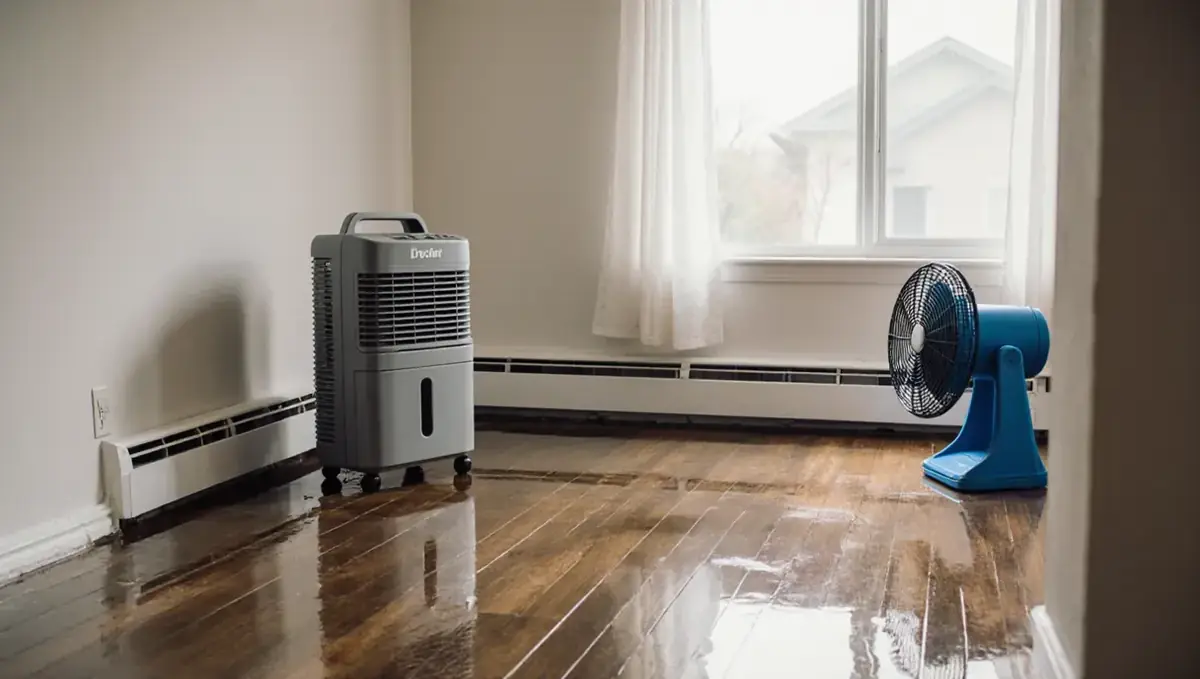
Air movers and dehumidifiers run while readings are taken over several days. In Brevard's humid climate, steady dehumidification is what makes structural drying work.
Rebuild
Once materials test dry, water damage repair can begin: drywall, paint, flooring, cabinets and trim. It is reasonable to ask any Melbourne contractor to show its licensing, insurance and training (IICRC certification is one common example) before work is approved.
After a Storm: Roof Leaks, Surge and Beachside Properties
Atlantic hurricane season runs June 1 through November 30. When a hurricane threatens, the City notes that all areas east of the Indian River Lagoon, including Indialantic, Melbourne Beach, Satellite Beach and Indian Harbour Beach, fall under mandatory evacuation orders. Check your evacuation zone with Florida's Know Your Zone map.
After the storm, homes on the mainland often deal with roof and window leaks, wet ceilings and flooded garages, while beachside properties may face surge and sand intrusion. Storm damage cleanup usually starts with emergency tarping or board-up, followed by water removal and drying. Wait for officials to say it is safe to return before going back to a damaged home.
Neighbors to the south in Palm Bay and north in Titusville face many of the same storm risks.
Keeping Mold From Following the Water
Per EPA guidance, mold can start growing on damp materials within 24 to 48 hours. Melbourne's summers give it warmth and humidity, so drying quickly matters as much as removing water.
In Florida, the Department of Business and Professional Regulation (DBPR) issues separate licenses for mold assessors and for mold remediators. The statute's definitions tie that licensing to jobs covering more than 10 square feet of mold, so a small spot under a sink is treated differently from a whole wet wall. You can look up any assessor or remediator by name or license number on MyFloridaLicense.com.
Professional mold removal usually involves containment, air filtration, removal of affected materials, cleaning and drying.
Claims, Paperwork and Commercial Properties
- Flood needs its own policy. Standard homeowners policies generally exclude flood. NFIP policies typically take 30 days to take effect, so buy before a storm forms. Brevard County participates in the NFIP Community Rating System.
- Watch the deadlines. Under Florida Statute 627.70132, you have 1 year from the date of loss to give notice of a new or reopened property claim, and 18 months for a supplemental one.
- Citizens customers. By January 1, 2027, all Citizens personal residential policies with wind coverage must also carry flood insurance.
- Keep everything. Save photos, receipts, moisture logs and drying reports.
Offices, shops, rentals and HOA common areas around Melbourne can use the same referral line. A restoration company can work around business hours and document each area for the owner and the insurer. Call (888) 817-5061 to get started.
Melbourne Neighborhoods and Nearby Space Coast Towns
WaterQ's free referral line connects callers throughout Melbourne and southern Brevard County with independent local restoration providers.
Neighborhoods
- Historic Downtown Melbourne
- Eau Gallie Arts District
- Eau Gallie
- Melbourne Beachside
- Lake Washington
- Pineda
- Central Melbourne
Nearby communities
- West Melbourne
- Melbourne Village
- Palm Shores
- Indialantic
- Melbourne Beach
- Indian Harbour Beach
- Satellite Beach
- Palm Bay
- Viera
- Suntree
Melbourne Water Damage FAQ
Is standing water in my Melbourne yard after rain a problem?
Not always. The City of Melbourne says standing water that drains within about 72 hours is normal during the rainy season because the soil is saturated. Water entering the house, or water that does not drain, is a different matter and should be dealt with right away.
Who maintains the culvert under my driveway?
According to the City of Melbourne, homeowners are almost always responsible for driveway culverts. Keeping them clear of debris helps rainwater move away from your property.
Do Florida mold remediators need a license?
Yes. Florida's DBPR licenses mold assessors and mold remediators, and the license applies to jobs involving more than 10 square feet of mold. You can verify a license on MyFloridaLicense.com.
Will my homeowners policy cover flooding from a tropical storm?
Standard homeowners policies generally exclude flood. Flood damage is typically covered by an NFIP or private flood policy, and NFIP policies usually have a 30-day waiting period. Wind-driven rain through a damaged roof may be handled differently, so review your policy with your agent.
Does WaterQ do the restoration work itself?
No. WaterQ is a free referral service available 24/7. We connect you with an independent local restoration company, which handles the inspection, estimate and work.
Local emergency and flood resources
Official sources for alerts, flood maps and preparedness in and around Melbourne: