Beach Island Versus Mainland Bluffs
Clearwater is really two places when it comes to water. Clearwater Beach and Sand Key sit on barrier islands facing the Gulf of Mexico, separated from the mainland by Clearwater Harbor and the Intracoastal Waterway. Across the causeway, the mainland sits much higher, with a listed city elevation of about 66 feet, and Tampa Bay lies to the southeast.
The barrier islands take the brunt of storm surge. The mainland is more likely to see water from heavy rain, overwhelmed storm drains, roof leaks and plumbing failures. Low spots on both sides can see what the City calls sunny-day flooding, when king tides leave standing water on roads even without rain.
About 52 inches of rain falls in a typical year, most of it in summer afternoon thunderstorms from June through September.
The City is installing tidal valves to keep high tides from backing up into storm drains, and it monitors Alligator Creek with a USGS water level gauge at Kapok Park. Residents can help through the Adopt-A-Drain program by keeping curbside inlets clear of leaves and yard waste, especially before storms and king tides.
Helene Broke a Record Set in 1993
For decades, the highest water level on record at Clearwater Beach came from the 1993 Storm of the Century. Hurricane Helene erased that mark in September 2024, pushing water to 6.67 feet above MHHW even though the storm made landfall far to the north. Gusts reached 73 mph at Clearwater Beach, and Pinellas County reported 12 deaths from surge drowning.
Homes and businesses on the beach were wiped out, and residents were shoveling mud out of houses days later. Many were still clearing Helene debris when Hurricane Milton arrived two weeks later with heavy rain and wind across Pinellas County.
Flood cleanup in Clearwater after surge is a contamination job, not just a drying job. Saltwater, sand and sediment get into walls, ductwork and flooring, and everything it touched needs to be cleaned, sanitized or removed. Read about flood cleanup and storm damage cleanup.
Hotels, Condos and Storefronts
Clearwater's tourism economy means a lot of commercial property: hotels and resorts on Clearwater Beach, condo buildings on Sand Key and Island Estates, and shops and offices in the Cleveland Street District downtown. Water damage in these buildings spreads differently than in a single-family house.
- Multi-unit leaks. A failed supply line can reach units below through ceilings and wall cavities. Notify building management and neighboring units quickly.
- Ground-floor surge. Lobbies, parking levels and retail spaces at grade are often the first to flood.
- Business interruption. Owners usually want drying planned around guests and tenants, with moisture readings documented for insurers.
Property managers can call (888) 817-5061 to be connected with a local restoration company that handles commercial water damage restoration and structural drying.
Protecting a Home in the First Hour
- Stay safe. Keep out of water that may be in contact with outlets or appliances, and never drive or walk through flooded streets.
- Turn off the water. Know where your main shutoff is before you need it.
- Take pictures. Record the water, the source and every damaged item before cleanup begins.
- Classify the water. A leaking dishwasher line is Category 1 clean water. Surge, floodwater and sewage are Category 3 and need protective gear.
- Get air moving if it is clean water. Open interior doors and run the air conditioning if it is safe to do so.
Help is a phone call away at (888) 817-5061, any time, day or night. We connect you with a local professional who can start emergency water removal.
The Drying and Repair Timeline
Water damage repair in Clearwater follows a logical sequence once a restoration company is on site.
Stabilize
Extraction removes standing water. After a storm, roof tarping or board-up may come first.
Measure
Moisture meters and infrared cameras trace water under tile, behind baseboards and into adjoining rooms or units. Readings are logged for the insurance file.
Dry and clean
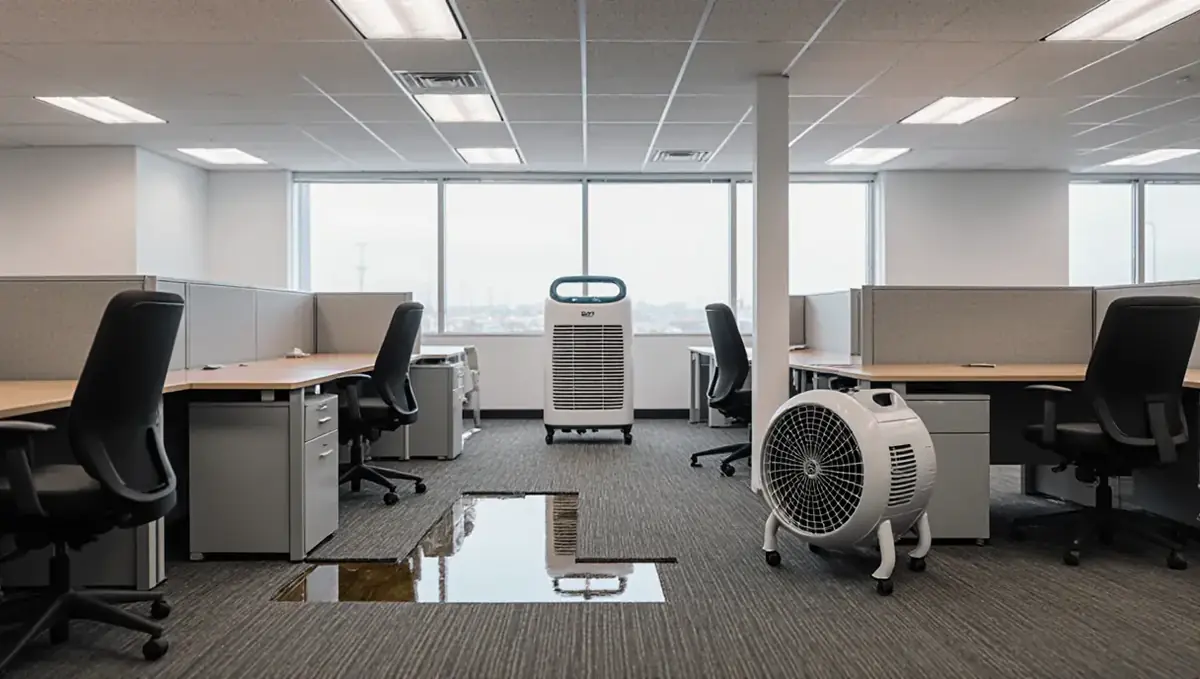
Dehumidifiers and air movers work until materials hit dry targets. Materials soaked by contaminated water are typically removed rather than dried.
Restore
Drywall, flooring, cabinetry and paint go back in last. Before signing a contract, ask about the company's licensing, insurance and technician training, for example IICRC certification.
Mold Prevention and Licensed Remediation
Gulf humidity keeps materials damp, and after a storm cuts power, air conditioning stops pulling moisture out of the air. Following EPA guidance, mold can begin growing within 24 to 48 hours on wet drywall, carpet or wood.
When mold cleanup in Clearwater goes beyond a small patch, Florida law comes into play. DBPR licenses mold assessors and mold remediators separately, and under the statute's definitions a license is needed for assessing or remediating more than 10 square feet of mold. Verify each one on MyFloridaLicense.com.
Learn how containment and HEPA filtration are used on our mold removal page.
Clearwater's Flood Discount and Claim Basics
- Class 5 CRS rating. Clearwater moved from Class 6 to Class 5 in FEMA's Community Rating System on October 1, 2024, which the City says gives residents a 25% discount on flood insurance.
- Look up your property. The City offers an interactive flood zone and elevation map, and coastal Pinellas flood maps were updated in August 2021.
- Flood is not in a standard policy. Homeowners policies generally exclude flood. NFIP coverage usually starts after a 30-day waiting period.
- Deadlines matter. Florida Statute 627.70132 allows 1 year from the date of loss for notice of an initial or reopened claim and 18 months for a supplemental claim.
- Citizens policies. Personal residential Citizens policies that include wind coverage must also carry flood insurance by January 1, 2027.
WaterQ cannot tell you how a claim will turn out. Call (888) 817-5061 to be connected with a provider who documents the work carefully.
Clearwater Beach, Countryside and Nearby North Pinellas
WaterQ connects callers on Clearwater Beach, across the mainland and in surrounding Pinellas County communities with independent local restoration providers.
Neighborhoods
- Clearwater Beach
- Mandalay
- Island Estates
- Sand Key
- Downtown Clearwater / Cleveland Street District
- Harbor Oaks
- Skycrest
- Countryside
- Imperial Park
- Greenbriar
- Coachman Ridge
Nearby communities
- Dunedin
- Safety Harbor
- Largo
- Belleair
- Belleair Bluffs
- Oldsmar
- Palm Harbor
- Indian Rocks Beach
- Feather Sound
- St. Petersburg
Clearwater Water Damage FAQ
What is sunny-day flooding in Clearwater?
The City uses the term for flooding during high or king tides when it is not raining. Tidal water can back up through the stormwater system and leave standing water on roads. The City is installing tidal valves to reduce that backflow.
How high did Helene's surge get at Clearwater Beach?
The National Weather Service recorded a water level of 6.67 feet above MHHW at Clearwater Beach, beating the previous record from the 1993 Storm of the Century.
Does Clearwater's CRS rating lower flood insurance costs?
Yes. As of October 1, 2024, Clearwater holds a Class 5 rating, which the City says gives residents a 25% discount on flood insurance.
Can WaterQ help with a hotel or condo building?
Yes. WaterQ is a free 24/7 referral line, and it can connect property managers with independent local restoration companies that handle commercial and multi-unit water damage.
When is a mold license required in Florida?
Florida's DBPR license requirements apply to mold assessment or remediation of more than 10 square feet. Check both the assessor and the remediator on MyFloridaLicense.com.
Local emergency and flood resources
Official sources for alerts, flood maps and preparedness in and around Clearwater: