A Planned Suburb Built Around Pumped Canals
Coral Springs grew out of farmland in northwest Broward County after Coral Ridge Properties bought nearly 3,900 acres in 1961. The city incorporated in 1963, boomed through the 1970s, 1980s and 1990s, and reached residential build-out in 2003. Today it covers about 24 square miles at roughly 10 feet of elevation, with the Everglades along its western edge.
What makes local water risk different is the drainage system. Instead of one public network, Coral Springs is divided among six drainage districts, and many homes back onto lakes or canals. The Coral Springs Improvement District alone maintains about 20 miles of canals.
Those canals do not drain freely. According to the district, they only discharge to the C-14 canal when its pump stations switch on, so water can stay in the system for long stretches. During a long rain event, lake and canal levels rise, and yards, pool decks and low entryways are the first to feel it.
Wilma, Irma and the Problem of Fallen Trees
Hurricane Wilma in 2005 was the strongest hurricane to hit Coral Springs since the city was founded. Its eye passed directly over town and it took out about a third of the tree canopy. Wind-driven rain through damaged roofs and broken windows is a classic source of interior water damage after a storm like that.
Hurricane Irma in 2017 showed a second risk. The Coral Springs Improvement District says Irma's near-hurricane-force winds dropped about 4,000 cubic yards of vegetation into canals and canal corridors. Fallen trees can choke a canal and slow drainage, which is why the district ran a canal tree removal project in 2023 and 2024.
If you live on a canal, city ordinance makes you responsible for maintaining your bank, including removing Florida Holly and Australian Pine down to the water line. Keeping that bank clear helps the whole neighborhood drain.
Your First Hour With a Wet Floor
Most calls in a built-out suburb like this one start inside the house: a split washing machine hose, a failed water heater in the garage, an AC drain line backing up, or a slab leak under tile. The steps are the same either way:
- Close the valve. Use the fixture shutoff or the main. Know where your main is before you need it.
- Keep away from wet outlets. If water has reached cords or power strips, switch off that circuit at the panel only if you can do it without standing in water.
- Identify the water. Supply-line water is usually clean (Category 1). Dishwasher or washer discharge is gray water (Category 2). Anything from a toilet backup, lake or canal should be treated as Category 3.
- Take pictures. Record the source, the affected rooms and damaged items before cleanup begins.
- Protect belongings. Move rugs, electronics and paperwork, and set furniture legs on blocks or foil.
- Bring in a pro. A quick call to (888) 817-5061 puts you in touch with a nearby restoration professional who can start emergency water removal.
Inside a Coral Springs Drying Job
Water damage restoration in Coral Springs generally follows a predictable path, though every house is a little different.
Inspection and moisture mapping
A technician traces the source and uses moisture meters and infrared cameras to see how far water has moved under tile, behind baseboards and into cabinets. Many homes here were built from the 1970s to the 1990s, so original supply lines and water heaters may be reaching the end of their service life.
Extraction and tear-out
Standing water is removed first. Wet carpet pad, saturated drywall and swollen baseboards are often cut out so the structure underneath can dry.
Drying and monitoring
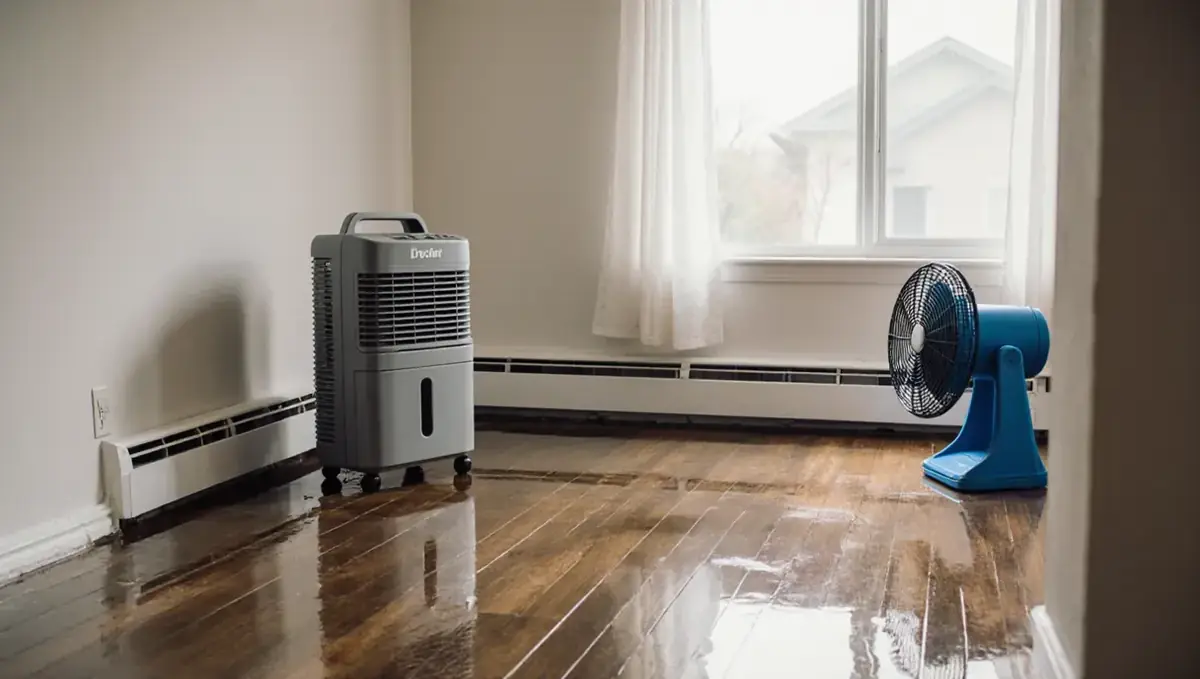
Dehumidifiers and air movers run while readings are checked daily. Proper structural drying is what keeps a simple leak from becoming a mold problem later.
Repairs
The final phase is water damage repair: drywall, paint, flooring and cabinetry. Before you sign, ask any company about its licensing, insurance and training, such as IICRC certification.
When Rain Overwhelms Lakes and Swales
The City notes that Coral Springs is not an evacuation area, but that does not make it immune to flooding. Heavy tropical rain can push lakes and canals up faster than pump stations can lower them.
Flood cleanup in Coral Springs after outside water enters a home is a different job from a pipe leak. Floodwater is treated as contaminated, so porous materials it touched are generally removed and surfaces are cleaned and sanitized before drying begins. See our flood cleanup and storm damage cleanup pages for more on what that involves.
For canal or drainage problems outside your home, contact the drainage district that serves your address. The City's drainage districts page lists each one with a boundary map. Residents can also sign up for AlertCS emergency notifications by texting AlertCS to 888-777.
Humidity, Mold and Who Can Legally Remediate It
Under EPA guidance, mold may appear on damp building materials in as little as 24 to 48 hours. South Florida humidity keeps that clock running, especially inside closed wall cavities and under cabinets where a slow leak can go unnoticed.
Florida licenses mold assessors and mold remediators separately through the Department of Business and Professional Regulation. The license is required for assessment or remediation work involving more than 10 square feet of mold, based on the definitions in Chapter 468, Part XVI of the Florida Statutes. Look up anyone you hire by name or license number with the DBPR search at MyFloridaLicense.com.
Professional mold removal in Coral Springs should include containment, filtered air and removal of damaged materials, followed by drying so growth does not return.
Claims, Contractors and Commercial Properties
- Separate flood policy. Homeowners insurance generally does not cover flood. NFIP coverage typically takes 30 days to begin, so it needs to be in place before storm season.
- Possible discounts. Coral Springs participates in FEMA's Community Rating System, which may lower flood insurance premiums. City Engineering can provide flood zone information for your property.
- Notice deadlines. Florida gives policyholders 1 year from the date of loss to report a new or reopened property claim and 18 months for a supplemental claim (Fla. Stat. 627.70132). Do not wait that long if you can avoid it.
- Citizens customers. Citizens is phasing in flood insurance requirements for personal residential policies that include wind, with all of them required to carry flood by January 1, 2027.
- Hire carefully. After storms, the City urges residents to use only licensed, insured contractors and to report unlicensed door-to-door solicitors to police non-emergency.
Office parks, retail centers and HOA clubhouses along University Drive and Sample Road face the same risks on a larger scale. Property managers can call (888) 817-5061 to be connected with a local restoration company for commercial drying.
Coral Springs Communities and Neighboring Cities
The WaterQ line connects callers across Coral Springs' neighborhoods and nearby north Broward cities with independent local restoration providers.
Neighborhoods
- Ramblewood
- Eagle Trace
- Wyndham Lakes
- Kensington
- Whispering Woods
- The Isles
- Maplewood
- Shadow Wood
- Oakwood
- Forest Hills
- Turtle Run
- The Crossings
Nearby communities
- Parkland
- Coconut Creek
- Margate
- North Lauderdale
- Tamarac
- Pompano Beach
- Deerfield Beach
- Boca Raton
- Sunrise
- Fort Lauderdale
Coral Springs Water Damage FAQ
Why do lakes and canals in Coral Springs stay high after heavy rain?
Many local canals do not drain freely. The Coral Springs Improvement District says its canals only discharge to the C-14 canal when its pump stations run, so water can stay in the system for extended periods.
Who maintains the canal behind my Coral Springs home?
The canal itself is managed by one of six drainage districts, depending on your address. City ordinance makes canal-front owners responsible for maintaining their bank, including removing Florida Holly and Australian Pine to the water line.
Does Coral Springs have evacuation zones?
The City says Coral Springs is not an evacuation area, though residents should watch local media for shelter information. Wind and flooding rain can still cause serious damage, so preparation still matters.
How can I check whether a Florida mold company is licensed?
Use the DBPR license search on MyFloridaLicense.com. Florida requires separate licenses for mold assessors and mold remediators on jobs involving more than 10 square feet of mold.
Is WaterQ a restoration contractor?
No. WaterQ is a free referral service. The line is open 24/7, and we connect you with an independent local restoration company that performs the inspection and work.
Local emergency and flood resources
Official sources for alerts, flood maps and preparedness in and around Coral Springs: