A City Built Around Lakes, Canals and the Everglades Edge
Pembroke Pines spreads across southwestern Broward County, about 22 miles north of Miami, with the Everglades on its western edge. Unlike the coastal cities to the east, its biggest water challenges are not tides or surge. They are summer rain, an engineered drainage network and the roofs and plumbing of tens of thousands of suburban homes.
Rain that falls on a typical Pembroke Pines street flows into catch basins and community lakes. From there it moves through South Broward Drainage District canals and pump stations into the state-managed C-9 and C-11 canals. The district says that across its service area it manages about 150 miles of canals and 7,700 acres of lakes.
That system works well most of the time, but it has limits. During a major storm the district can only discharge water at its permitted rates, so lakes rise and low yards, streets and garages can hold water until levels come back down.
What Usually Causes Water Damage in Pembroke Pines
- Roof leaks after wind and storms. Strong thunderstorms and hurricanes can lift shingles and tiles, letting water soak attic insulation and ceiling drywall.
- Localized street and yard flooding. The city notes that grass clippings and debris can clog catch basins and cause localized flooding during heavy rain.
- Aging household plumbing. Many subdivisions west of I-75 were built after Hurricane Andrew in 1992, so water heaters, supply lines and fixtures in those homes are now decades old.
- Appliance and AC drain failures. Washing machine hoses, dishwashers and clogged air conditioner condensate lines are common sources of slow leaks that go unnoticed.
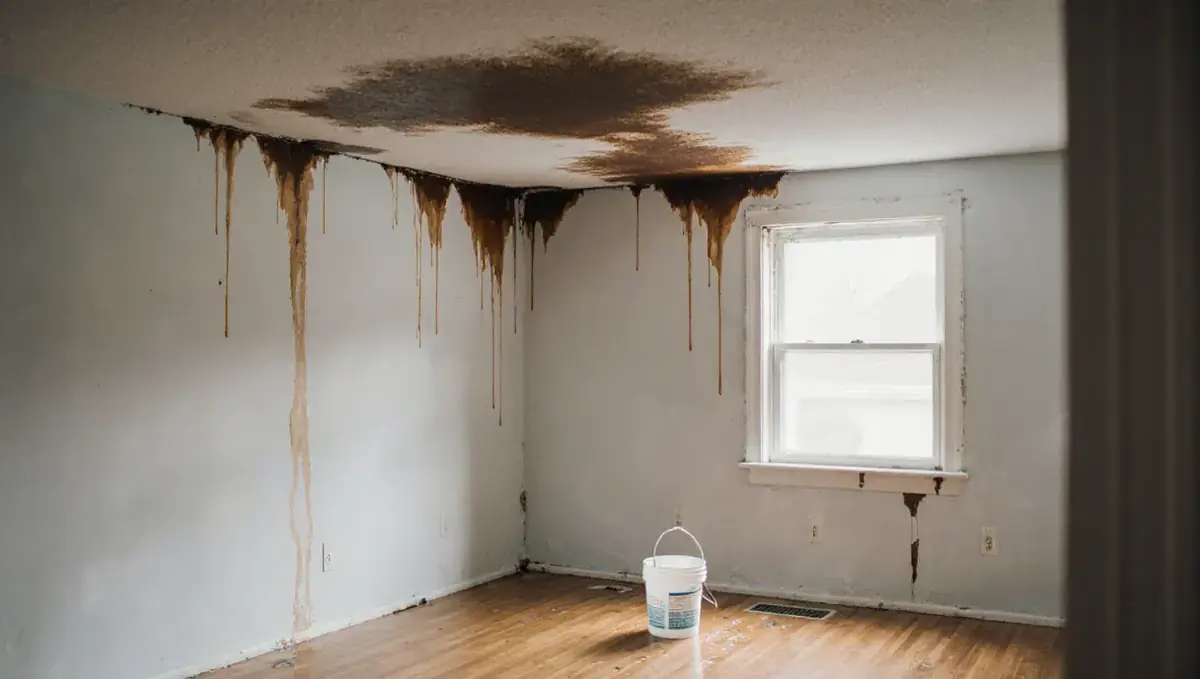
A search for water damage Pembroke Pines help often starts with a stain on the ceiling or a soft spot in the floor. Finding the source quickly is the most important first step.
Wilma, Katrina and the Lessons of Wind-Driven Rain
Hurricane Wilma crossed South Florida on October 24, 2005. The National Weather Service in Miami reported that structural damage was heaviest in Broward and Palm Beach counties, with roof damage and downed power poles, and more than 3 million customers lost power across the region. Two months earlier, Hurricane Katrina had passed directly over Pembroke Pines as a Category 1 storm, causing minor damage.
Severe thunderstorms can do damage too. On June 12, 2011, a storm brought hail, gusts over 60 mph, downed trees and broken glass to western Pembroke Pines and Miramar.
When wind opens up a roof, water damage often shows up days later as sagging ceilings or wet insulation. Storm damage cleanup in Pembroke Pines usually begins with tarping the roof, then removing soaked ceiling drywall and insulation before drying the structure. See storm damage cleanup for more detail.
Right After You Find Water: A Homeowner's Order of Operations
- Watch for electrical risks. A wet ceiling near a light fixture or a puddle by an outlet is dangerous. Turn off the breaker for that area if you can do it safely.
- Shut off the source. Close the main water valve for a plumbing leak. For a roof leak, place buckets and move belongings out of the drip zone.
- Relieve a bulging ceiling carefully. If drywall is sagging with water, keep people out of the room below and let the restoration crew handle it.
- Take photos and video. Record the source, ceiling stains, wet floors and damaged items before cleanup begins.
- Notify your HOA if relevant. If your community association maintains roofs, lakes or common drainage, let it know right away.
- Call for professional help. Reach (888) 817-5061 and we will connect you with a local company that offers emergency water removal and drying.
From Extraction to Final Repairs
Water damage restoration in Pembroke Pines generally moves through four stages, though the details depend on the house and the water source.
1. Water removal
Standing water is pulled out of tile, carpet and pad with extractors. Wet ceiling insulation and drywall are often removed early so they do not collapse or hold moisture.
2. Moisture mapping
Meters and thermal cameras show where water spread under baseboards, into cabinets and through wall cavities. That map guides the drying plan and documents the loss.
3. Structural drying
Dehumidifiers and air movers run for several days while technicians track readings. Pembroke Pines summers are humid, so dehumidification is critical. Learn more about structural drying.
4. Rebuild
Water damage repair in Pembroke Pines finishes the job with new drywall, paint, flooring, trim and cabinets. Ask any company about its licensing, insurance and training, such as IICRC certification, before you agree to the work.
Flood Zones and Drainage Help in the City
Broward County uses FEMA flood zones A, AE, AH and VE for higher-risk areas and X for lower-risk areas. The City of Pembroke Pines reminds residents that all areas are susceptible to flooding to varying degrees, and that a 1 percent annual chance flood zone is not a promise of only one flood per century. Check your address on the city's flood zone page.
If drainage near your home is not working, report it to the South Broward Drainage District at 954-680-3337 or to the city's Environmental Services Division. For flood cleanup in Pembroke Pines after water has entered a home, treat it as contaminated water and plan on removing wet flooring and lower drywall. Our flood cleanup page explains the process.
Mold Prevention and Florida's Licensing Requirements
A roof leak that soaks attic insulation or a slow leak behind a vanity can turn into a mold problem quickly. Per EPA guidance, mold may start growing within 24 to 48 hours on wet materials, especially in warm, humid weather.
Two separate state licenses come into play here, one for the mold assessor who evaluates a Pembroke Pines home and one for the remediator who cleans it, both issued by Florida's DBPR. The statute applies them once a job involves more than 10 square feet of mold. For mold removal in Pembroke Pines on a job that size, ask the assessor and remediator for license numbers and confirm them on MyFloridaLicense.com. See mold removal to learn how containment and cleanup work.
Coverage Questions and Keeping Good Records
Roof leaks from wind and sudden plumbing failures are often handled under a homeowners policy, while water rising from outside is generally a flood loss that requires NFIP or private flood coverage. New NFIP policies usually come with a 30-day waiting period, so do not wait until a storm is in the forecast.
Florida Statute 627.70132 allows 1 year after the date of loss to report an initial or reopened claim and 18 months for a supplemental one. Citizens customers whose personal residential policies include wind coverage will need flood insurance as well by January 1, 2027.
Save photos, moisture readings and invoices in one place. Office parks, retail centers and property managers can use the same referral line. Call (888) 817-5061 any time, day or night. Neighboring Miramar and Hollywood are also covered.
Pembroke Pines Communities and Nearby Cities
Callers across Pembroke Pines, from the original eastern neighborhoods to West Pines, and in nearby southwestern Broward cities can use our free line to reach independent local restoration providers.
Neighborhoods
- Chapel Trail
- Silver Lakes
- Pembroke Lakes
- West Pines
- Century Village
- Grand Palms
- Pembroke Falls
- Towngate
- Pembroke Shores
- Walnut Creek
Nearby communities
- Southwest Ranches
- Davie
- Cooper City
- Weston
- Sunrise
- Miramar
- Plantation
- West Park
Pembroke Pines Water Damage FAQ
Why does water collect on my Pembroke Pines street during heavy rain?
Rain drains into catch basins and community lakes, then through South Broward Drainage District canals to the C-9 and C-11 canals. In big storms the district can only discharge at permitted rates, and clogged catch basins can also cause localized flooding. Report problems to SBDD at 954-680-3337.
Can a roof leak in Pembroke Pines cause mold?
Yes. Wet attic insulation and ceiling drywall can begin growing mold within 24 to 48 hours. Removing soaked materials and drying the space quickly is the best way to prevent it.
Which flood zones are used in Pembroke Pines?
Broward County uses FEMA zones A, AE, AH and VE for high-risk areas and X for lower risk. The city says all areas can flood to some degree, so check your address on the city's flood zone page.
Does a mold remediator need a license in Florida?
Yes, for jobs involving more than 10 square feet of mold. Florida's DBPR licenses both mold assessors and mold remediators, and you can search licenses on MyFloridaLicense.com.
Will WaterQ do the restoration work at my house?
No. WaterQ is a free referral service that connects you with an independent, local restoration company. That company inspects the damage and does the work. The line is open 24/7.
Local emergency and flood resources
Official sources for alerts, flood maps and preparedness in and around Pembroke Pines: